Tag Archives: design & decoration

Airport Meets Art and Design

If your most recent flight to Mumbai landed prior to January 2014, then probably all you remember is an old airport with long queues and lack of world-class facilities. But if your latest trip took place later, then you know that Mumbai Chhatrapati Shivaji International Airport‘s newest terminal (T2) is a beautiful oasis of art and design. Mumbai Airport Terminal 2Designed by Skidmore, Owings & Merrill (Chicago-based architects also behind Burj Khalifa, Dubai), Terminal 2 is a true mix of Indian heritage and modernity. We had a chance to spend some time in this terminal just before catching our Emirates A380 flight to Dubai, and highly appreciated our brief visit. The terminal was spacious, white, clean and full of light, and I loved the pillars. In addition, the terminal is home to the world’s largest public art program! Including images of Bollywood stars, of course.Mumbai Airport, Terminal 2What I absolutely loved was the carpet that according to its manufacturer, Brintons from the UK, is inspired by the peacock, India’s national bird. Such lovely colors, such beautiful designs. Walking on this carpet made our departure from India a bit less sad.Brintons carpet in Mumbai, terminal 2From the practical point of view it was –well– very practical! There was no waiting and trolleys were available everywhere. Time between entering the terminal and reaching the departure gate was about 20 minutes. Wow.

Despite the fact that everything worked smoothly, many shops were still closed. For example, I could not buy English-language books because I could not find a book shop (I certainly hope there will be one!). Regarding the restaurant facilities, we did not use any, but I hear that all big names, “usual suspects”, are or will be there. Personally I hope that I will still be able to eat a good old onion rava masala dosa, and that whoever is responsible on distributing the licences loves Indian food as much as I do. Viva dosas, idlies and upma!!

Skidmore, Owings & Merrill: http://www.som.com/projects/chhatrapati_shivaji_international_airport__terminal_2

Brintons: http://www.brintons.net/apac/en/project-wall/chhatrapati-shivaji-international-airport-t2-mumbai-india/

The Midsummer Weekend in Finland

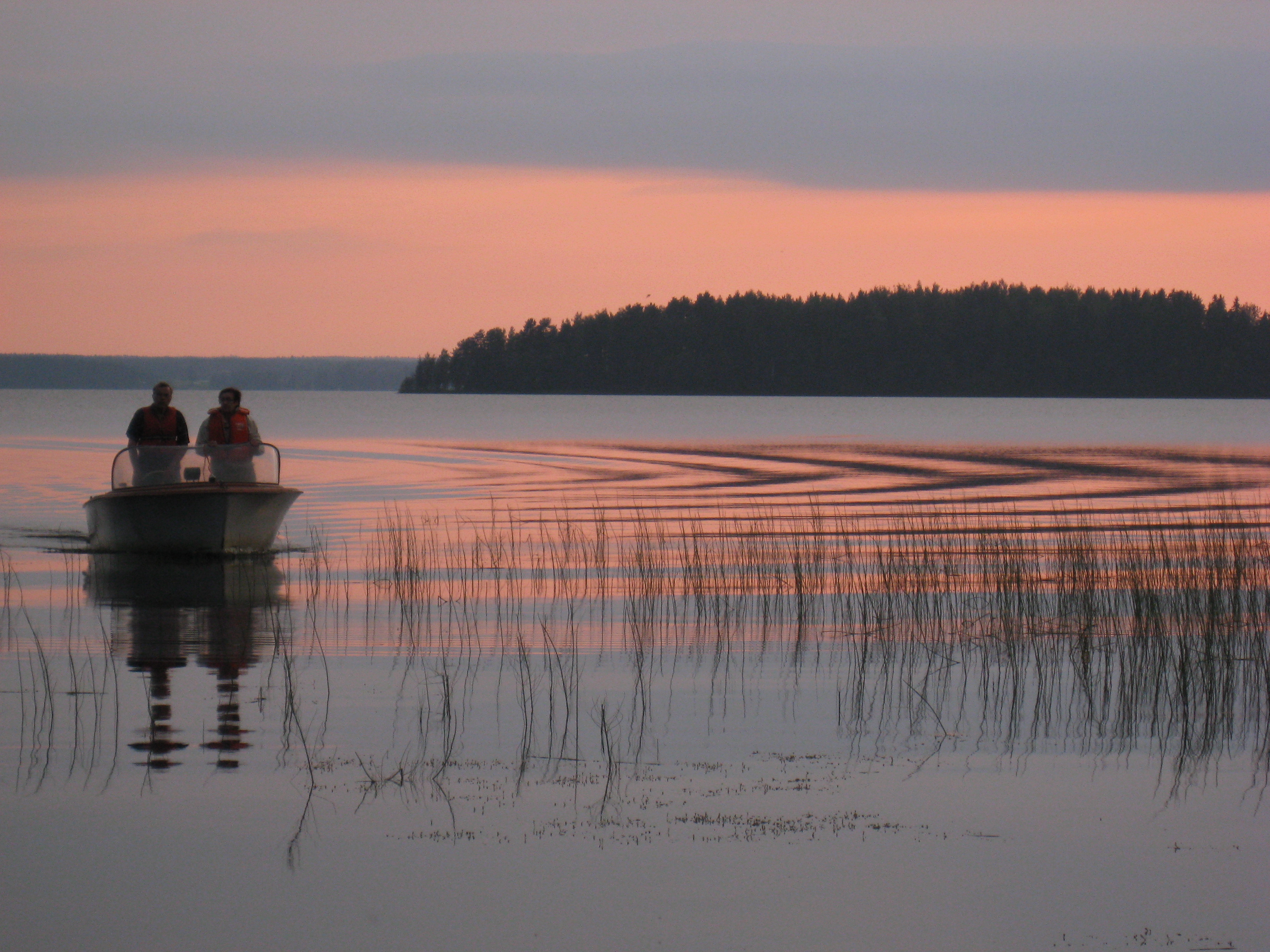
Midsummer in Finland, miss you! Midsummer in FinlandThis is the weekend when Finland shuts down. As early as Thursday afternoon people started migrating to summer houses by the lake or the sea, and they will stay there until Sunday. Activities include sauna, swimming, outdoor games, fishing, water sports and barbecue. It is the weekend when the sun never seems to set. Midnight sun, Midsummer in FinlandThe Midsummer holiday (Juhannus in Finnish) is full of symbolism and magic. Some villages prepare a hug bonfire, kokko, which usually burns by the water. In addition, there are other traditions and rituals that include running around naked, looking deep into water, collecting flowers and placing them under the pillow and observing the direction of the bonfire smoke, to mention a few, and all these rituals are for the purpose of finding a decent husband and getting a hint of who he may be. Indeed, Midsummer is originally a pagan celebration. Midsummer, FinlandI have not been able to join Midsummer celebrations in Finland for a long time and it is a pity. It really is one of the happiest celebrations in Finland (even if every year someone gets too dunk and drowns…). Now that I am thinking about it, I realize I am more nostalgic about Juhannus than I am about Christmas! And to be very honest, uploading these photos (taken at the summer house) made me cry a bit. To me this is the most beautiful place in the world.

Happy Midsummer everyone!! Hyvää juhannusta!!

PS For those interested in understanding what life at the summer house looks like, see these previous posts:

Finland, Land of the Midnight Sun
Summer holidays in Finland
Sauna Time
A typical Finnish meal after sauna
Fishing at midnight
Our beautiful lake has turned into a monster!
What does Finnish barbeque look like?
Finnish fish tajine (part 2)
Very easy tartiflette
The Wind in the Willows (kaislikossa suhisee)
A must-try at the Finnish summer house!

Lastly, if you like these posts, why not to follow Pearlspotting on Facebook, too? Or by Twitter, @Miia_Niskanen.

Mustard Obsession

I bought some really delicious mustard to accompany our Christmas meal last December, and ever since then I have been returning to La Grande Epicerie de Paris to buy some more.

La Grande Epicerie de Paris in the 7th arrondissement is my favorite high-end food store in Paris and maybe in the world. Whatever they sell, it is always the best of the best. Moreover, the packaging is so beautiful that graphic designers shop there not only for food but for ideas, too (and this was confirmed to me by a designer friend). In fact, La Grande Epicerie de Paris is like a dream to me: a dream of being able to buy all the groceries there, or even better, winning unlimited groceries for life!

But, let’s stay focused and talk about mustard!

This week I returned for my usual monthly stock up and came home with three mustard jars. I have tasted Boletus-Mushroom mustard before (I absolutely love it), and in addition I got two new flavors: Curry & Curcuma mustard and Truffle & Black Pepper mustard. Look at these beauties!mustard, Savor & sensI am sure I will be returning very soon to buy more –after all I have over a dozen flavors to taste, and to be precise, 16!! Exciting. There is nothing better than a Sunday poulet rôti (roast chicken), mashed potatoes and Savor&sens organic mustard…

La Grande Epicerie de Paris: http://www.lagrandeepicerie.com/en.html

Savor&sens mustards: http://www.savoretsens.com/index.php/savor-sens-bio-c-96_85

Other delicious discoveries to be purchased at La Grande Epicerie de Paris: 

Neemrana Fort-Palace: Architectural Pearl

If you recall the India travel series I wrote earlier this year, you may remember that  is one of my favorite hotels in the world. If I renewed my wedding vows, I would probably do it at the Neemrana Fort-Palace hotel. Right in the middle of history, charm, elegance and Rajasthani hospitality!

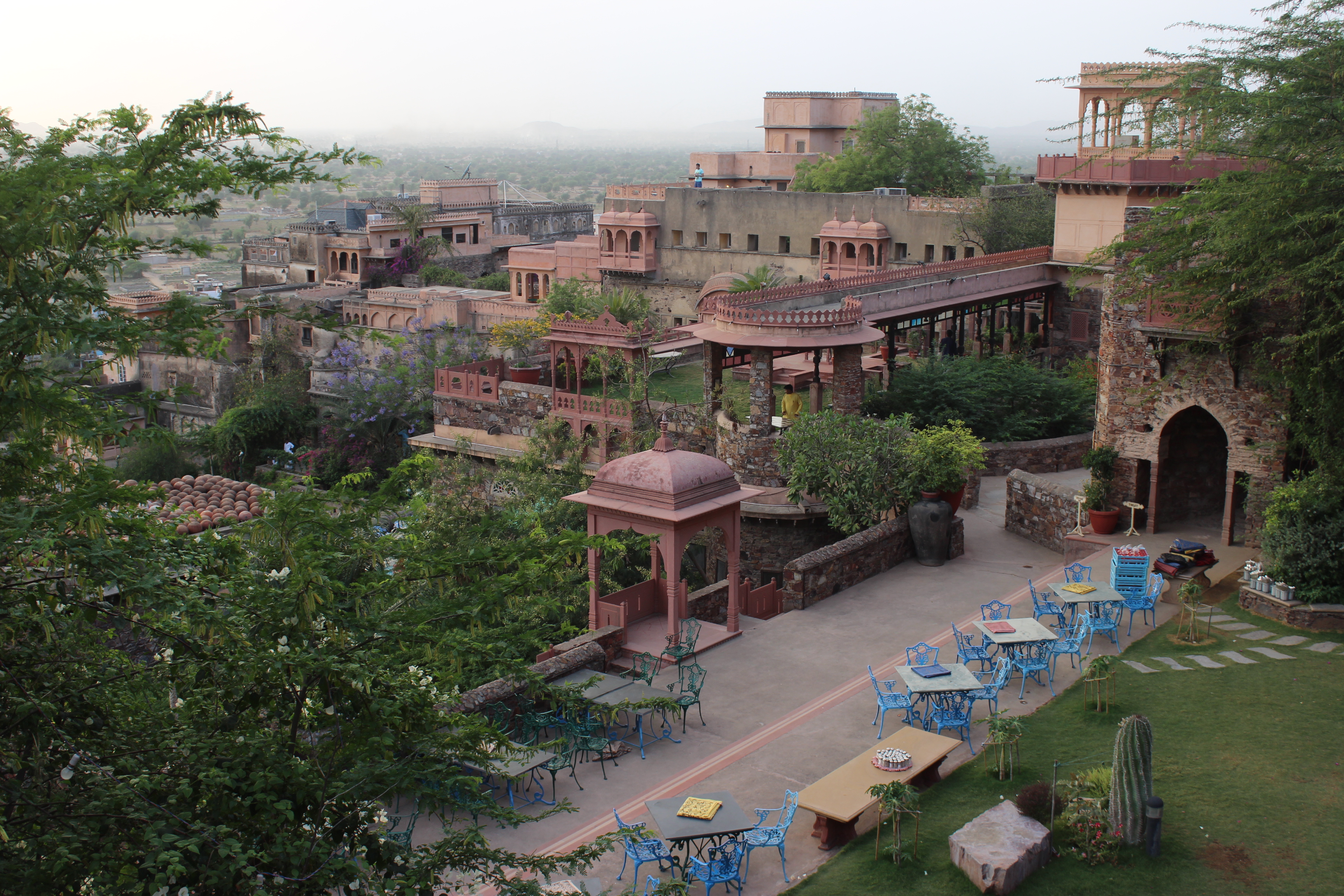
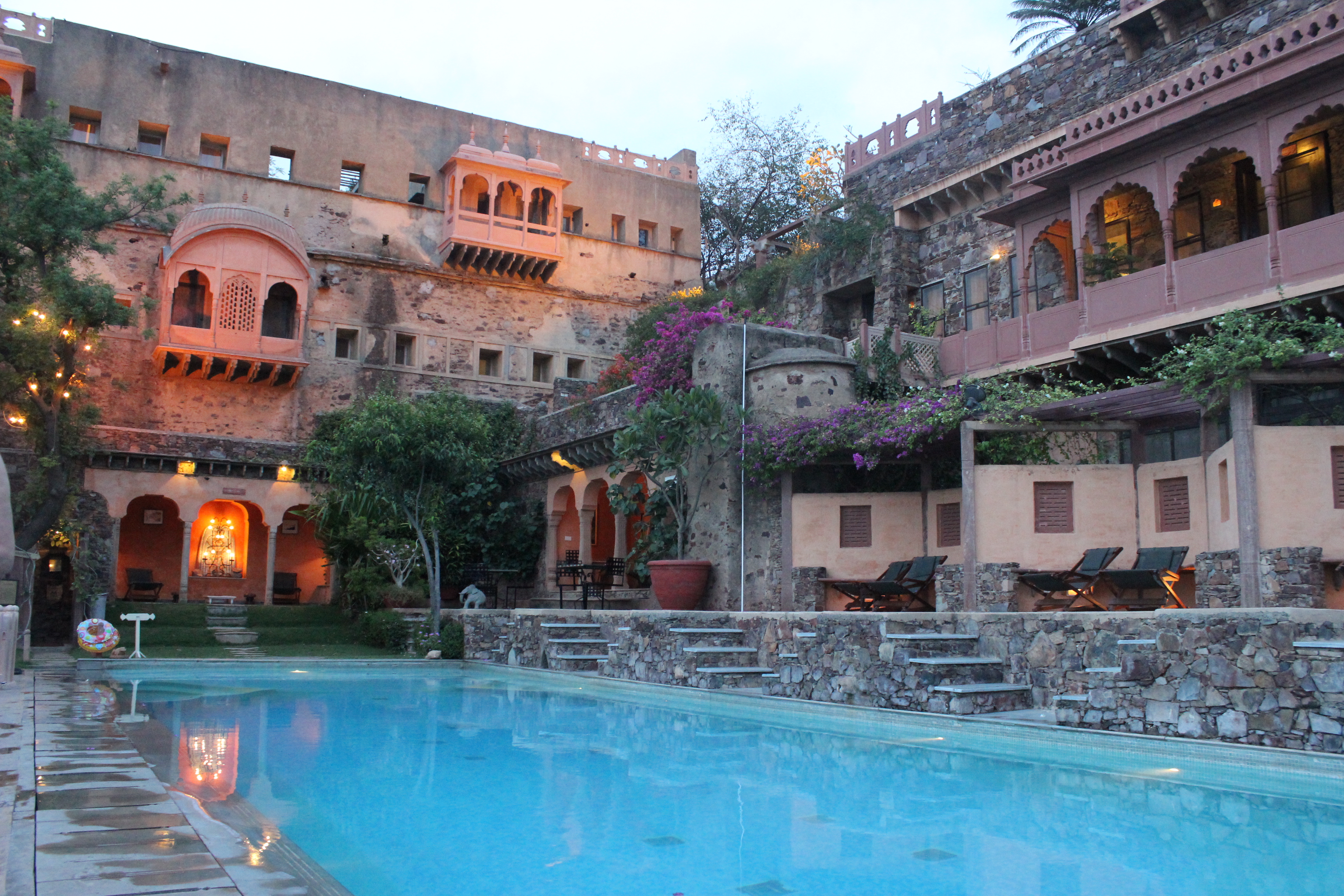
During my last trip to India in April this year I had a chance to return to Neemrana Fort-Palace for one night. It was a wonderful visit and we were pleased to realize that in spite of the extension works (there are now two swimming pools and 65 rooms) the hotel still feels very intimate. Just look at these labyrinths, verandas, patios and towers all over the property!Neemrana Fort-PalaceNeemrana Fort-PalaceAt the time of our stay the hotel was occupied mainly by Indian families (most foreigners stop visiting Rajasthan by April as it gets too hot) so we had the upper pool to ourselves. In fact the original pool (at the lower level) can accommodate children, whereas the newer, upper pool, is reserved for adults. Neemrana Fort-PalaceNeemrana Fort-PalaceOnce the sun started to set, we descended to the lower levels of the hotel complex. The view toward the valley was spectacular, and with a little bit of imagination we could have imagined a camel (or elephant?) caravan travelling in the horizon.Neemrana Fort-PalaceNeemrana Fort-PalaceBefore heading to our lovely, comfortable beds in our Aman Vilas room we enjoyed an excellent buffet dinner with Indian Sula wine (red). It was my parents’ last night in India and I don’t think their stay could have ended in a more royal way.

Neemrana Fort-Palace, hope to see you soon again!

***

Should you want to read more about the Neemrana Fort-Palace history, go here: http://fort-palace.neemranahotels.com/history and http://fort-palace.neemranahotels.com/philosophy

For a virtual visit of wonderfully decorated rooms, go here: http://fort-palace.neemranahotels.com/rooms

Lastly, for a memorable stay, reservations are made here: http://fort-palace.neemranahotels.com/contact-us


Da Vito: Cool and Affordable Pizzeria

Since its opening in summer 2013, we have visited Da Vito several times. Their pizzas have a very unique taste that we would recognize even eyes closed (quoting my husband), prices are very affordable (pizza prices start at 10€) and the decoration is cosy and cool (I love the floor tiles!). In addition, there are big windows that stay wide open during the summer, some tables are available outside, and two large doors next to the cashier lead to a secret bar… Da Vito, ParisWe have always been welcomed very well and the service has been efficient and friendly. I don’t think we have ever reserved in advance, but one should –there is always a line! In case you decide to arrive without a prior phone call, you can always have a drink at the bar. Da Vito, ParisLast night we had our usual choice, Vegetariana, and a new discovery, Napolitaine. We loved both pizzas. Da Vito’s tomato sauce is simply from heaven, the quality of mozzarella is excellent, and grilled vegetables are some of the best I have ever had. Pizzas are quite minimalist but when top-notch ingredients are used, this is just fine!

We chose to drink Italian wine from Veneto region (14€ a bottle!!) and highly appreciated this well-balanced and elegant rosé we have had before.

Da Vito restaurant and Moonshiner bar: 5 rue Sedaine, Paris 75011. Metro Bastille and Bréguet-Sabin. Tel: 09-50731299
Le Fooding review: http://lefooding.com/en/restaurants/restaurant-da-vito-moonshiner-paris
Pinot Grigio Ramato, Il Barco wine: http://www.ewwines.co.uk/italy-rose-pinot-grigio-ramato-il-barco.html

***

Other pizza reviews by Pearlspotting:  and 


Gardening is fun!

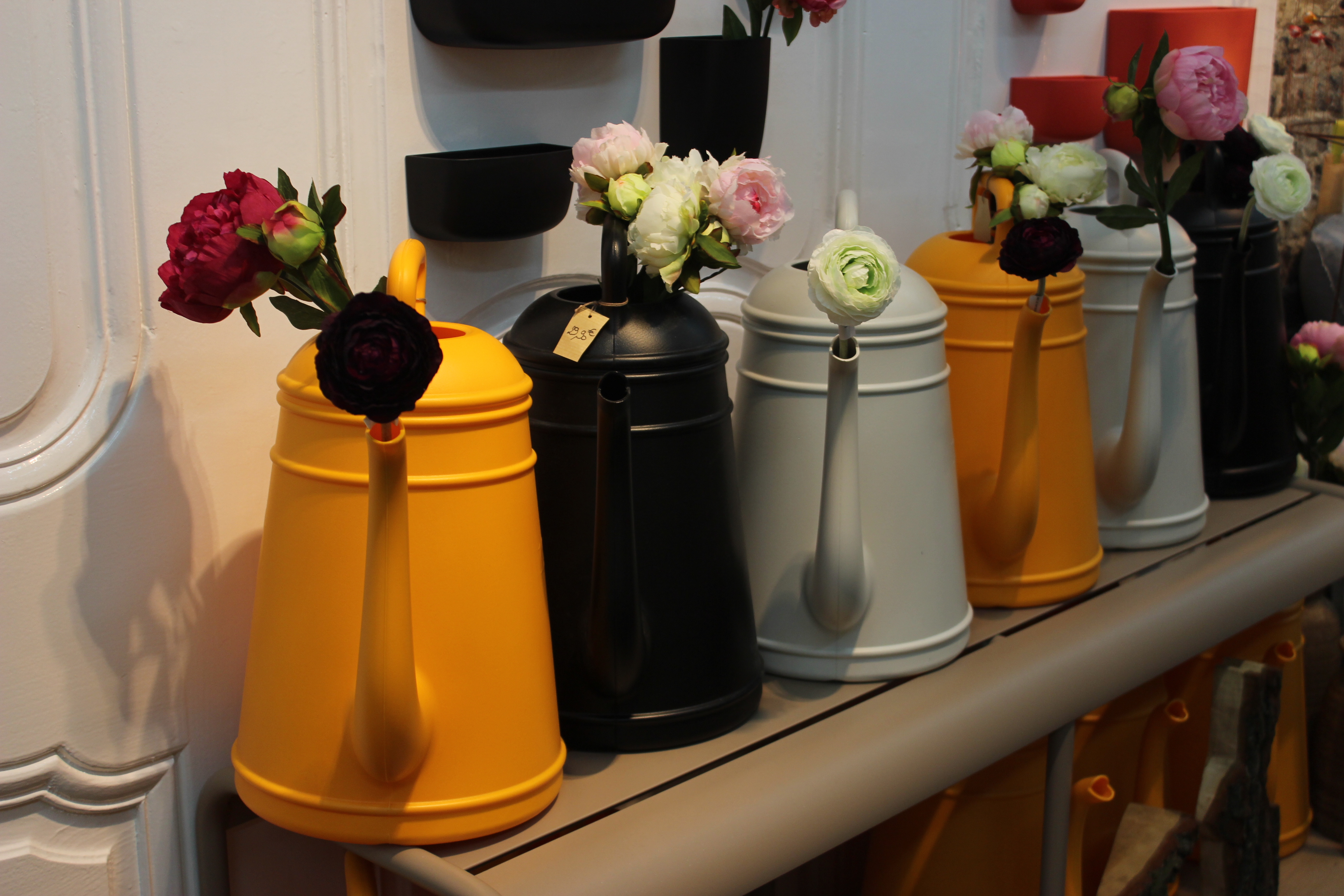
One of my favorite shops in the heart of Marais is Fleux, a fashionable concept store that sells super cute, stylish and original objects. The atmosphere is nice and always puts me in a good mood, and today was not an exception.Fleux concept design store in ParisWe were looking for gardening tools and could not believe our eyes. So much variety and look at these colors! Almost like in India or in the Caribbean islands… Simply lovely. Fleux surely knows how to motivate people to take care of their garden.gardening toolsThe watering can we wanted to buy was sold out in the smaller size (six liters) but I am not surprised. Wouldn’t you want to have one of these beauties in your garden or balcony?Fleux Concept Store, ParisWe will have to return in two weeks’ time but that is ok –it is at that frequency we visit Fleux anyways!

***

To learn more about this wonderful store (in fact there are three stores in the same street), read my previous post Colorful, happy decoration ideas and then visit the store here:

39 & 52 rue Sainte Croix de la Bretonnerie, 75004 PARIS (Metro Hôtel de Ville)
Telephone: 01-42782720, 01-42777385, 01-42745182, 01-42746554.
Open on Sundays! http://www.fleux.com/

Skull Decoration

Cleaning and arranging are not my most favorite past-time activities but I have to admit they bring benefits… like rediscovering things that you forgot existed and coming up with new decoration ideas with these newly-found objects!

We bought these four marble skulls in Varanasi, from the same man who sold us the Nandi (Home Sweet Home). Yesterday while cleaning I placed the skulls on this bowl (that I think comes from Zanzibar) because they were on my way, but once I took a second look I realized they actually look quite stylish. Especially with those red communist farmers in the background (an old Communist propaganda poster from Kyrgyzstan). skull decorationSkulls are very fashionable these days. My husband is dreaming of a tiny golden skull necklace. Skulls have a lot of symbolic values and not only among different religious groups. A skull is actually beautiful –even that black, burnt skull I saw at the burning ghat in Varanasi. Skulls fascinate and scare us.

What do you think? Would you have them at home as a decoration item? What do they symbolize to you?


Understanding Finland by Art

During my last visit to Helsinki I did something that I recommend every tourist to do. I visited some of the most important art museums of the Finnish capital: Ateneum Art Museum, Design Museum and Kiasma Museum of Contemporary Art.

This may sound like a lot of museums to do in one trip, but in my opinion these museums provide interesting insight into what Finland used to be, how it has evolved, what it represents today and where it is heading to. In fact, I would even go as far as to say that what you will learn about Finland through art in these museums will lay foundations for your further encounters in Finland and make you better understand this sparsely populated but geographically big country, sometimes also described obscure.

My first mission was to visit Ateneum and particularly its “Highlights of the Collections” section. To me this is where I would get to the roots of Finland; time travel to the Romantic Nationalism era of the late 19th century when Finnish artists begun to praise local traditions and culture. Kalevala (the national epic) and its mythology, lakes, majestic scenery, peasants, folklore and nationhood were recurring themes in the paintings of Akseli Gallen-Kallela, Eero Järnefelt, Albert Edelfelt, Helene Schjerfbeck, Hugo Simberg, to mention a few.Kullervo Cursing by Akseli Gallen-KallelaAs every Finn, I have seen these masterpieces thousands of times, but I wanted to revisit them to see what they can explain to me about my country of origin. As I continued observing, I was reminded of the harsh living conditions of this northern country, the period of the Swedish and then Russian rule, as well as of the solitary personality type of a Finn who still often is more relaxed alone (or in the nature) than with other people.

Wandering in front of some of the most famous Finnish paintings did open the door to the Finnish soul and I understood that what these artists expressed more than 100 years ago is still very much alive. Today, the Finns continue to love the nature and lakes, and forest is a place of meditation. Indeed, this is why in Finland there are about 500,000 summer houses, sacred places where Finns jump into their dear lake in all weathers, often naked as in this painting. The Aino triptych by Akseli Gallen-KallelaOn my way out of Ateneum my mind was stuck on Finland that was an agrarian state much longer than its neighbors. How did this country that was so poor just over 100 years ago became one of the richest and most gender-equal nations of the 21th century? The answer to this question was to be found in my next destination, Design Museum, where I was going to witness the transformation that Finland underwent. First around its independence in 1917 and second immediately after the Second World War that left the country ruined and badly injured physically and psychologically.Lemminkäinen's Mother by Akseli Gallen-KallelaAlready during the Russian rule Finland had taken steps toward showing its distinctiveness. The artistic triumph of the Romantic Nationalism era culminated in the Paris World’s Fair in 1900 when Finland made its international breakthrough: “we are culturally different from Russia” was what Finland was saying to the world and the world loved the message.

When Finland gained its independence seventeen years later, architecture and design played an important role in the identity making. The poor, agrarian past remained in the back of the mind of designers, encouraging them to create simple and practical but aesthetic objects, often in harmony with the nature and natural materials. The predominant Protestant religion further directed the designers toward plain and unornamented creations.Alvar Aalto chairs at Design MuseumThe years following the Second World War filled Finnish homes with tears and poverty, but some comfort was brought to the Finns by the international success of Finnish design. The postwar period in Finland is called the Golden Age of Finnish Design and for a good reason. This is when Artek, Arabia and Marimekko became internationally sough-after brands. The Aalto vase, created in 1936, continued to travel around the world, and Jackie Kennedy stood by her husband wearing a Marimekko dress in 1960. The Finns were slowly but surely recovering from the wounds of the war.

Finnish design continued to strengthen its domestic and international position in the ’60s, ’70s and ’80s. New materials like plastic emerged, creating new opportunities for designers like Eero Aarnio and Yrjö Kukkapuro who became forerunners of plastic chair design. As Finland grew richer, design expanded to home appliances (for example, Fiskars scissors) and various aspects of daily life (for example, Helsinki got its funky orange metro in 1982). Design MuseumIndeed, during many decades Finnish design and art were seen as means to serve everyday needs, and everyday needs were seen as opportunities to create design and art. Convenient! Very Finnish! The moment I understood this idea, I understood a lot about Finland. Art and design were always meant to be available for everyone, regardless of person’s social class. The fact that every Finnish home is full of “design objects” is probably one of the best proofs of successful nation building that is equal and democratic…?

Now, let’s fast forward to the ’90s. Once again Finland took big international steps and Finnish design contributed to the success of the world’s most famous telephone, the Nokia phone. However, this was not all that was happening. During the ’90s Finland embraced the world in an unseen way. Finland’s EU negotiations coincided with the construction of Finland’s first truly international museum, Kiasma. Curiously, but as a reflection of the spirit of the time, it was designed by an American architect. KiasmaSome have compared Kiasma to Espace Louis Vuitton and Pompidou Center, but during my visit I realized that there was something particularly Finnish about Kiasma’s approach to contemporary art. Its desire to create a dialogue. In fact Kiasma is a platform where a dialogue between decision makers, artists, audience and society takes place, and as a demonstration of its ideology, I stumbled upon an exhibition curated by Finnish daycare children. Talking about participation and engagement!

While I admired Steven Holl‘s minimalist hence oh-so-Finnish architecture, I realized that Kiasma played and still plays a very symbolic role: it is a prime example of Finland’s forward-looking attitude. Finland has strongly tied its development to the future (as opposed to some countries that are more past-focused) and is open to the world. As Ville Kylätasku, an aspiring, young Finnish artist residing in Berlin told me, “To me, Kiasma is like a window through which Finland looks at the outside world”.

So, what did visiting these museums teach me about Finland? That art has played a strong role in the Finnish identity making. That art is practical and accessible. That often design objects and daily needs look the same. That Finland is a young country still looking for its place. That even after Nokia Finland will continue making international headlines. That there is nothing more sacred than a lake (and if you a foreigner visiting Finland, do jump –preferably naked– into that lake!).

Ateneum: http://www.ateneum.fi
Design Museum: http://www.designmuseum.fi
Kiasma: http://www.kiasma.fi

***

Note: The idea behind this write-up was to see what kind of Finland-related emotions and ideas these three museums bring to me –“me” being someone who left Finland in the ’90s, travelled the world and settled (at least for the time being) in Paris. “Me” being someone who finds herself no longer fully Finnish and not yet (and maybe never?) French, but who is interested in individual and national identities.

Do notice also that I am not an art historian. I have tried to check facts and figures, but as always, do your own research and certainly do not take every word and sentence I wrote as a representative of the absolute truth. These are my ideas and should be taken only as such. 

Lastly, I would love to hear your opinion about Finland and Finnish art! Please do so by writing your comment below this post, by Facebook (Pearlspotting) or by Twitter ()!
Seen by the Seine

Even during a rainy week there is something joyful happening in Paris.wedding in Paris by the Seine

PS Why not to follow Pearlspotting on Facebook (Pearlspottingor Twitter ()?

@Miia_Niskanen

Helsinki by Food

So much has happened on the Helsinki food scene since the ’90s that some call it a revolution.

All current Michelin-star restaurants in Helsinki have been created since 2003 and none of the current Bib Gourmand restaurants existed before 2009. In addition to Russian, Tex-Mex and Mediterranean restaurants, which were some of the first international cuisines to arrive in Helsinki, choices keep growing. There is now a Kosher deli. A Peruvian restaurant opened earlier this year. Two young chefs mix Korean, Japanese and North-Chinese flavors. Hakaniemi neighborhood has turned into a bazaar of ethnic grocery shops. The Restaurant Day concept, born in Helsinki in 2011, has now spread to more than 30 countries. The first street food event was organized in March this year. And the list goes on. Indeed, Helsinki has never been as welcoming to foodies as it is today!

As someone who left Helsinki in the mid-’90s, I am intrigued by the latest food scene developments of my old hometown. During my last visit to Helsinki in May this year I took this passion even further and spent an entire day touring the Finnish capital with a professional food guide. Read further to see why this day was fantastic!

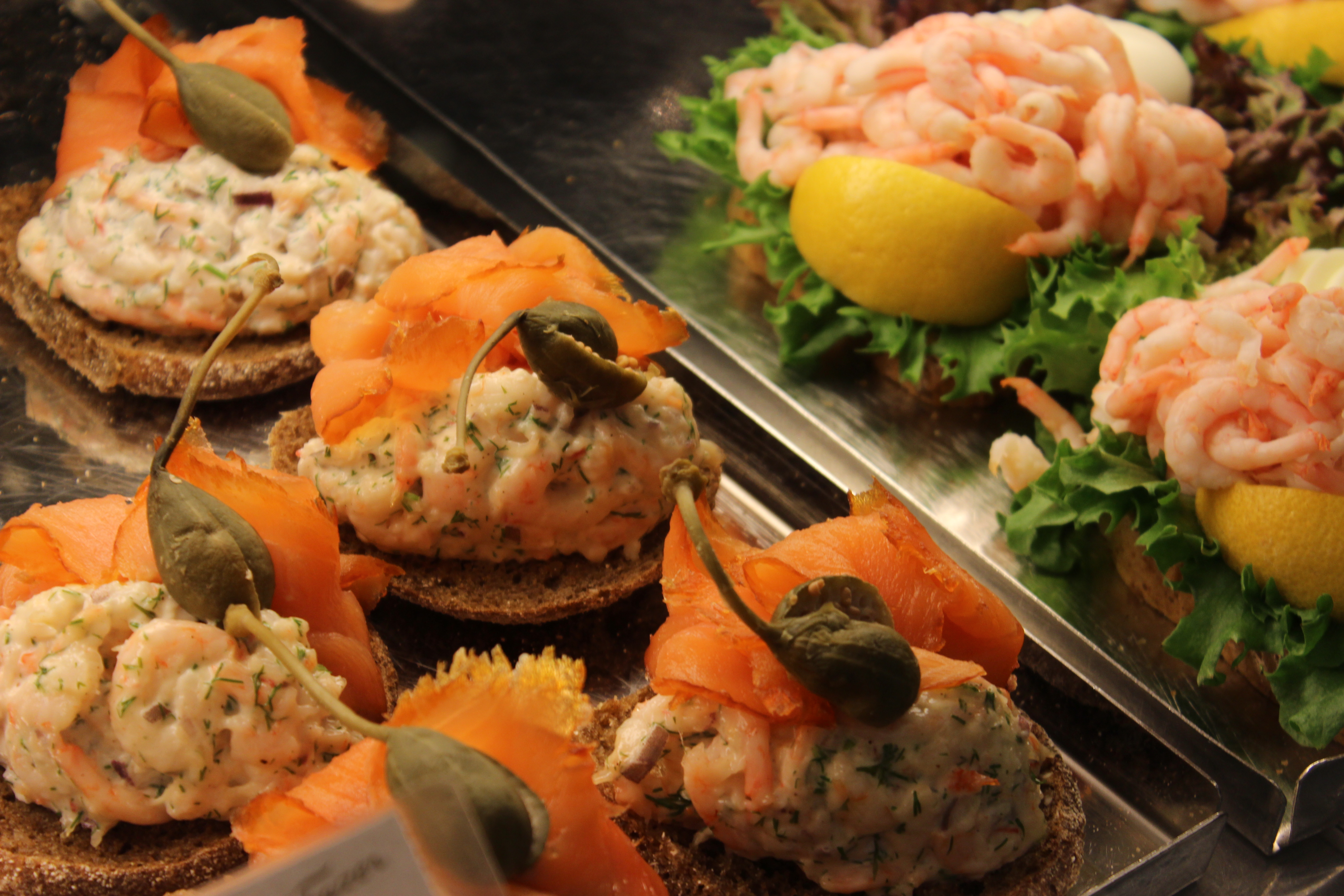
I met my lovely guide Veera in front of the Hietalahti Market Hall, which was our first stop. According to an urban legend, this 110-year-old covered market was used as a horse stable during the Russian rule.As visiting Finland is nothing without discovering local fish, our first stop was Fish Shop Marja Nätti. We had a chance to run into Petri, Marja’s son, who proudly explained to us that the sandwich we are eating is their newest recipe: cold-smoked salmon and asparagus on malt bread topped with caviar-infused Hollandaise sauce. Wow. It was as delicious as it sounds like and yes, it was eco-friendly caviar grown in the heart of Finland’s lake district.

Indeed, respecting the ecosystem, traditions and small fishermen were the words that kept appearing in Petri’s talk. He revealed that this summer Marja Nätti will co-run a fish and chips restaurant at the entrance (outside) of the Hietalahti Market Hall. One of the items on the menu will be a fish burger made of those Finnish fish (roach, pike, etc.) that have been ignored for a long time by chefs.fish skinJust as we were leaving, Petri grinned and asked “are you adventurous“? Curious as we are, Veera and I responded yes and Petri brought us another new product: fried salmon skin, a Finnish delicacy from the ’60s and the ’70s. I was a bit skeptical before tasting it, mainly because I am not a big fan of fried food, but it was lighter than I thought. And very tasty. My guests in Paris, are you ready for fish skin starters?

Our second and third stops were chosen by Veera because they are true representatives of the classic Helsinki: Lasipalatsi and Fazer. She explained to me that in spite of all sorts of exotic tendencies that hug Helsinki at the moment, these two places have maintained the market position thanks to their excellent, traditional products and loyal customers. At times when so much new comes to the market every week, people like to return to the roots from time to time, she added.

Lasipalatsi is an architectural masterpiece, a perfect example of Finnish Functionalist architectural style from the ’30s. Originally built as a temporary office building, Lasipalatsi is today one of the main landmarks of Helsinki and home to a well-known retro restaurant and a busy cafe, as well as other businesses.LasipalatsiThe best cafes of Helsinki are located in the residential neighborhoods but Café Lasipalatsi in the heart of Helsinki is one of the rare exceptions” Veera told me. She continued to explain that helsinkiläiset (residents of Helsinki) are very fond of this institution, making Café Lasipalatsi a meeting point of different generations. As we were walking out, I snapped some quick photos that in my opinion portray well that particular atmosphere (very Kaurismäki some may say).Cafe LasipalatsiOur third stop, Fazer, needs no introduction to Finnish readers. To my foreign readers, let me start by saying that Fazer is a confectionery and food company, created in 1891. Whenever there is a ranking of the most-loved Finnish brands, Fazer and its products are on the top of the list. For example, if you ask a Finn living abroad what she misses about Finland, she/he will probably tell you “Fazerin Sininen” (Fazer’s most popular milk chocolate).Fazerin SininenWe stopped for a cup of coffee but Veera reminded me that I should try to come back to enjoy Fazer’s famous brunch. Apparently reservations are sometimes needed a month in advance but this seemed understandable to me. Who would not salivate over these sandwiches? FazerFrom the city center we moved to a charming neighborhood called Kruununhaka, and this is where I got a little bit lost. I know Helsinki very well, and could have guessed the previous stops, but suddenly I had no idea where I was walking. Suspense!Anton & AntonAnton & Anton, where we stopped, is a lovely grocery store created out of love. The founders, previously unknown to each other, met and decided to create a super market that specializes in personalized service and sells the kind of food they would want to eat themselves. Conveniently, they both had a son called Anton, and that resolved the problem about the shop name. Cute, isn’t it!Anton&AntonWhile we were tasting different types of cheese (with fantastic fig and rhubarb jam!), I learned more about the everyday business of Anton & Anton. Veera told me that the idea of Anton & Anton is not to sell exclusively organic food, but simply good food: seasonal products, handpicked artisan products, food that comes from respected origin, grown by passionate small farmers, etc. Some products come from Finland –many from the Åland Islands I noticed– but there are products from abroad, too. Before we left Anton & Anton I made a note to self: fill your picnic basket here next summer.

Our next and last destination required catching Helsinki’s funky orange metro. It was a nice ride by the sea and this time I knew where we were going: Teurastamo alias the Abattoir. Yes, this lovely ’30s building made of brick was indeed a place of blood until the early ’90s. The Abattoir HelsinkiVeera was taking me around the Abattoir complex but I had to stop her to confess something. “Veera, I do not understand what the Abattoir is about. It seems to be work in progress but where is it heading to?“, I asked her. Veera laughed and said it was well said. She continued that indeed the Abattoir is an urban concept still looking for its identity, but that basically its role is to provide premises for different activities (often ad hoc) including city gardening, food-related lectures and festivals, flea market, concerts, exhibitions, etc. One can also book a sauna (of course, after all we are in Finland!) or simply use the premises for a private barbecue party. The main guideline of the Abattoir is to keep it easily accessible and available to everyone.

In addition to aforementioned activities, there are a wholesale market and some restaurant-bars. We visited Jädelino, an ice-cream bar run by a Finno-Italian couple. JädelinoValerio, the Italian side of the love story, served us amazing pistachio and divine chocolate ice cream. He explained that he has no previous experience in ice cream making but that a kind man in his home town taught him all the tricks. Last November Valerio was ready and Jädelino opened its doors to serve ice cream and sorbet of Finnish and other flavors. When Valerio mentioned that some customers come from really far away just for his ice cream I was not surprised –I will return from Paris for his pistachio! And I will definitely return to the Abattoir. For me, it is one of the most interesting things happening on the Helsinki food scene at the moment.

My guide: 

Veera Teppola
Facebook: Helsinki Bites / Blog: http://food-fetish.com / Email: helsinkibites@gmail.com
Visits are tailor made and languages spoken include Finnish and English.
Highly recommended!

… places visited during the tour:

The Hietalahti Market Hall: http://www.hietalahdenkauppahalli.fi
Fish Shop Marja Nätti: http://www.kalaliikemarjanatti.fi
Lasipalatsi Restaurant: http://www.ravintolalasipalatsi.fi
Café Lasipalatsi: http://cafelasipalatsi.fi
Karl Fazer Café: http://www.fazer.fi/kahvilat-ja-leipomot/kahvilat–ravintolat/karl-fazer-cafe/karl-fazer-cafe/
Anton & Anton: http://www.antonanton.fi
Teurastamo (The Abattoir): http://www.teurastamo.com
Jädelino: http://www.jadelino.fi