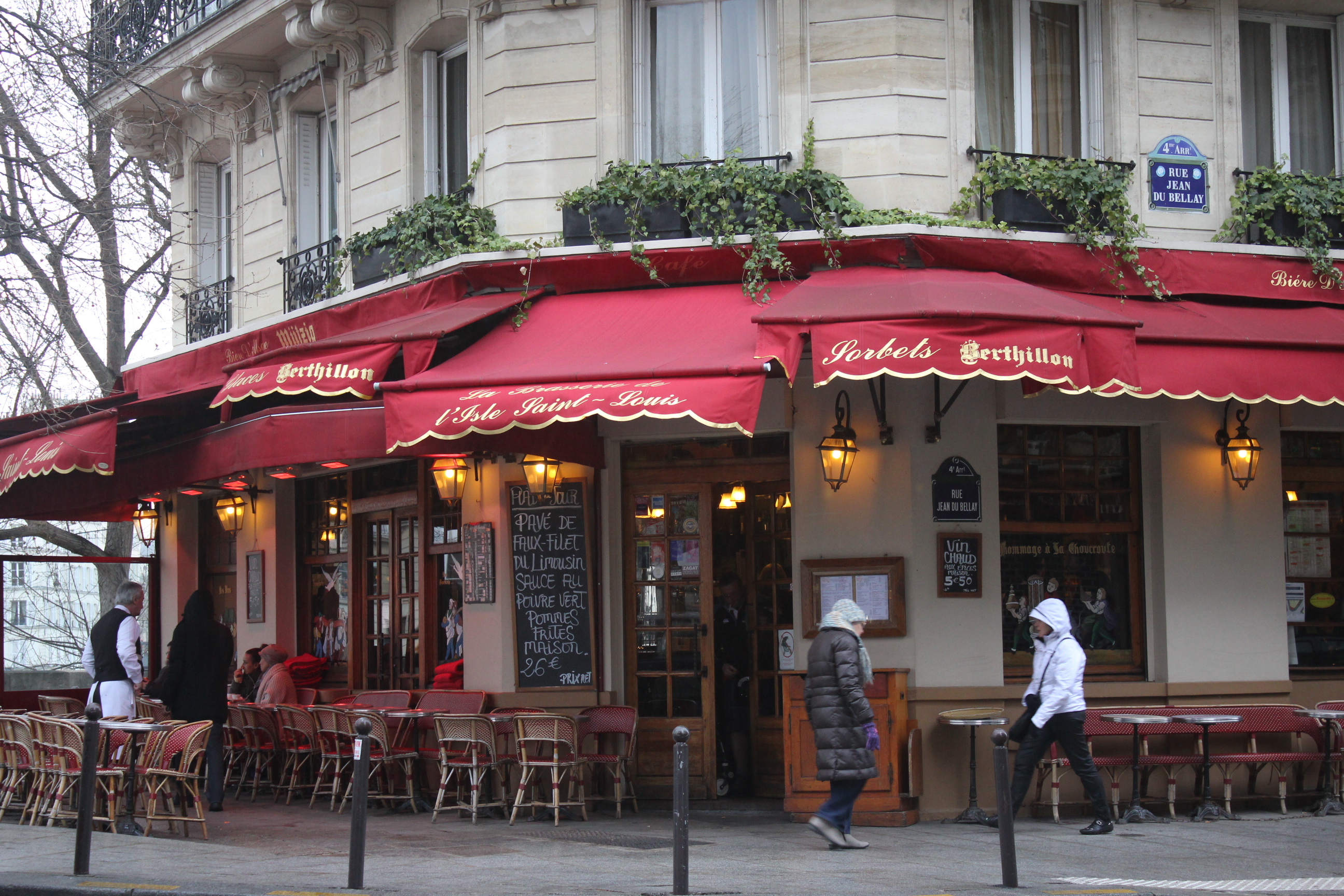
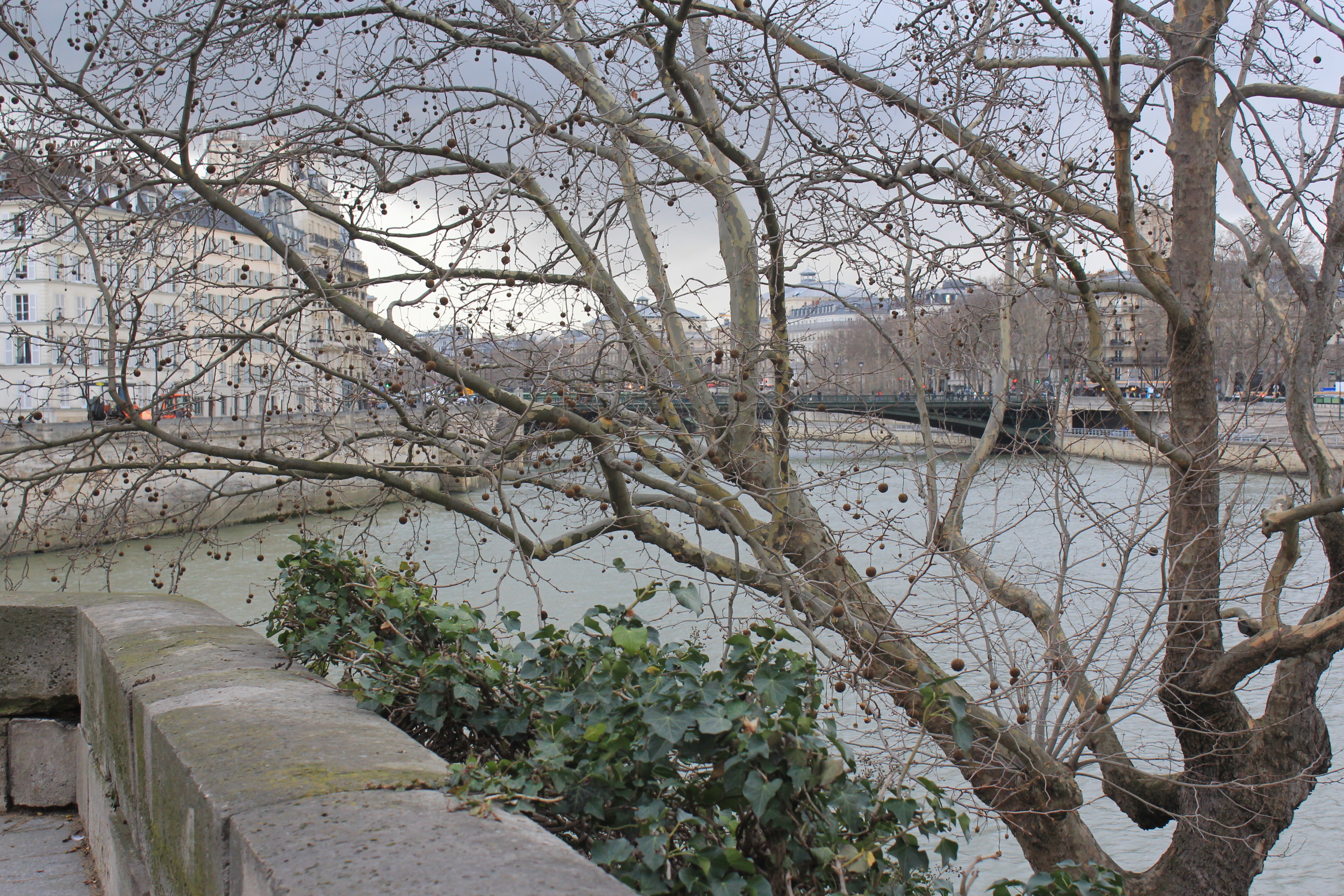
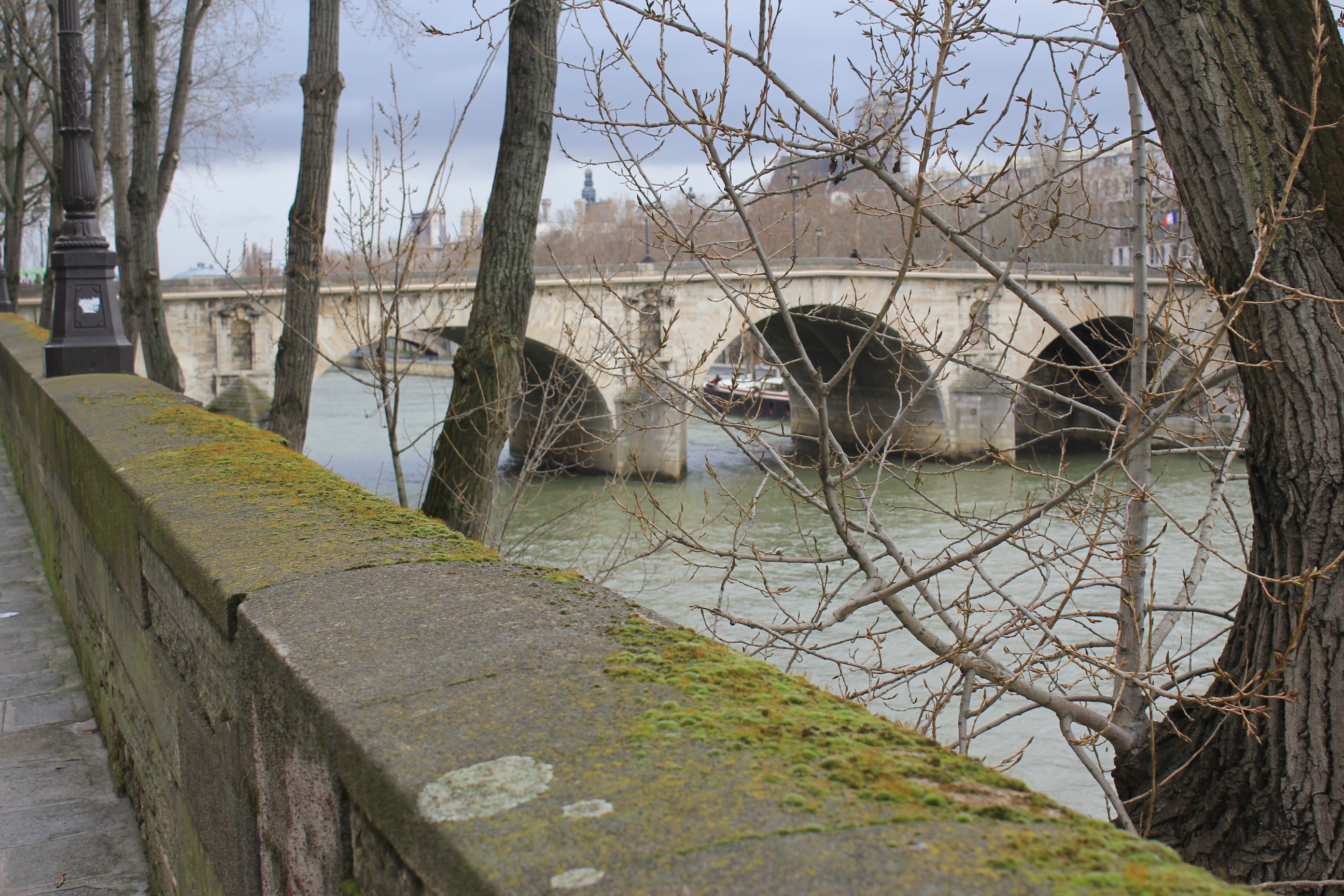
L’Île Saint-Louis and le Marais
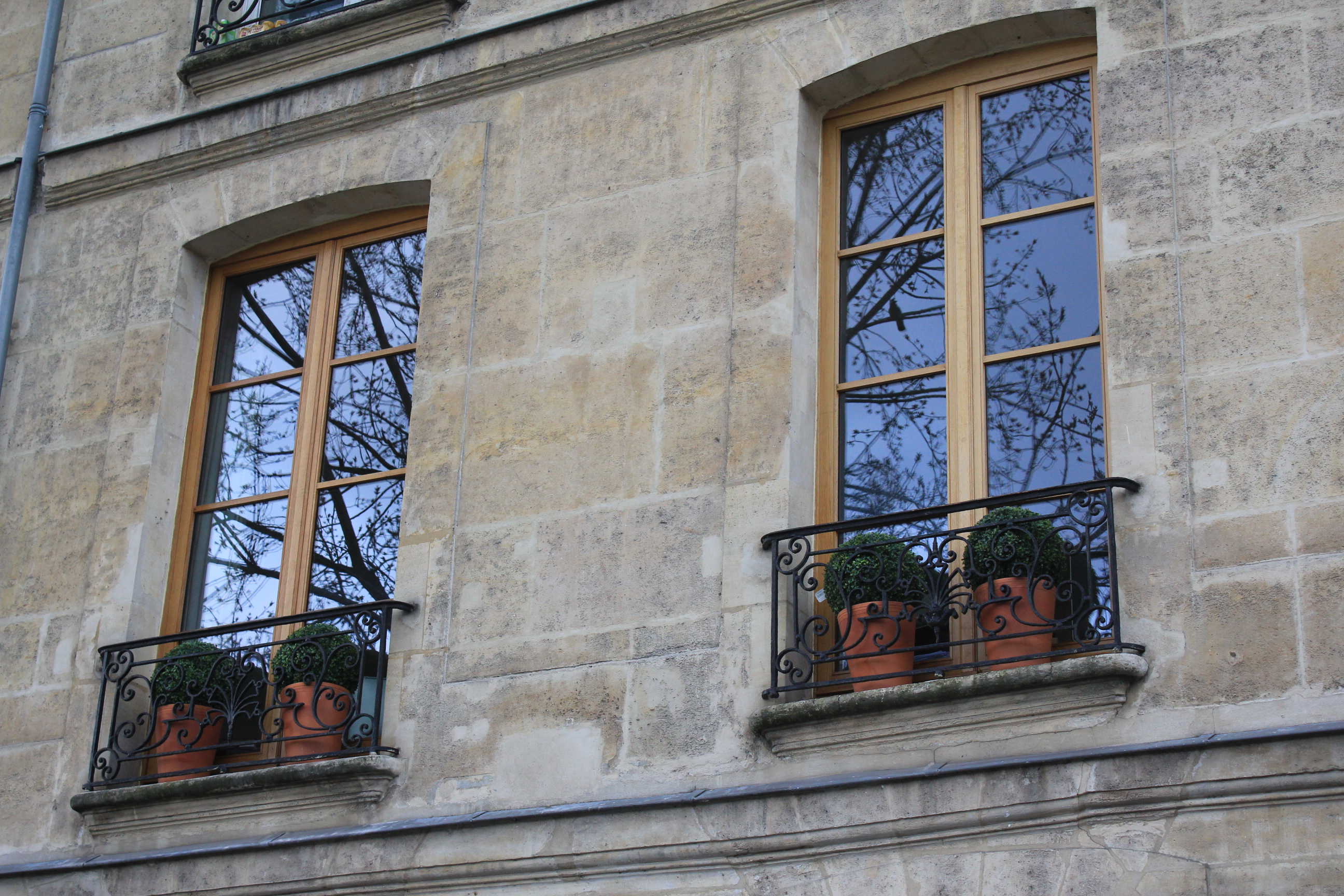
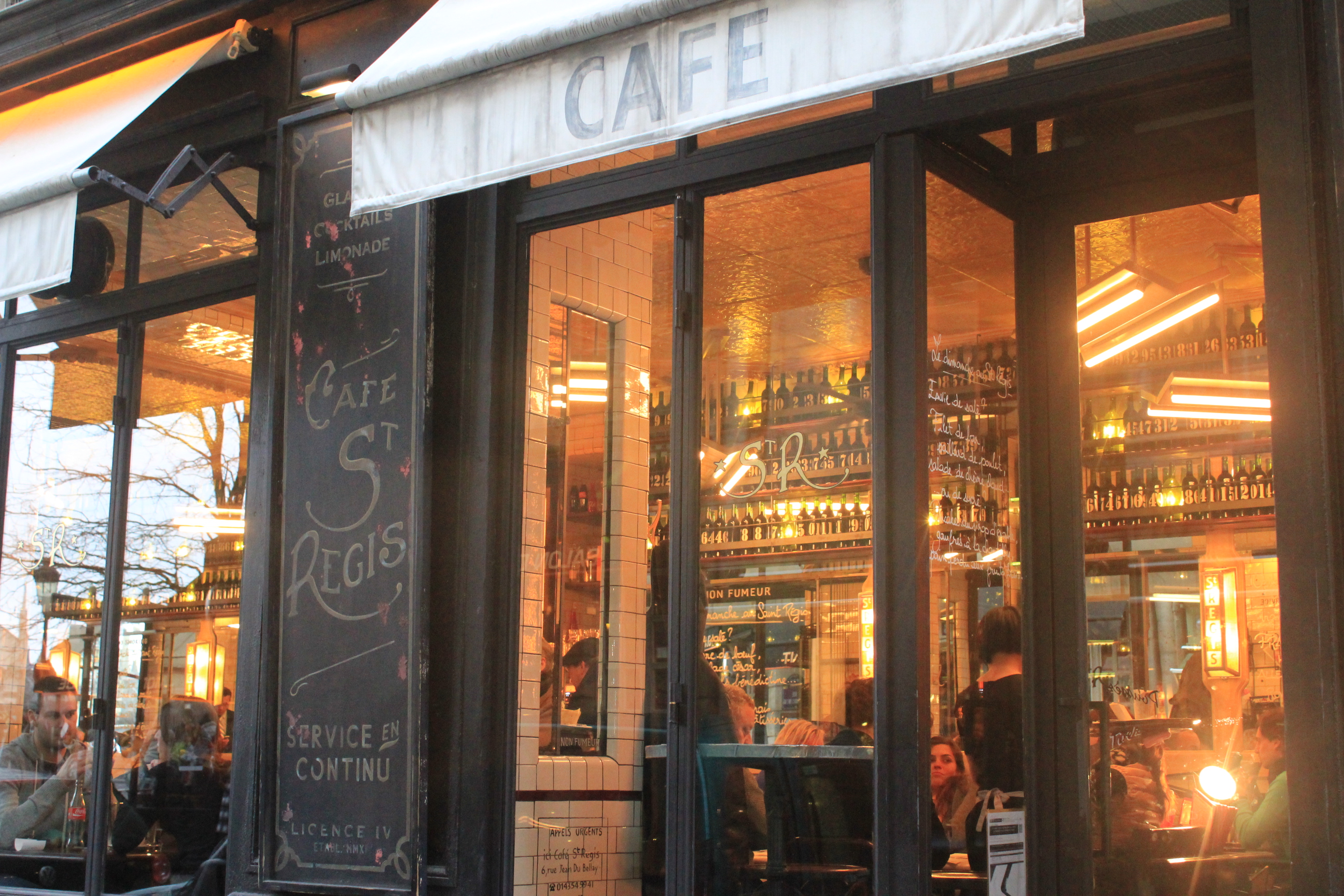
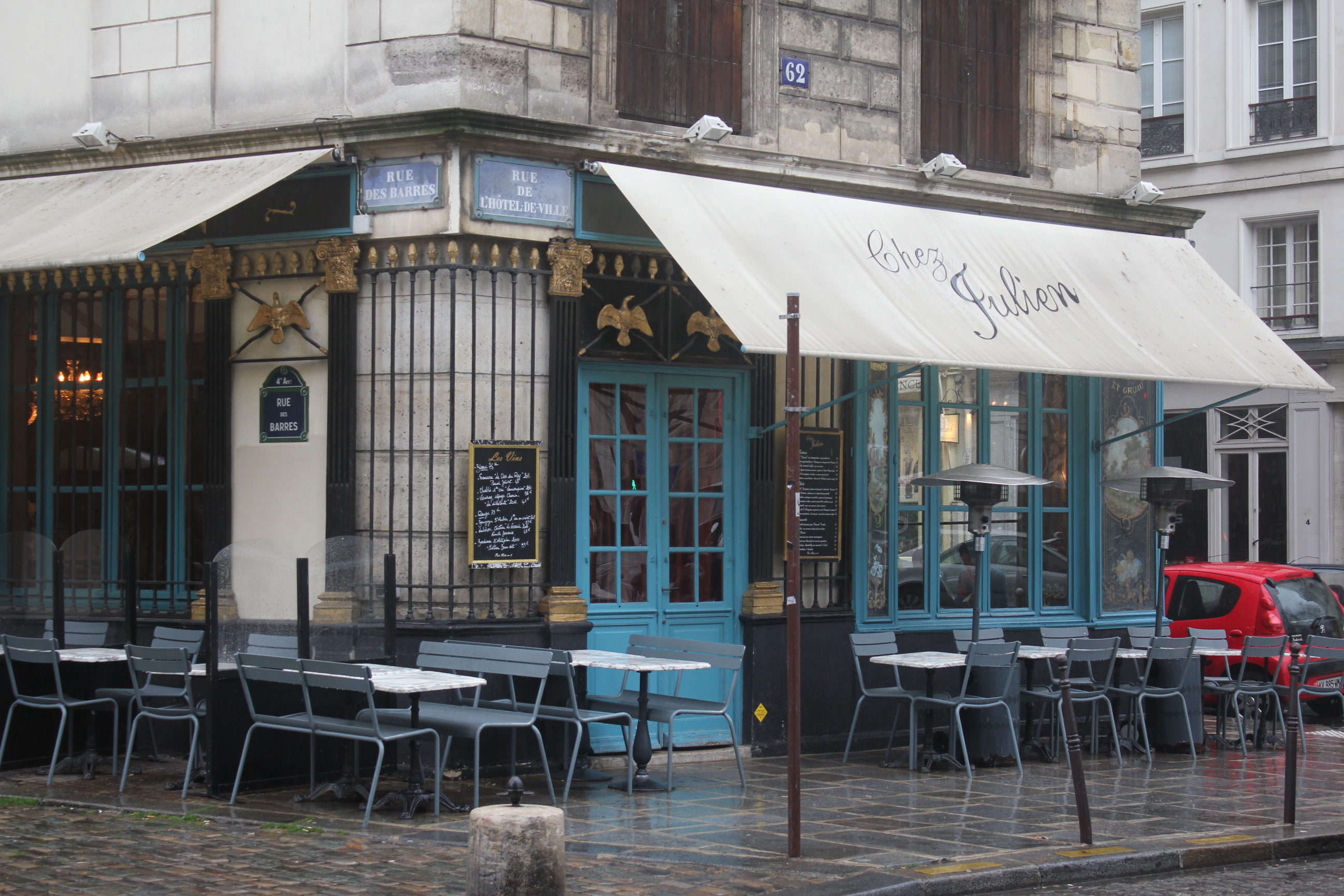
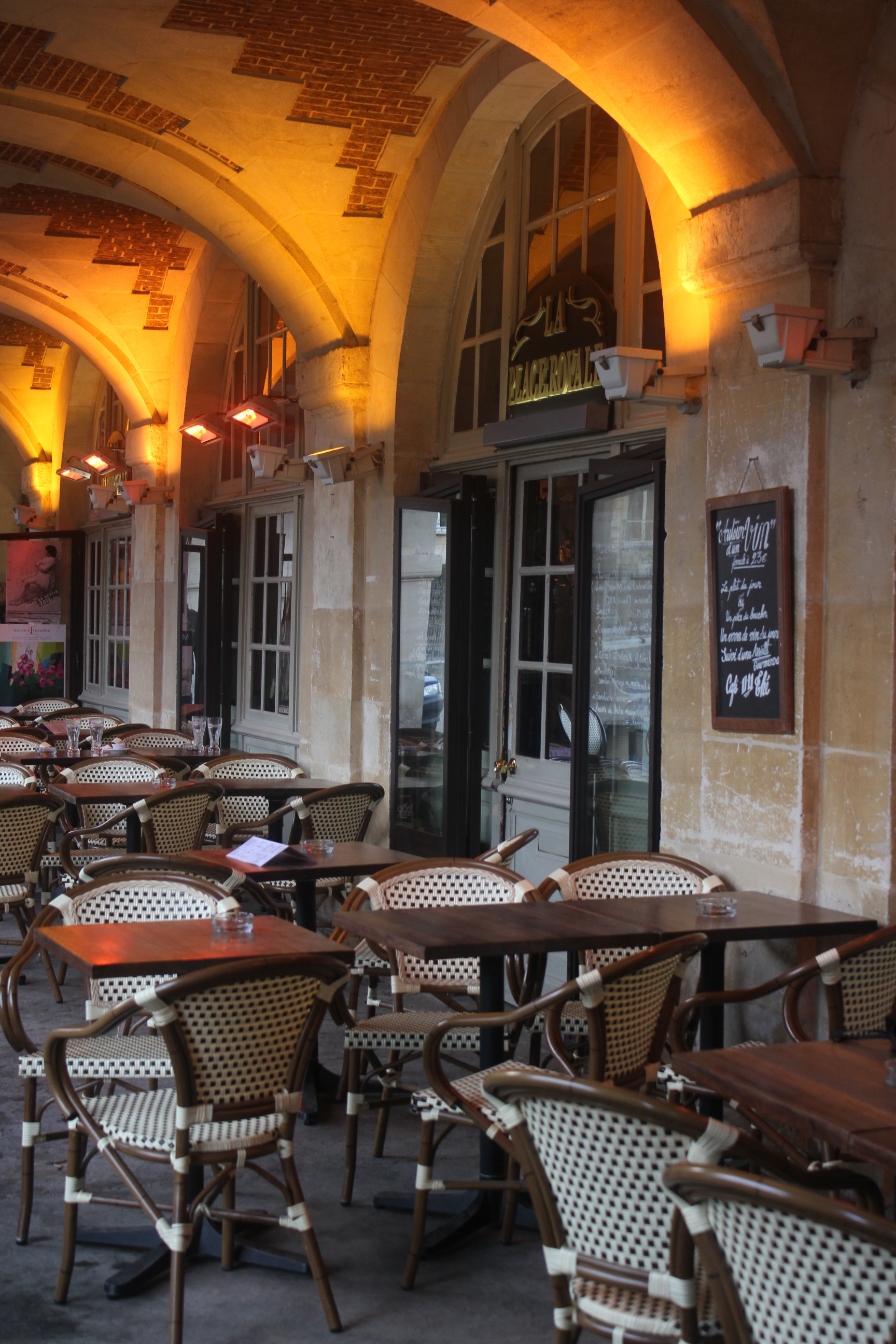
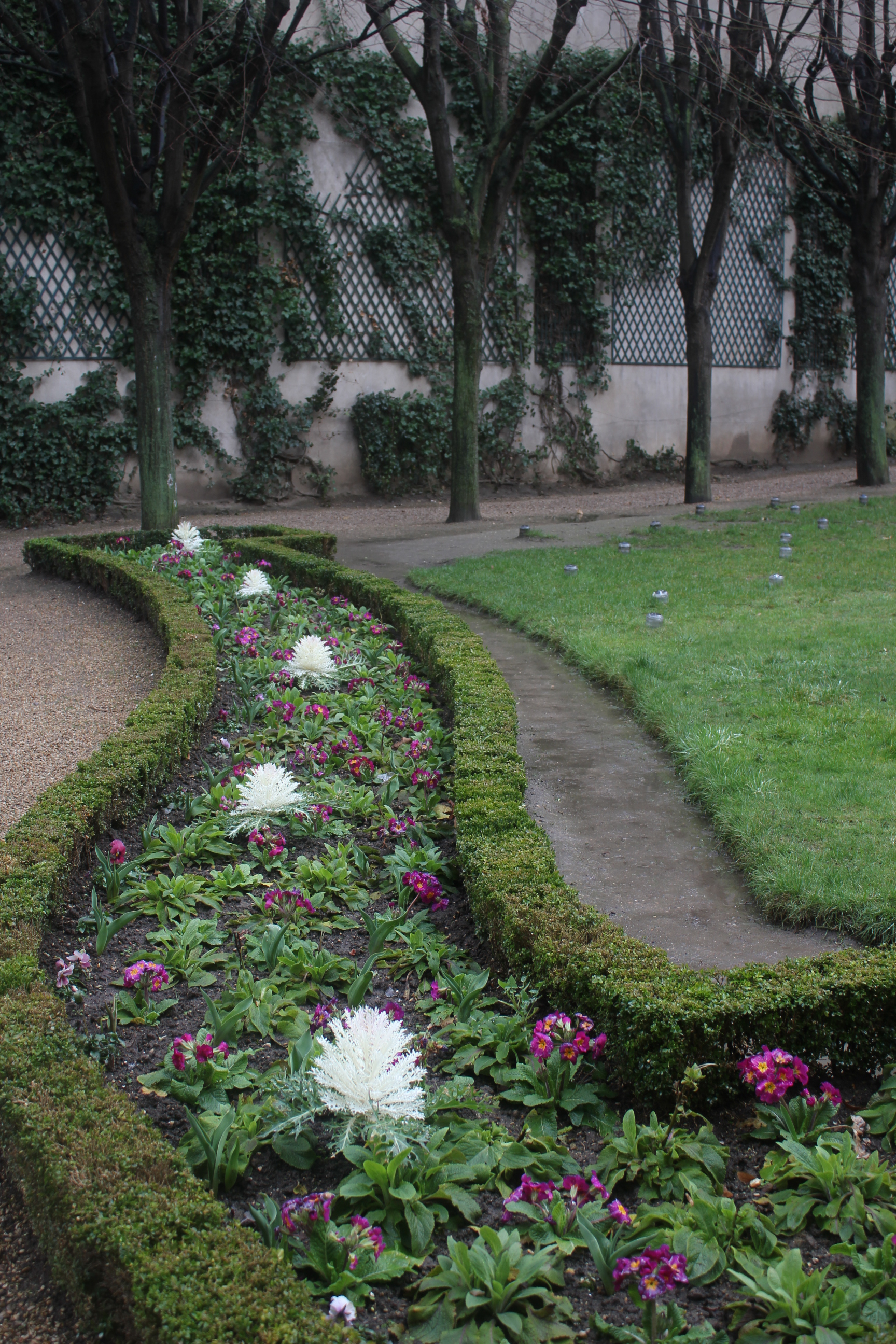
Le Marais and la Place des Vosges

L’Île Saint-Louis and le Marais
Le Marais and la Place des Vosges
 There are many superb old-fashioned cafes in Paris that I like going to especially with friends visiting Paris. As a bonus, I get to play tourist, too. During these last two days, I have been to Le Petit Marcel near the Pompidou Centre, Cafe de la Mairie near the Eglise Saint-Sulpice and La Palette in the Saint-Germain-des-Prés.
La Palette, like many other similar cafes, was frequented by Picasso and Hemingway, amongst other famous names. When we walked in, the lunch hour was just ending and the waiters were getting ready for their own lunch pause. The snow was falling outside but inside the paintings and their yellow and orange colors warmed us up. Large mirrors on all walls were very scratched. There was a charismatic-looking American couple and us. It was an odd hour for an apéritif, but that is all we felt like having, so deux kir s’il vous plaît Monsieur!

After my last blog writing, my husband asked me if I am ever going to write about anything else but food… So, here you go, I will write about Finland and carpets, inspired by today’s snow fall  which still continues in Paris.
In Finland we have a tradition with carpets in winter. Maybe people in other countries do it too, but since I am originally from Finland, I talk about Finland now. When temperature falls, we take carpets to the balcony because the cold weather cleans them, kills the bacteria. My parents actually throw carpets outside and leave them rest on the snow. I can still remember that particular fresh, cold odor of carpets when they were brought inside. (ok, you may find this weird, but please continue reading)
So, every winter in Paris I eagerly wait for the cold that allows me to practice this tradition I learned in Finland. Over my years in P aris, I have also learned not to say it aloud because the city is not equipped for the snow and cold weather and wishing for cold weather is considered almost comparable to wishing for bad luck… But I keep observing the weather forecast, hoping the temperature to drop below zero at least once a year… It is my little secret.
This said, it is happening today! I woke up and learned that it may drop even to minus 6 during the early hours of  Wednesday. So this morning, after learning about the opportunity, I took every single carpet to the balcony. They are still there, getting a special snow and cold treatment. Everyone is happy.
PS For those interested to know, the first carpet comes from Istanbul, one of my favorite cities in the world. The second fragment comes Kyrgyzstan and we use it currently on the sofa. The third carpet comes from Istanbul, too. The last one is also a fragment and I purchased it in Baku, Azerbaijan (another fascinating city!).
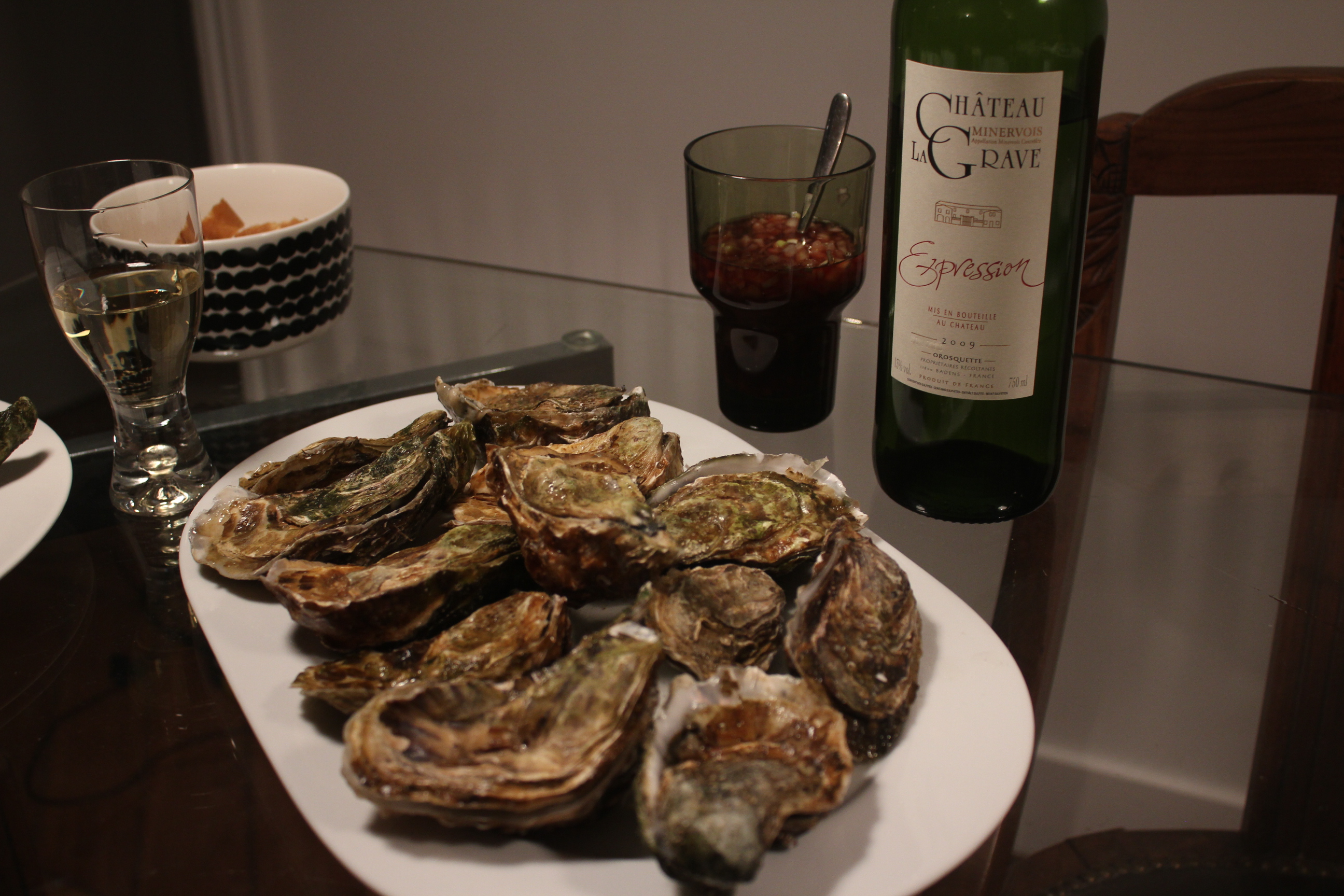
Something that I missed a lot while in Southeast Asia is oysters. Amongst many other benefits, raw oysters are one of the best sources of zinc and I just love the iodine-rich sea water taste. In my opinion, they are best eaten nature, and at most with vinaigre aux échalotes. No t forgetting bread and salted butter, and a bottle of white wine, of course! These oysters come from the Oléron Island, which is France’s second biggest island after Corsica, located off the Atlantic coast roughly speaking between Bretagne and Bordeaux.
To complete the meal, we had chosen three different cheese: Bethmale from the Pyrenees, Manchego from Spain and Ossau Iraty from the Basque country. A perfectly happy marriage between France and Spain and the region in between!
Our local caviste in the 15th arrondissement had suggested an excellent bottle of white wine to go with the oysters: Chateau la Grave ‘Expression’ Minervois 2009 (http://www.chateau-la-grave.net/wines/expression-blanc.html). For the cheese, we had bought Buzet Les Prieurs de Fonclaire 2010 (http://www.nouvelle-epicerie.fr/fr/sud-ouest-provence/5201-buzet-les-pieurs-de-fonclaire-2010-rouge.html). Both bottles cost less than 10€ and far exceeded our expectations.
If you have been following my blog, you know that I rank the national dish of Laos, laap (also called larb) very high on the list of world’s best dishes. To show one more time my admiration for laap, here is one more photo of it. This photo was taken at a restaurant called Boat Bar Restaurant on the main street in Luang Prabang, Laos. Yummy! Should you want to to make it yourself, see my previous post for the recipe (Cooking class in Luang Prabang).
.
My first contact to Laotian food took place in Paris many years ago, at a restaurant called Rouammit in the 13th arrondissement. The same owners nowadays have three restaurants on the same street and since they opened Lao Lane Xang 2, we have been going to this one (http://www.viamichelin.com/web/Restaurant/Paris_13-75013-Lao_Lane_Xang_2-233365-41102). We usually go there at least once a month and in my opinion it is one of the best restaurants in Paris, and I am not only talking about the Asian food category. Needless to say, I was excited to take a cooking class in Luang Prabang to learn more about the culinary culture in Laos. A country that has exported such an excellent restaurant to Paris must have a lot to offer, I figured! 
We chose to have our first Luang Prabang lunch at Tamarind, a restaurant our friend who knows what good food means had recommended to us (http://www.tamarindlaos.com/). The lunch was so tasty that I had no more hesitations about where to do my cooking class, so I booked myself into a one-day cooking class for the next Saturday (classes fill up fast, so book in advance by email!).
Just before 9 o’clock on a Saturday morning everyone met at Tamarind, from where we were taken to a market to learn about the local ingredients. From the market we moved to a beautiful, green setting a bit outside the town, where the culinary secrets were about to be revealed to us.
We started preparing Jeow Mak Keua (eggplant dip). The fact that the ingredients (egg plant, onion, garlic and chillies) were grilled on an open fire gave the dip a smoky taste, and the peeling easier. (The moist should come out while the eggplant is being grilled, so don’t forget to puncture it beforehand!) After peeling these grilled ingredients I pounded them together with coriander, salt and fish sauce in a mortar (a stone bowl). When the paste became soft, our breakfast was ready: apparently Laotians like to eat sticky rice with this dip! So, the next time you fancy a break from your daily croissant or cereal, you know what to do… and you may even not need coffee to wake you up afterward!
The next dish we prepared is called Mok Pa (fish steamed in banana leave). In Cambodia it is called amok, and I have seen t his dish (with different name variations) in almost all Southeast Asian restaurants I have been to.
In a mortar I pounded 1 teaspoon of sticky rice powder, 3 shallots, 1 spring onion, 1 kaffir leave, 2 chillies, 5 thin slices of lemongrass, a bunch of dill and basil, plus a pinch of salt. A generous amount of fish sauce helped the pounding. The next step was to place banana leaves on a fire for few seconds (it makes them softer and more flexible to work with). I then cut the fish into rather large chunks and mixed them with the paste. Lastly, I placed the fish chunks on the banana leaves and folded and tied the leaves (use toothpick to close your banana leaf packages). These packages were then steamed. The next time my father says he has caught too much fish and doesn’t know what to do with the quantity, I tell him to surprise my mother with Mok Pa.
One of the highlights of our lunch at Tamarind a few days earlier had been Oua Si Khai (stuffed lemongrass) so I was pleased to hear it was part of our cooking class program. A s with the previous dish, we started with the mortar and pestle: pound 2 cloves of chopped garlic, 4-5 chopped spring onions, coriander to your taste, 2 kaffir leaves and salt (apparently the blender won’t release the flavors as well as the mortar and pestle). I chose to stuff my lemongrass with chicken and added the minced chicken meat to the paste, but only the imagination is your limit (try fish, shrimps, beef, tofu, vegetables, etc).
Before I could stuff the lemongrass with the chicken paste, I had the most difficult task to accomplish: cut the lemongrass! Actually I will copy paste the instructions from Tamarind, Restaurant & Cooking School, Exploring Lao Cuisine leaflet we were given in the end of our class, as t he cutting technique is quite challenging. “Using a sharp knife, and starting about 1cm from the base of the lemongrass, make a cut right through the stalk for about 4-5 cm, ensuring that both ends of the stalk remain intact, as these ends hold the filling in place. Rotate the lemongrass stalk a quarter turn and repeat. This will give a central hole or cage to hold the filling.”
I managed the cutting part quite ok and after one missed attempt, the chicken paste entered the lemongrass rather neatly. Before I could fry my oua si khai, I dipped them in beaten egg. I asked the chef why we cannot add the egg directly to the chicken paste, but he said the stuffing part will become very slippery (maybe I will try it anyhow one day).
I would definitely like to prepare stuffed lemongrass in Paris, too, but my only concern is where to find such large lemongrass?
While our stuffed lemongrasses were left to cook in the frying oil, we moved onto the last dish: laap. I cannot over emphasize my love for laap (sometimes also written larb) –it is one of my favorite dishes in the entire world. This minced meat (or fish) salad, a national dish of Laos, has several variations, but one of the most common variation comes with beef. We followed the tradition and started putting ingredients together in a bowl.


First we put together everything that you can see on the left-side board (minced beef meat, sticky rice powder, chilli powder, salt and fish sauce) and cooked it on a frying pan during few minutes. Secondly and separately, we finely chopped and mixed garlic, shallot, lemongrass, galangal (Lao tian ginger), chillies, (Chinese) long bean, mint, saw tooth, coriander, banana flower and spring onion (the right-hand board). In the end I added beansprouts and lime juice. For the adventurous ones, there was beef bile duct juice to make it more Laotian. In the end I only had to mix the ingredients of these two bowls, place the laap on salad leaves, and voila, my very first laap was ready!
It was around 2 o’clock and we had made the eggplant dip and three main dishes. It was time to sit down at the table and enjoy the results of this pleasant day. I liked the crispiness of the chicken-stuffed lemongrass and I  found the laap very good and subtle, and various herbs made it taste very fresh and aromatic. Banana leaf package was intact and I was pleased with my folding skills. It was maybe the least tasty dish, but at the same time it compensated for the tanginess of the laap. And when I felt like something more pungent, I had the eggplant dip.
Overall, the day was excellent. Our chef was professional, explained with patience and took time to show cutting techniques in person when needed. Tamarind also organizes an evening course where you do one dish less and there is no market visit, but otherwise it is a convenient choice for those limited with time.
I wanted to title this post Save the Monks but that would maybe be too provocative. Eve n if it would better describe my feeling about something that is happening in Luang Prabang, Laos.
Prior to going into my personal sentiments and reasoning, let’s begin with some facts about Luang Prabang.
Luang Prabang, a Unesco Heritage Site since 1995, is an Exquisite small town, with a capital E. Unesco website introduces this former capital of Laos like this: “Luang Prabang is an outstanding example of the fusion of traditional architecture and Lao urban structures with those built by the European colonial authorities in the 19th and 20th centuries. Its unique, remarkably well-preserved townscape illustrates a key stage in the blending of these two distinct cultural traditions.” (http://whc.unesco.org/en/list/479).
It is going to be difficult for me to properly express my admiration for Luang Prabang, especially since I already nominated Vientiane the cutest capital in the world and used so many sup erlatives to describe it. So, let me just say this: I believe Luang Prabang will be the Next Big Travel Destination. I truly believe honeymooners will soon be putting together a trip which combines some precious time between Luang Prabang and Thai (or other regional) beaches. Luang Prabang is very romantic, surrounded by lush mountains and located by the Mekong River, and one can even arrive in Luang Prabang by boat.
Contrary to Vientiane where the future and the past meet and compete, Luang Prabang is a town where time has stopped. It would not be fair to stay Luang Prabang lives in the past, as it has all modern facilities any traveler would want from upscale hotels to hip bars, but there is something so old school (in a good way) there. In fact, what makes Luang Prabang so special is the wats (temples). And the monks that live in them.
32 temples remain today in Luang Prabang and according to estimates, some 2000 monks inhabit them. At least until recently, it was very common for parents to send their son to a monastery where he would receive free education and free food during few years. As everywhere in the world, the world is changing, and not every son goes to the monastery, but in Luang Prabang the time seems to move slower. Wherever you go,  you can see monks and some of them are very young (not even 10 I reckon). They seem content, composed, calm and those who looked at us, smiled. It is very uplifting to watch them: one rarely sees such inner calm in the big cities in the West.
The problem, if I may call it so, is that these monks are very charming and photogenic. I would even say cute and I don’t mean this in a patronizing or sexual way (and I certainly hope no one does!). But it is very pleasant to observe them. They transpire beauty and you become tempted to kidnap one to take home with you (half-kidding now).
In order to get a glimpse of their life without too much interference, we decided upon so me basic rules: we would try not to look at them too much, and if we did, we would try to do it from the distance. We would not approach them unless they made the first contact. If they did, it is only then when I would ask for a permission to take a photo. As you can see, I have only very few photos of their faces, and now you know why. After all, they are living an ordinary life, and I just don’t believe someone should be there all the time harassing them. I would not want that for myself…
Temples and monks are surely one of the top reasons why a tourist comes to Luang Prabang, and it was one of ours, too. And to add even more charm to all this, there is something called tak bat that Luang Prabang is also famous for. Tak bat is an ancient Buddhist ritual, where hundreds of monks walk in a line, silently of course, and  receive alms (food) from local people (usually elderly women). Normally the monks start walking around the town at 4 in the morning and finish around the sun rise.
Before we traveled to Laos, I consulted a dear friend of ours, a very cultivated, intelligent and respectful Hindu woman. Together with her husband, she is also one of the most-traveled person in the world I know. She had been to Luang Prabang one year earlier and this is what she had written to me about tak bat: “Just before sunrise, the monks from all the monasteries walk the main street asking for alms. You can buy cooked rice and dry biscuits (sold on the streets itself a bit earlier) and offer it to them. I had bought a big basket of cooked sticky rice and you put a large spoonful in each monk’s bowl as they walk past you.”
Needless to say, we were excited to wake up one morning to witness this ritual. B ut as soon as we walked into the event, we were shocked. It was still dark (after all it was 5 in the morning) but hundreds of camera flashes used by tourists made it look like a day. Tourists were literally chasing the monks, like one chases animals in a safari in Africa. The only thing missing was a guide yelling “look at this monk, run this way to take a photo”.
I felt sorry for everyone. For the monks as surely this conflicts with the monastery ideology (they are supposed to be meditating!). For the tourists as some of them obviously had no consideration. Some of the tourists placed themselves right in front of the monks (blocking their path), right at their face, to take a closed-up photo to bring home. Ok, I am going to stop here because otherwise I don’t know what I will say next, but what were those tourists thinking? Imagine yourself getting married in a church and the priest giving you his blessing, and then suddenly a tourist walks in and comes right to your face to take a photo of you without asking your per mission (and even if he did, you would certainly say no). Imagine that.
In fact every single Laos guide book talks about tak bat and they also tell you very clearly how to behave should you want to observe it or even participate in it. There are very strict rules: for example, no flash should be used, and a woman should not touch a monk and should kneel. When you walk along Luang Prabang streets you will surely see some notice boards put up by travel agencies who educate tourists about responsible traveling. What puzzles me is that most of the tourists c ome to Luang Prabang from very literate countries, but obviously their reading skills are not put into use.
(I found a blog writing that talks about this bad behavior, and I found it quite interesting to read: http://www.travelblog.org/Asia/Laos/West/Luang-Prabang/blog-479534.html).
I didn’t begin this post with Save the Monks title, but I will end it with a plea: please, do respect the local culture and don’t let your egoism to destroy this centuries-old tradition. Buy a post card (in many cases the photo will be much better than any of your amateur photos taken in dark) or take photos from distance.
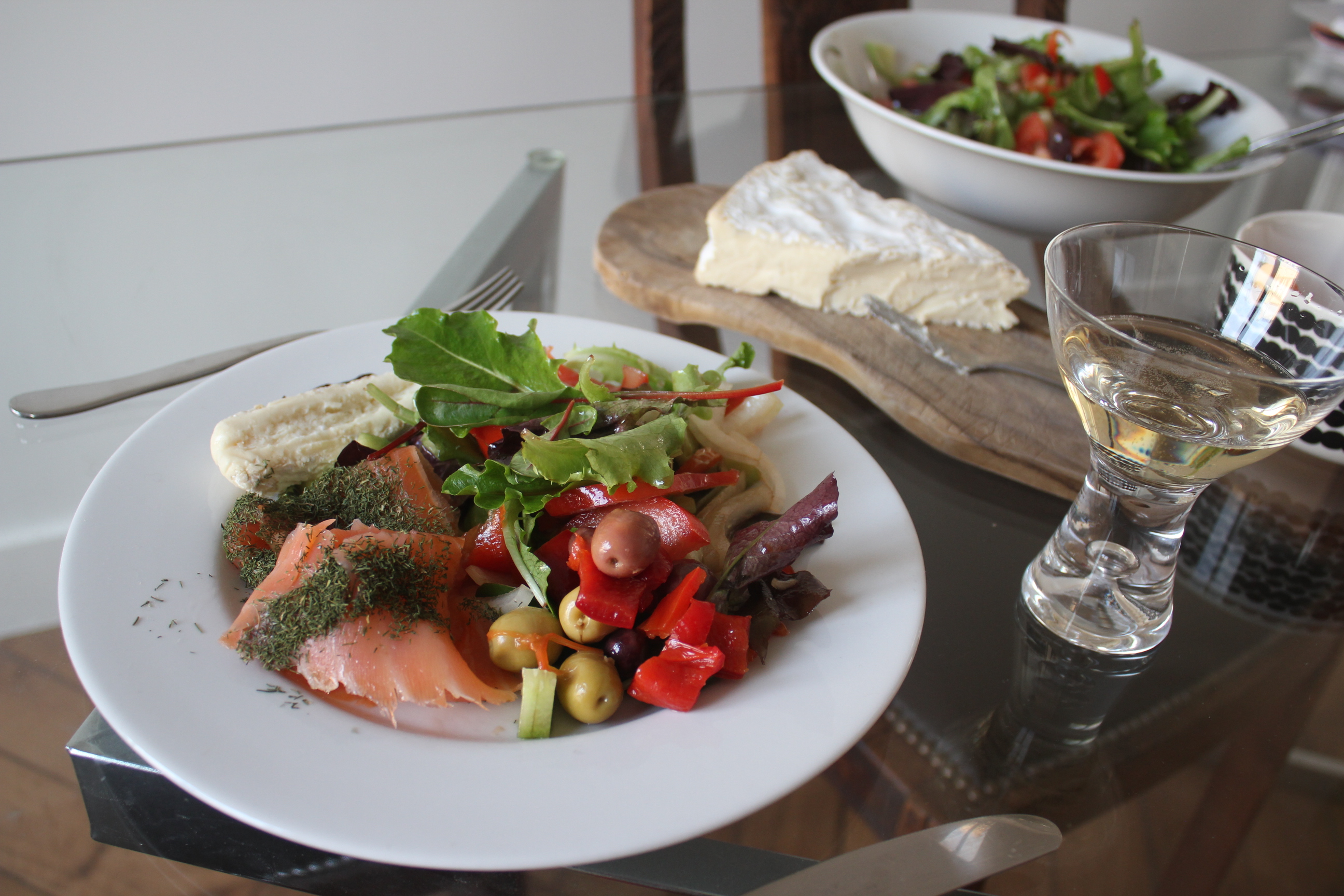 During the last 24 hours I have had many meals: a Malaysian dinner in Kuala Lumpur just before heading to the airport, a Cajun-inspired snack and a Malaysian nasi lemak breakfast on Emirates flight KUL-DXB, and an Arabic mezze breakfast and an Indian lunch on Emirates flight DXB-CDG.
When we arrived at home in Paris around 3pm this afternoon, it was dinnertime in Kuala Lumpur and the question what to eat arose… Naturally we had been eating a lot of noodles, fried rice, laap, Thai soups and salads during our just over three week stay in Southeast Asia. We asked ourselves what was it in the French (or European) cuisine that we really craved and nothing special came to our mind apart from fresh salad, French cheese and smoked salmon. Had we had a bit more energy, oysters would have been nice as well!
The plates are empty and it is now 7pm. I will probably break my all-time record, but I am going to sleep now.
PS Due to weak connection I was not able to write as much as I had planned to. This and next week there will be posts about Siem Reap, the temples (Angkor Wat etc) and the surroundings, more writing about Laos and particularly Luang Prabang (Unesco Heritage Site), something on Thailand even if I cannot call it the best part of the trip (we went to Koh Lipe), and lastly about Langkawi, Malaysia, where we stayed at an amazing boutique hotel. À bientôt until then!
You are tempted to take the bus ride from Vientiane to Luang Prabang, and have read about the beautiful scenery, but are worried about the insecurity and the poor condition of the road? Do not think twice: if you have a day to spare, do it!
 Lonely Planet (2010) still talks about the armed attacks by the Hmong insurgency that took place in 2003-2004 on the Route 13 from Vientiane to Luang Prabang, but when we bought tickets, our travel agency based in Vientiane (DD Travel) had never heard about these incidents. The French guide book Le Routard also talks about the “bad reputation” the road has and the attacks that have taken place on it.
  To be absolutely sure (or as sure as one can ever be), we ended up questioning DD Travel a lot and the only incident that he remembered included a Frenchman called Vincent, who “treated the Lao people like shit” and who owed money “all over”. An another local source confirmed that it was no surprise that “he got what he had asked for” (he was eventually killed on that road, but that was in the end of the 90s and had nothing to do with insecurity or road condition…)
 Assured, we purchased the tickets. We were asked to be in front of our hotel at 7am. A mini van came to pick us up and drove us to the Northern bus station (this took almost one hour!). After some waiting around, our rather old bus finally left at 9am. The long journey begun. There were a lot of stops and often we had no clue why. There seemed to be just one driver and he liked to smoke a lot. The road kept turning left and right, went up and then down, so maybe he needed his cigarette in order to concentrate? Once we stopped in front of a monastery to pick up two young monks.
  We had been warned about this road so much in advance that we were expecting much worse but in fact it felt quite safe. The road was quite flat during the first two hours, and the climbing up begun only around 11am. We had been advised to sit on the left hand side (when the destination is in front of you) as this way we would not see how dangerous the road is, but in our opinion it made no sense: the cliffs were all over, on both sides. Sometimes on your left, sometimes on your right. And honestly, if you have done a little bit of driving in the Alps or other mountains, you will soon realize that this road is a piece of cake. The only advise we followed was to sit close to the security exit: an easy way to get out can become handy!
 There were plenty of stops to buy water and drinks, noodle soup and fried rice (we didn’t eat as we had had a decent breakfast before taking off). One could even buy fried frog legs and dried fish… and something else we did not recognize!
 Honestly, when you hear about the insecurity on the road, I think the only thing you should be worried about is the quality of your bus. Many people we had talked to in Vientiane had said that they had a flat tire (some even twice during the same trip). It didn’t happen to us, but even if it did, it would have probably only meant an hour delay. The only thing that could worry me is the brakes, but that is something difficult to verify before you jump onto the bus… right?
 We arrived in Luang Prabang at 8.30pm, almost 12 hours after we had left Vientiane. Was it worth it? Yes, because we saw some beautiful scenery and dramatic-looking mountains. Yes, there were many stops, but we were in no hurry. Would I recommend it –yes. For 160,000 kip, the journey is worth every penny.
Updated on February 2014: I wrote this piece one year ago and it is today the most-read article of my blog. I am happy that so many people find it useful! However, I have received a lot of questions and I think it is important to clarify some points.

Lastly, other interesting articles about Laos:
PS If you are on Facebook, why not to follow Pearlspotting there too?
 I decided to label Vientiane The Sleeping Beauty, but I may have as well called it The World’s Cutest Capital. This tiny capital is very quiet and traffic jams are unheard of. Instead you hear birds and see butterflies. You see monks wondering around the temples and some tourists, mainly independent it seemed, and you are pretty much without hassle while visiting the town. My first impression on Vientiane was
 “what a cute capital”!
My second impression was that the future and the past of Laos use Vientiane as a playground. It felt and looked very Chinese and Communist. At the same time the devoted monks were seen with iPhones and other devices for listening music. It also became obvious very soon that there is plenty of money in the capital (or was it remittances sent into Vientiane by Laotians living abroad?). We saw an abundance of exp ensive four wheels and white seemed to be the color à la mode. There was at least one white-colored four-wheeled Porsche and an Englishman we met said he had seen a yellow Lamborghini! Furthermore, Russian influence was present in the streets and a cellular phone operator Beeline seemed to be advertising everywhere. But Russia was not the only country present. France had left its legacy, too, and there are many lovely and good-valued cafes in Vientiane serving all types of coffees and croissants. An interesting battle field of influences I reckon!
After a cup of Lao coffee (filtered coffee mixed with con densed milk) we started our walking tour. The itinerary we did followed the Lonely Planet “Monument to Mekong Cycling Tour” except that we did it by walking and chose a different restaurant to eat lunch at. Note: If you are interested in visiting the temples, do remember that most of them close between midday and 1pm, and close again 4pm.
  Of all wats (temples) on this route, we liked particularly Wat Ong Teu Mahawihan and Wat Si Saket. Our lunch stop was Makphet, the famous non profit restaurant run by an NGO called Friends International (http://www.friends-international.org/) and where former street youth are trained to wait and cook.
We chose two main dishes: Lemongrass Spiced Chicken, Young Bamboo & Mushroom Stir Fry and Grilled Beef Salad with Apple Eggplant & Young Lemongrass. Both were excellent, but the beef salad was divine. I find it  very interesting that they had added dill in it -dill is very much used in my home country Finland and also in the Eastern Europe and Russia, but I have not associated it with Asian dishes. Will need to do some research on the origin of dill once I get back home.
After the lunch we had two more important places to go to: we hired a tuc tuc to take us to Pha That Luang before its closing, also at 4pm. This is considered to be the most important monument in Laos and legends of the site’s origin vary (http://www.laos-guide-999.com/pha-that-luang.html). The second place we wanted to go to is Wat Si Muang (open until 7pm), where the spirit of Vientiane is supposed to reside. This temple felt very much alive and we could see people praying and asking for help. In fact there is a Buddha made of stone and locals believe that by lifting it three times from its pillow, while at the same time asking for something, your wish will come true. We saw an elderly woman doing this and the statue seemed very heavy. Outside the temple there were many stands where on could buy offerings –something you are supposed to do if your wish comes true.
For the dinner we could not resist the temptation and returned to Chokdee Cafe (read yesterday’s The Sleeping Beauty: Vientiane (part 1) to hear more about this restaurant). I still believe their duck breast laap is one of the best in the entire world! I keep looking for a better one, but in vain…
We spent two full days in Vientiane and could have stayed a bit longer. It really is a pleasant town and in my humble opinion much of its charm lies (in addition to dozens of sacred temples) in Chokdee Cafe and interesting stories you hear there (not forgetting their laap!)…
 pearlspotting