Tag Archives: religion

Religion Talks at Lal Qila

Indians love talking and meeting foreigners. Sometimes the purpose is trying to make money out of the tourist, but in most cases (at least in my experience) it is out of sincere curiosity. Where do you come from? What is your country dollar? Are you married? Where do you work? What do you think of India? Etc. Etc. Questions never end.

This morning we started by visiting Lal Qila, the famous Red Fort of Delhi. Before entering the fort, my father started talking to a young man from Jharkhand region and eventually four of us spent two hours getting to know each other while visiting the magnificent fort. There is one particular topic we discussed during our time together that I will always remember, so here you go:

Lal Qila (Red Fort)Red Fort (Lal Qila)

Friend: I am Hindu. Have you heard about it?
Me: Yes, I know a little bit about it.
Friend: Good. A big religion. And you, what is your religion?
Me: I am Christian.
Friend: What is the name of your God?
Me: ummm… The God is called the God… ummm
Friend: But what is his name?
Me: He really is just called the God…
(pause)
Me: Well, he does have a son too..
Friend: I don’t understand, your God has a name, doesn’t he?
Me: Yes, there is the God, the father, the main God, and then he has a son called Jesus. So, we have two Gods you can say.
Friend: I know Jesus! He is well known among Hindus! But is that all? Only two?
Me: ummm.. well, technically, if you are a Catholic like the French are, then you also have something called Virgin Mary…. She is kind of like a God, too. But in Finland we don’t believe in her. Not like the French do. She is not our God.
Friend: Ok… (visibly puzzled)
(pause)
Me: So, what is your Hindu God?
Friend: My God is called Bajrangbali. I am single so like all Hindu singles, I believe in him. When I get married, I can change my God.
Me: Ok, I don’t know him. But my husband believes in Hanuman.
Friend: (all happy and smiling) Hanuman and my God are the same!

***

After this conversation we moved onto another one, but that story is for the next time! I am now going to get a glass of red Grover wine from Nandi Hills and eat some tandoori chicken. Adios and be well everyone.


Return to Delhi

Delhi is much cleaner than it was in 2008. Have not even seen any cows yet (monkeys yes). People are as friendly as I remembered.

Waiting for the 5 o’clock prayers to stop at Jama Masjid. Air is thick, feels like a sandstorm is approaching us. Prayers end, we walk in. The huge, orange sun sets, the rain begins. Tomorrow is an other day.Jama Masjid


.

Jaisalmer: revisiting the Silk Road

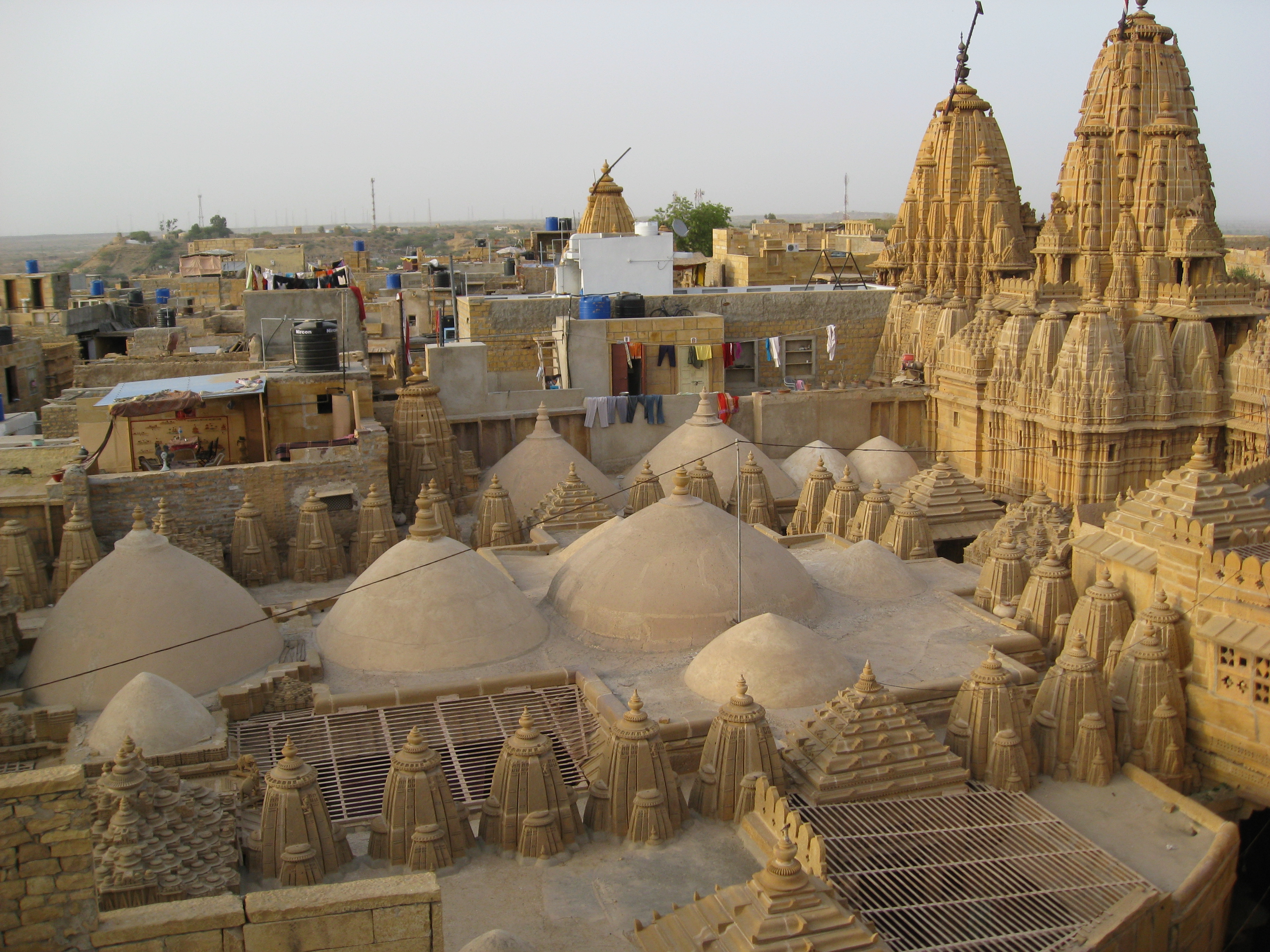
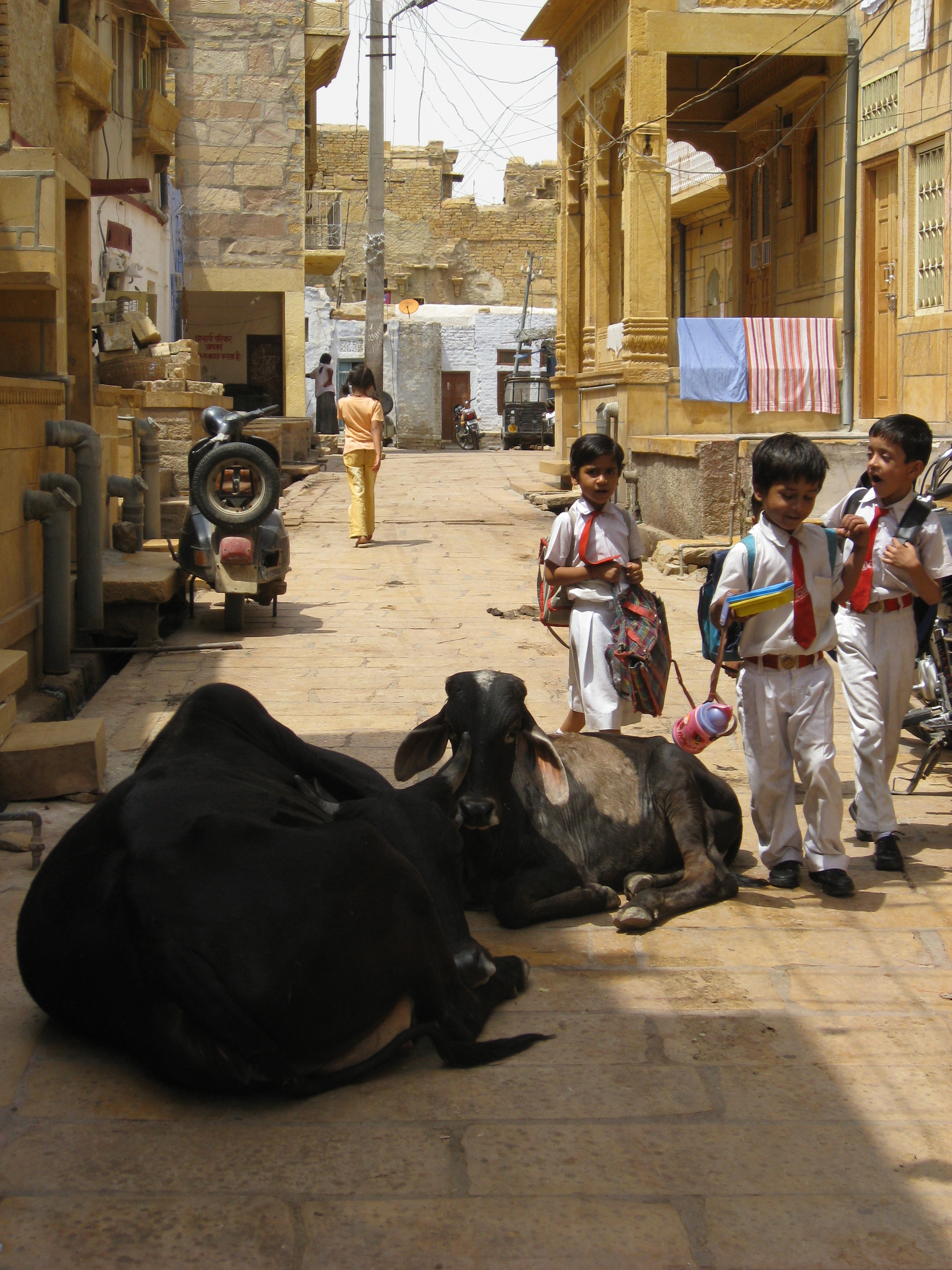
Jaisalmer is magical and outstanding, not least because it was built by yellow sandstone that has given it its nickname The Golden City. Even if Jaisalmer did not make it to my India: Top 10 places to visit, it is one of my favorite places in India.Jaisalmer The Golden CityJaisalmerSoon after its creation in the 12th century, Jaisalmer became an important trade center along the Silk Road. Tons of silk, opium and spices passed through Jaisalmer throughout the centuries. Today, it attracts visitors mainly for three reasons: 1) the location (in the middle of the stunning Thar Desert; great for desert and camel safaris) 2) Jaisalmer fort (India’s last remaining living fort) and 3) architecture (exquisite havelis and elaborate Jain temples). JaisalmerThe Jain temples, constructed between 12th and the 16th centuries, were indeed very impressive. Some 11th century manuscripts written on palm leaves are kept in the temple complex, too. Tip: be aware of the odd opening hours if you are interested in visiting the temples!Jaisalmer Jain temples Jaisalmer Jain templeWe spent two nights in Jaisalmer and loved the fort as well as the city outside the fort. Most of our time was used in walking along the ramparts and tiny streets inside the fort. It felt quite magical and amazing to witness locals, tourists and cows mixing so peacefully. The fort of Jaisalmer reminded me of another fortified city called Bukhara in Uzbekistan, also located along the old Silk Road.JaisalmerJaisalmerEven if we spent most of the time inside the fort, we did walk to the city outside the fort to visit the famous havelis. These 19th century mansions are true pearls and so elaborately carved. Some were open for visits, some weren’t. Haveli in JaisalmerWe also made some great purchases: a bag made of camel skin (we regret of not buying more of those wonderfully handmade bags!!) and silver jewelry. Indeed, shops and bazaars were very well-equipped, making Jaisalmer a great place to buy souvenirs. After all, who wouldn’t be fascinated to revisit the Silk Road trading experience…!?Jaisalmer
PRACTICAL INFORMATION: We slept at Suraj Haveli, which is a 500-year old haveli run by a friendly family. We had the Maharaja room, the biggest, and well, what can I say. It was an extraordinarily beautiful room but there were no amenities. It felt like sleeping in an abandoned house. At night we could hear haunted dogs barking. It was a full moon, the sounds were weird, and had a camel caravan arrived in front of our door, we would not have been surprised. Nothing was spooky, but it felt sort of mystical. Well, I guess authentic places feel that way for one reason: they have an old soul! (http://hotelsurajjaisalmer.webs.com/)

Secondly, the first night we ate at a random restaurant inside the fort and it was so disgusting that we left after taking the first bite. The second night we ate at Trio, outside the fort, and it was amazing. Definitely one of the best meals we had in Rajasthan! We ate at the terrace, the musicians were playing and the dinner came to less than 10€ for both of us. Wish I could relive that moment.

***

Note: This is the 18th post about our trip in Delhi, Agra, Rajasthan and Bombay in March-April 2008. Previous posts are:

Part 1. Arrival in Delhi: first impressions
Part 2. Eight cities of Delhi
Part 3. Road from Delhi to Agra
Part 4. Visiting Agra and Taj Mahal
Part 5. Fatehpur Sikri: what a pearl!
Part 6. Neemrana Fort-Palace: the magnificent 15th century palace
Part 7. Breathtaking Amber Fort
Part 8. Chaotic but charming Jaipur (part 1.)
Part 9. Chaotic but charming Jaipur (part 2.)
Part 10. Hotel Pearl Palace in Jaipur
Part 11. Samode Palace: live like a Maharaja
Part 12. Shekhawati: the Haveli Hub
Part 13. Enchanting Hotel Mandawa Haveli
Part 14. Karni Mata Temple (WARNING: includes images of rats)
Part 15. Subtle charm of Bikaner
Part 16. Bhairon Vilas: sleep like a Prime Minister
Part 17. Fort Pokaran: ideal oasis in the Thar Desert

PS Have you already joined Pearlspotting?

Subtle charm of Bikaner

One of our biggest regrets about the Rajasthan trip is that we did not spend two nights in Bikaner. Many tourists entirely skip this 15th century town, located on the old trade caravan route, and I think it is a pity. Bikaner is a pleasant oasis in the middle of the Thar desert. Thar desertAfter checking into our hotel, we hopped on to a rickshaw to visit the 15th century Jain temples in the southern part of the town. We met a friendly priest who was flying a kite and despite the lack of a common language we spent a memorable moment together. Jain temples BikanerJain temples BikanerThe walk back to the hotel took longer than we had estimated but it was enjoyable. Streets seemed to create one long bazaar of spices, kitchenware, clothes, car spare parts and textiles. We were definitely viewed as odd tourists who rarely stop by Bikaner, and locals kept looking at us from a distance with a reserved, kind smile.

As we had arrived in Bikaner quite late in the afternoon, there was no time to visit the fort, and this is what I regret. Built in the 16th century, the fort is another architectural masterpiece from the Emperor Akbar era. It is very well preserved because it has never been conquered. One day I will see it from inside.BikanerIn the end we had to catch a rickshaw because the streets never seemed to end. We were covered in dust, hungry, and ready for a luxury dinner at Laxmi Niwas Palace. After all, who would’t use the opportunity to eat where King George V and Queen Mary once enjoyed chicken tandoori and gin & topic?

During our agreeable garden dinner a rare rain storm arrived, transforming the evening very special. I could only think of those people living in the Thar desert and how happy they were. And we were happy too. The dinner, typical Rajasthani dishes, was extremely good, one of the best we had during our journey!

Afterwards we had a private tour of this majestic, glorious hotel. Everything was spectacular, including the billiards room where 15 tiger skins hanged on the wall reminded us of the old days… Laxmi Niwas Palace

So, if you are planning a trip in Rajasthan, do not limit yourself to the Golden Triangle. There is so much to see everywhere and I strongly recommend Shekhawati: the Haveli Hub and Jaisalmer, where our trip continued from Bikaner. Promise to think about it!

Laxmi Niwas Palace: http://www.laxminiwaspalace.com/

***

Note: This is the 15th post about our trip in Delhi, Agra, Rajasthan and Bombay in March-April 2008. Previous posts are:

Part 1. Arrival in Delhi: first impressions
Part 2. Eight cities of Delhi
Part 3. Road from Delhi to Agra
Part 4. Visiting Agra and Taj Mahal
Part 5. Fatehpur Sikri: what a pearl!
Part 6. Neemrana Fort-Palace: the magnificent 15th century palace
Part 7. Breathtaking Amber Fort
Part 8. Chaotic but charming Jaipur (part 1.)
Part 9. Chaotic but charming Jaipur (part 2.)
Part 10. Hotel Pearl Palace in Jaipur
Part 11. Samode Palace: live like a Maharaja
Part 12. Shekhawati: the Haveli Hub
Part 13. Enchanting Hotel Mandawa Haveli
Part 14. Karni Mata Temple (WARNING: includes images of rats)

PS Have you already joined Pearlspotting?

Karni Mata Temple (WARNING: includes images of rats)

Karni Mata Temple (the Rat Temple) is a crazy place, at least in the minds of Westerners. Adjectives used to describe it are: disgusting, horrific, creepy, surreal, shocking and dreadful. The use of these words is understandable, but like many other things in India, it is indispensable to look beyond common Western perceptions. So, follow my story but please leave your fixed beliefs behind. Accept Karni Mata as it is: a very important pilgrimage site to millions of Hindus. Karni Mata TempleThe Rat Temple was constructed in the early 20th century following Mughal style, and it is in fact a pretty temple full of marble and silver decorations. Its floor tiles are very beautiful, too.Karni Mata decorationThere are several legends about the birth of the Rat Temple. One is linked to Hindu mythology and Yama (the God of Death), who saved a stepson of Karni Mata (a female Hindu sage). Following the rescue of this child, Yama decided that Karni Mata’s  sons should all be incarnated as rats. The other legend says that 20,000 soldiers abandoned a battle nearby and escaped to the town where the Rat Temple is located. Thanks to Karni Mata’s kindness, despite the soldiers’ unforgivable act, she decided to save, turned them into rats and gave them a home.

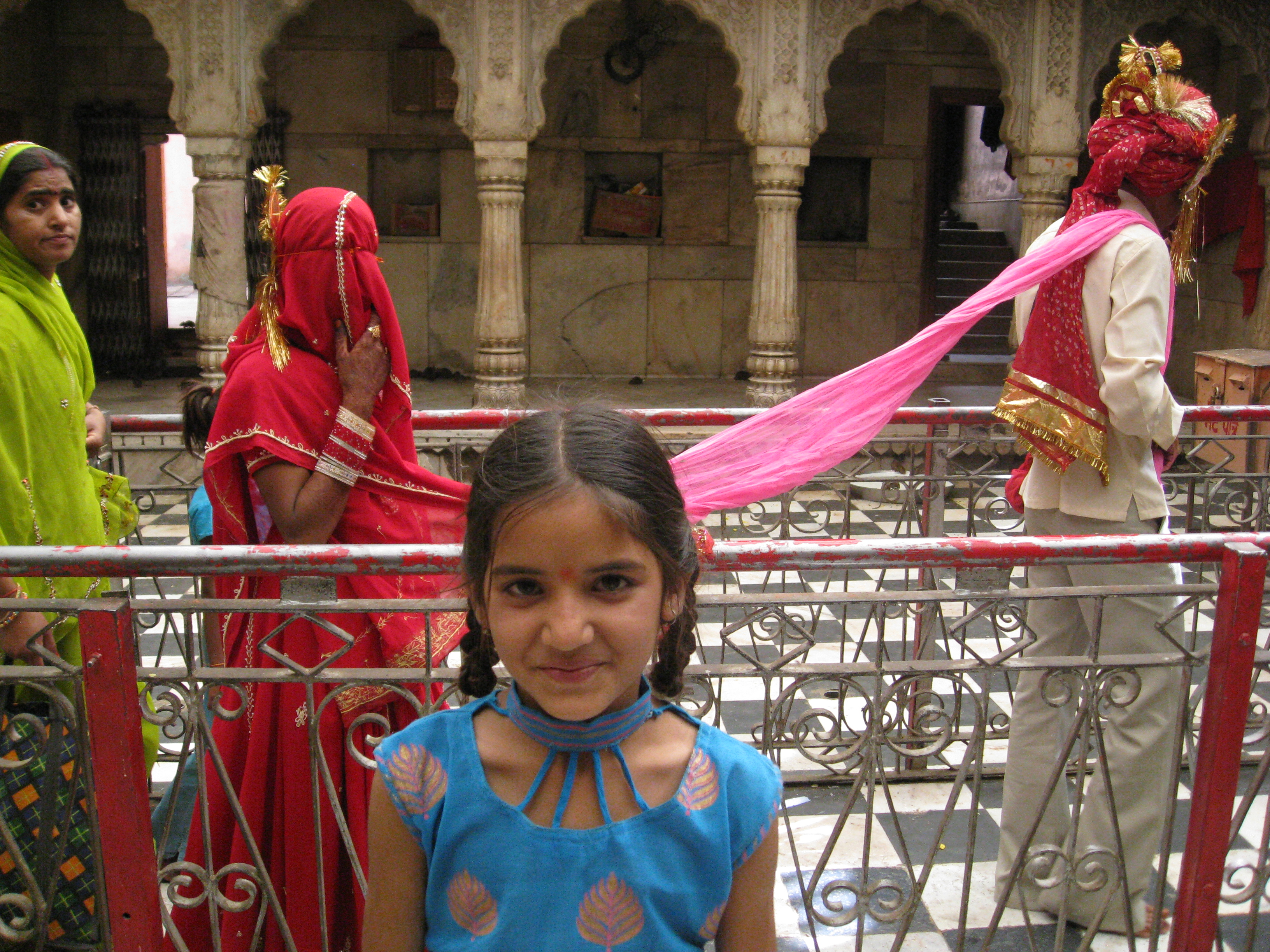
Whatever the truth is, the fact is that there are around 20,000 rats running around the Rat Temple and they seem to like. Undoubtedly it is their home now.Karni MataUpon entering the temple, my first reaction was to throw up. It is not an exaggeration to say that rats are everywhere. In fact they walk on your feet. They touch your legs. If you lied down, they would crawl on you.Karni Mata ratsAfter the initial shock we got used to the rats and wandered around observing the habits of locals. Some came to the temple for a marital blessing, some brought their babies to the priest. Everyone was –of course– very serious about the special power of the temple. Many people were making offerings to rats, either sweets or milk. Karni Mata Rat Temple weddingWe met a lot of really lovely and friendly people at the Rat Temple and spent more than an hour taking photos of each other. Some of these families had traveled from very far away to pay respect to Karni Mata and her rats. However, even if the Rat Temple is quite well-known, it seemed that the locals were as curious about us than we were about the rats! Karni Mata Needless to say, I highly recommend Karni Mata. This is the place where one’s readiness to accept the other –as he/she is– is truly tested. The Rat Temple offers a great insight into Hinduism. And if you are afraid of rats there is nothing better than overcoming your fear. I recommended you to remove your shoes (obligatory), walk inside, keep your eyes open and breath. Start walking and let this wonder of the world embrace you. You won’t regret, I promise.

PRACTICAL INFORMATION: Visiting Karni Mata depends on where you are coming from. We visited it on our way from Mandawa (Shekhawati region to Bikaner. It was extremely hot along the road (it is basically desert) and the last part of the road was very bad. You do not want to have a flat tire there. However, probably the easiest way to visit it is from Bikaner: It is only about 30 km away.

***

Note: This is the 14th post about our trip in Delhi, Agra, Rajasthan and Bombay in March-April 2008. Previous posts are:

Part 1. Arrival in Delhi: first impressions
Part 2. Eight cities of Delhi
Part 3. Road from Delhi to Agra
Part 4. Visiting Agra and Taj Mahal
Part 5. Fatehpur Sikri: what a pearl!
Part 6. Neemrana Fort-Palace: the magnificent 15th century palace
Part 7. Breathtaking Amber Fort
Part 8. Chaotic but charming Jaipur (part 1.)
Part 9. Chaotic but charming Jaipur (part 2.)
Part 10. Hotel Pearl Palace in Jaipur
Part 11. Samode Palace: live like a Maharaja
Part 12. Shekhawati: the Haveli Hub
Part 13. Enchanting Hotel Mandawa Haveli

PS Have you already joined Pearlspotting?

Breathtaking Amber Fort

Amber Fort near Jaipur is another must thing to do while visiting Rajasthan. I know that I keep repeating myself, and I use many excessive adjectives, but this palace is a dream come true. It is spectacular. An architectural pearl and like no other palace.  Amber FortAmber Fort was built in the end of the 16th century on the ruins of an 11th century fort. Some parts were added a decade later. Style-wise it is a combination of Hindu and Mughal architecture, full of alluring ornaments, relief works, frescoes, carved doors and latticed windows. It seems that silver and marble were the favorite materials of Maharaja Man Singh, who ordered the construction of the citadel. Amber FortAmber FortAmber FortWe found Amber Fort rather calm. There were less people than in other touristic sites and they were mainly locals who were very friendly and curious. The security guards were very eager to practice English with us, and even gave us a private tour in one of the underground caves. What an adventure! It was definitely one of those moments when the rich history of India felt very vivid, allowing us to time travel to the era of Emperor Akbar. Indian tourists at Amber Fort

Some practical information: We left Neemrana Fort-Palace: the magnificent 15th century palace at 2 pm and it gave us plenty of time to arrive at Amber Fort by 4 pm. However, do check the opening times prior to your arrival!

It took us about 2.5 hours to visit the citadel, and as you could notice from my photos, most of out time was devoted to taking pictures of and with local tourists. Indians LOVE to have a picture taken with you!

If you are driving directly from Delhi to Jaipur, it is totally feasible to leave the capital in the morning and visit the fort in the afternoon.

Alternatively, as many tourists do, make a morning or afternoon trip from Jaipur. After all, the distance is only 11 km and even a rickshaw can do this.

This is the seventh post about our trip in Delhi, Agra, Rajasthan and Bombay in March-April 2008. Previous posts are:
Part 1. Arrival in Delhi: first impressions
Part 2. Eight cities of Delhi
Part 3. Road from Delhi to Agra
Part 4. Visiting Agra and Taj Mahal
Part 5. Fatehpur Sikri: what a pearl!
Part 6. Neemrana Fort-Palace: the magnificent 15th century palace

PS Have you already joined Pearlspotting?

Fatehpur Sikri: what a pearl!

Fatehpur Sikri is located only 40 km from Agra and should be on everyone’s What To Visit list. Very different from the nearby Taj Mahal, Fatehpur Sikri is considered to be one of the finest examples of Mughal architecture. One more time, I repeat myself; do not miss this fantastic, abandoned red sandstone town!Fatehpur SikriFatehpur Sikri was constructed by the order of Emperor Akbar in honor of the famous Sufi saint called Salim Chishti who predicted the birth of Akbar’s son Jahangir. The capital was moved from Agra to Fatehpur Sikri in 1571 and remained there for 14 years, until Akbar decided to move the capital to Lahore to be closer to Persian and Afghan armies. 

There weren’t many tourists during our visit, which was nice for a change. We loved admiring public and private parts of the capital, the ornaments, pools, court yards etc. It felt like a phantom town: red, haunted and mysterious. But above all, exquisite in its beauty. Fatehpur SikriFatehpur SikriFatehpur SikriWe spent around 2.5 hours visiting the imperial complex, completing the tour at 11.30 am. Even this early, the heat was almost intolerable (this was in the end of March), so as a tip, think of bringing something for your head. A hat or a scarf can become handy, especially because women and men need to cover their head while visiting Jami Masjid mosque where the tomb of Sufi saint Chishti is.Fatehpur SikriI would love to return to Fatehpur Sikri, and to me it is one of the most fascinating and beautiful sites to visit in India. I admit that I have a soft spot for the Mughal Empire period but I also think that Akbar was an extraordinary ruler whose presence can be felt in Fatehpur Sikri. Do make time to visit it if you are in Agra!

***

This is the fifth post about our trip in Delhi, Agra, Rajasthan and Bombay in March-April 2008. Previous posts are:
Part 1. Arrival in Delhi: first impressions
Part 2. Eight cities of Delhi
Part 3. Road from Delhi to Agra
Part 4. Visiting Agra and Taj Mahal

PS Have you already joined Pearlspotting?

Road from Delhi to Agra

To travel from Delhi to Agra by car, train or plane, that is the question of many visitors heading to see Taj Mahal!

The distance between Delhi and Agra is just over 230 km, but driving along the old National Highway can easily take 5 hours. When we drove to Agra in 2008 it took us eight hours with some stops… And this is with a driver who knows the road! However, thanks to the recently built Yamuna Expressway the travel time is close to three hours now. Definitely worth the toll.

We met our driver in front of our hotel and begun the journey at the dawn. Navigating out of Delhi was not as painful as I had expected, and we soon found ourselves surrounded by agricultural and industrial countryside, colorfully dressed people and some interesting monuments. road from Delhi to Agra Our first stop on the route was Mathura. This lively, religious small town used to be Buddhist until Hinduism took over in the 8th century. Today, it is known among devoted Hindus as the birthplace of Krishna. Precisely, it is in the temple of Sri Krishna Janmabhoomi were he was born, it is said. No cameras were allowed inside.Sikandra, Akbar's tombFrom Mathura we moved to Sikandra, where the Mughal Emperor Akbar the Great is buried (1555-1605). His mausoleum is a 17th century architectural masterpiece, which Akbar according to a Tartary belief started constructing during his lifetime. It is said to be a forerunner of Taj Mahal and I found it very beautiful. Sikandra, Akbar's mausoleum

I know many travelers catch a plane or a train to Agra, mainly to save time, but now that there is this new road, traveling by car becomes as interesting I reckon. Both Mathura and Sikandra are worth the stop, Mathura for religious reasons, Sikandra for architecture. Both are along the national highway, making it very convenient to visit them if you are on the highway. However, if you are traveling on the Expressway, it probably makes sense to use the fast road until Mathura, and from there until Agra use the highway. But ask your driver…

Whatever you decide, buy some water and enjoy the ride!

PS This is the third post about our trip in Delhi, Agra, Rajasthan and Bombay. Previous posts are: Part 1. Arrival in Delhi: first impressions and Part 2. Eight cities of Delhi

Eight cities of Delhi

Most tourists use Delhi only as an entry point to travel toward the Himalayas or Agra. Many say Delhi is a disgustingly dirty city with nothing to see, but this is not true. This may come as a surprise, but I believe everyone should spend at least two days exploring this historic city. Read more and see why!

We spent three nights in Delhi, and after our initial shock (see Arrival in Delhi: first impressions) it grew on us. We ate well, we visited well and the history of the world had never felt so fascinating. During our first day, which happened to be the Holi Festival, we had lunch at the historic Karim’s restaurant (ok food, nothing special) and visited the nearby 17th century Jama Masjid mosque. The view from the minaret was breathtaking.Jama Masjid, DelhiDuring our second day, we rented a car with a driver, and started the tour with the Red Fort, the fortified 17th century palace of the Mughal empire. Afterwards we visited the Jain temple across the street, which was our first-ever contact to Jainism, and Raj Ghat, the Gandhi memorial.

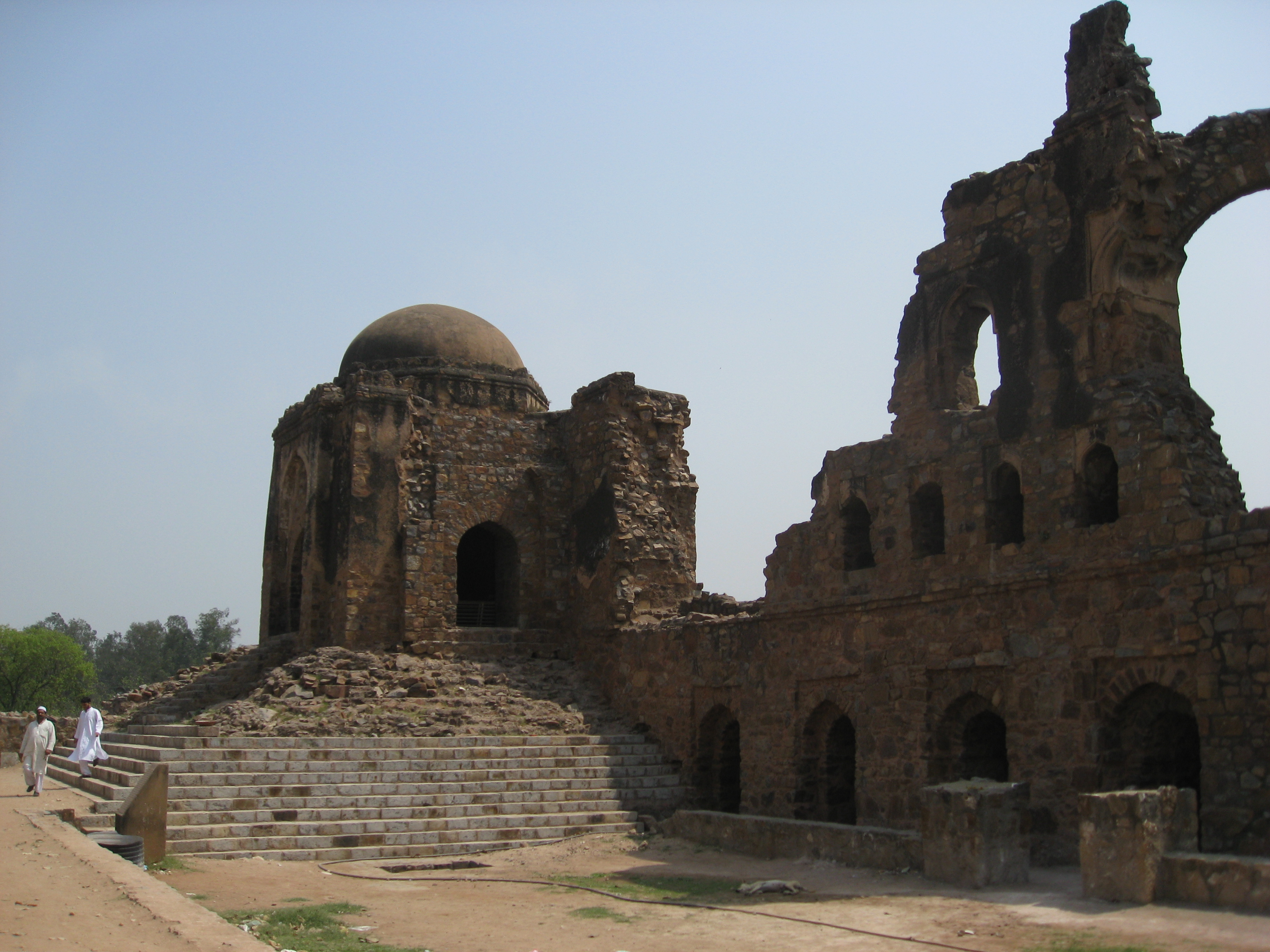
After a very pleasant lunch break at Chicken Inn (very good food), we continued toward the older sites in the southern part of Delhi. As many of you probably know, Delhi has been the capital of seven empires. Today, the ruins of these empires can be easily visited and it would be difficult for me to highlight just one, because each one of them was interesting in its own way. Firozabad, DelhiSome remaining cities reminded me of the Silk Road architecture I had seen in Uzbekistan, whereas some were pure examples of Muslim architecture. Afghan architecture was strongly present, too. To our delight, a lot had remained in a very good shape. Gutb MinarHowever, if I must mention one city to visit outside the city center, I would definitely say explore Mehrauli, the first city of Delhi, where the famous 12th century Qutb Minar is located (the one in the photo). In the same site, you can see the mysterious Iron Pillar from the 3rd or 4th century (http://wikimapia.org/7381299/Iron-pillar-of-Chandragupta-II-Vikramaditya-375%E2%80%93414-CE). Such a lovely, interesting site. We spent a lot of time here, because many Indians stopped us to be photographed with them. How cute. We felt like Bollywood stars…Mehrauli city, DelhiWe had such a fascinating day and I think Delhi completely outdid our expectations. Should I return to Delhi, I would definitely reserve one full day to revisiting all of these cities, and the ones I did not have time to see. As a tip I would suggest (like we did) renting a car especially for the visits in the southern part of the city. It can be a long way… Moreover, before you rent the car, make sure that the driver knows these cities. Everyone has probably at least heard about the Qutb Minar tower, but your driver doesn’t necessarily know the location of the other, less known cities. Ours didn’t, and he even kept insisting they don’t exist or that they aren’t worth visiting…. and to some extent he was right. At some sites we were the only people, which brings me to the last point. Visiting these southern cities can also be a nice way to get away from the hectic city center full of cars and people. Think about it and I bet you won’t be disappointed.

More information on the eight cities: http://www.delhitourism.gov.in/delhitourism/aboutus/eight_cities_delhi.jsp

PS So far, I have made three one-month long visits to India. I felt quite overwhelmed as to where to start (see e.g. India: Top 10 places to visit) but I have now made my decision. I will start unfolding my India experiences from the beginning, by posting about our first visit, which included Delhi, Agra (Taj Mahal), Rajasthan and Bombay. So, what you are reading now is the second post about this trip, and the previous one can be found here: Arrival in Delhi: first impressions. Stay tuned for more!! And don’t forget to join Pearlspotting on Facebook.

India: Top 10 places to visit

This is not your usual guide to India, which directs you to Taj Mahal, the Golden Triangle and Goa. I am not saying these places are not worth visiting -they are- but my goal is to show the richness of India by introducing diversified, less obvious places to visit. Namaste! Taj Mahal

My Top Ten of India (in alphabetical order):

1. Badami (Karnataka). Why? The capital of the Chalukya Kings during the 6th-7th centuries. Stunning cave temples dedicated to Hinduism and Jainism. Badami is also a small, pleasant and rather green town.

2. Chettinad (Tamil Nadu). Why? Chettinad is a region and its capital is Karaikudi. It is the home to Nagarathars, people renowned for their financial and banking skills, who migrated to South and Southeast Asia in the 19th and 20th century. With the money they made abroad, many splendid mansions were built in Chettinad, making the region an architectural pearl. Moreover, Chettinad is famous for its distinctive, delicious cuisine.Chettinad

3. Ellora (Maharashtra). Why? A group of rock-cut temples devoted to Hinduism, Buddhism and Jainism. A UNESCO World Heritage site. The most famous temple Kailasanatha, built in the 8th century, was carved from one rock, hence a true architectural masterpiece.

4. Hampi (Karnataka). Why? Another UNESCO World Heritage Site. The capital of the Vijayanagara empire in the 14th-17th century. Impressive Hindu temples scattered around a huge terrain. Do not miss the Elephant stables!

5. Hyderabad (Andhra Pradesh). Why? A crazy, noisy and polluted city. Closest I have been to Pakistan (what I imagine Pakistan to be like). At the same time, Hyderabad is amazing and fascinating!! The world’s Biryani capital. Excellent Biryanis.Hyderabad

6. Kannur (Kerala). Why? Not many people have heard of Kannur, but if you want to see the famous Theyyam performance-ritual, this is the town where you will be based. Theyyam is more than 2000 years old and a definite must see. (Note: I had hard time choosing between Kochi and Kannur, but chose Kannur because Theyyams are less known than Kochi)

7. Mamallapuram (Tamil Nadu). Why? Built in the 7th century by a Pallava King, Mamallapuram is an other fantastic UNESCO World Heritage site. Elements of Dravidianism, Buddhism and Hinduism. Stunning monolithic rock carvings and sculpted reliefs. For elephant lovers. Mamallapuram

8. Shekhawati (Rajasthan). Why? Located on an old trade route, Shekhawati region is another architectural pearl, full of spectacular merchants’ and industrialists’ houses. These houses are real storyboards and their frescoes tell a story of the late 19th century industrialization. Read more: Shekhawati: the Haveli Hub

9. Tirupati (Andhra Pradesh). Why? Tirupati is your base for visiting the Shri Venkateshvara Temple located in the Tirumala Hills. One of the most important Hindu pilgrimage site in India. In the league of Vatican and Mecca in the global context. Talking about the power of religion.

Udaipur10. Udaipur (Rajasthan). Why? The Venice of the East. Probably the most romantic city of India. Sleep in an old palace and you will see why.

What is your favorite place in India and for what reason? And if you haven’t yet been to India, then what would be your top three places to go to?

PS Join Pearlspotting on Facebook!