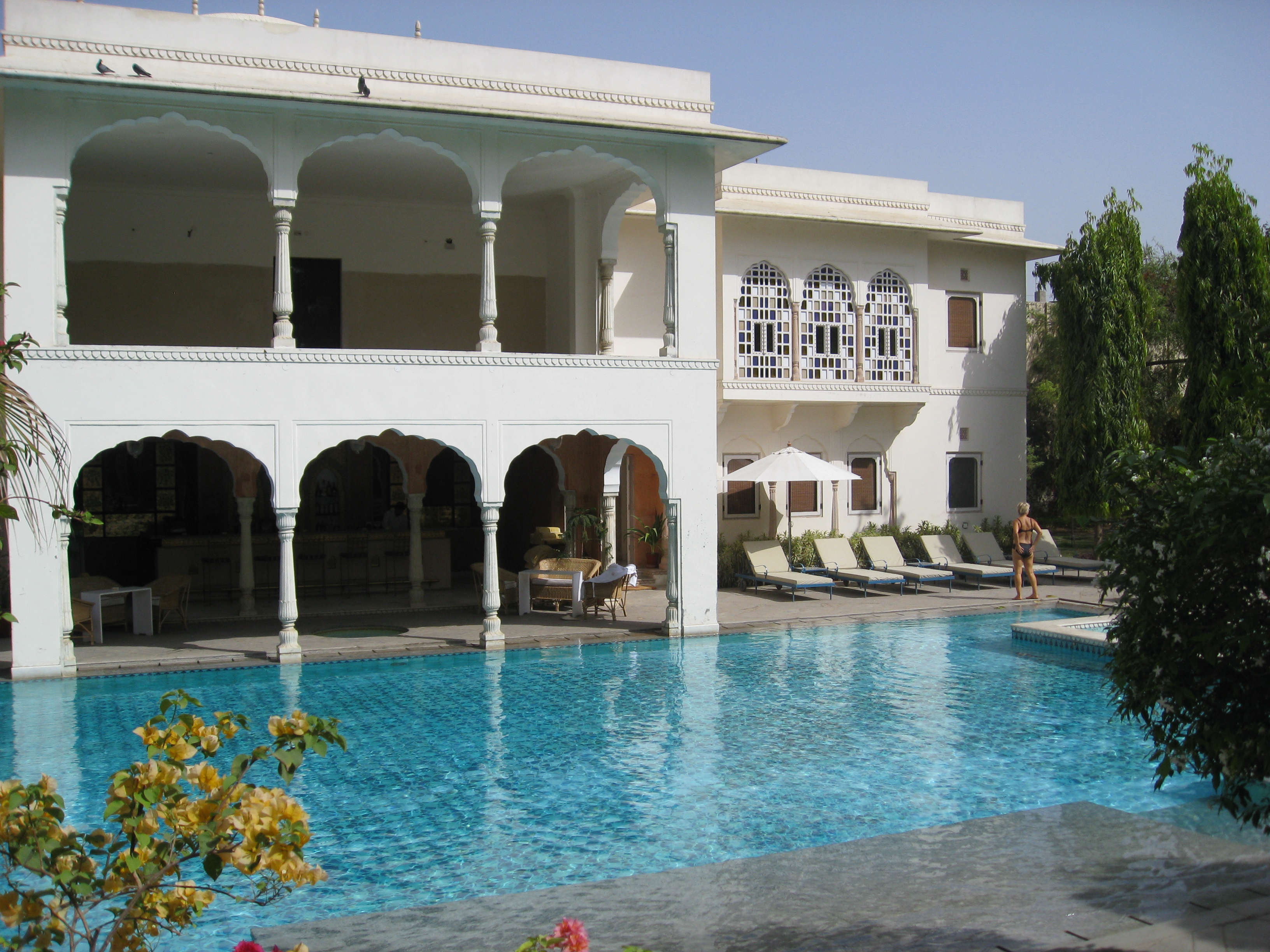
Tag Archives: Rajasthan

Jaisalmer: revisiting the Silk Road

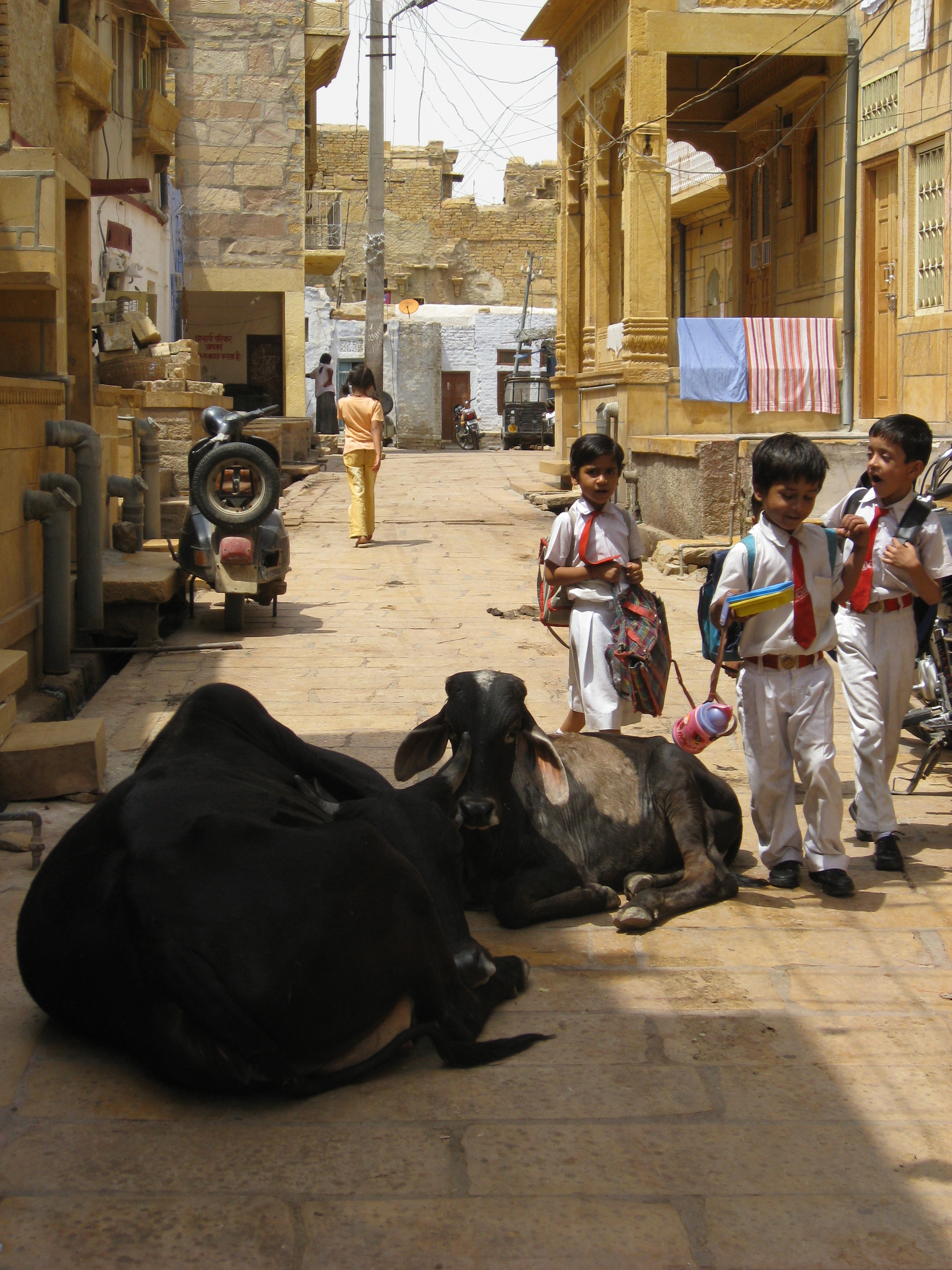
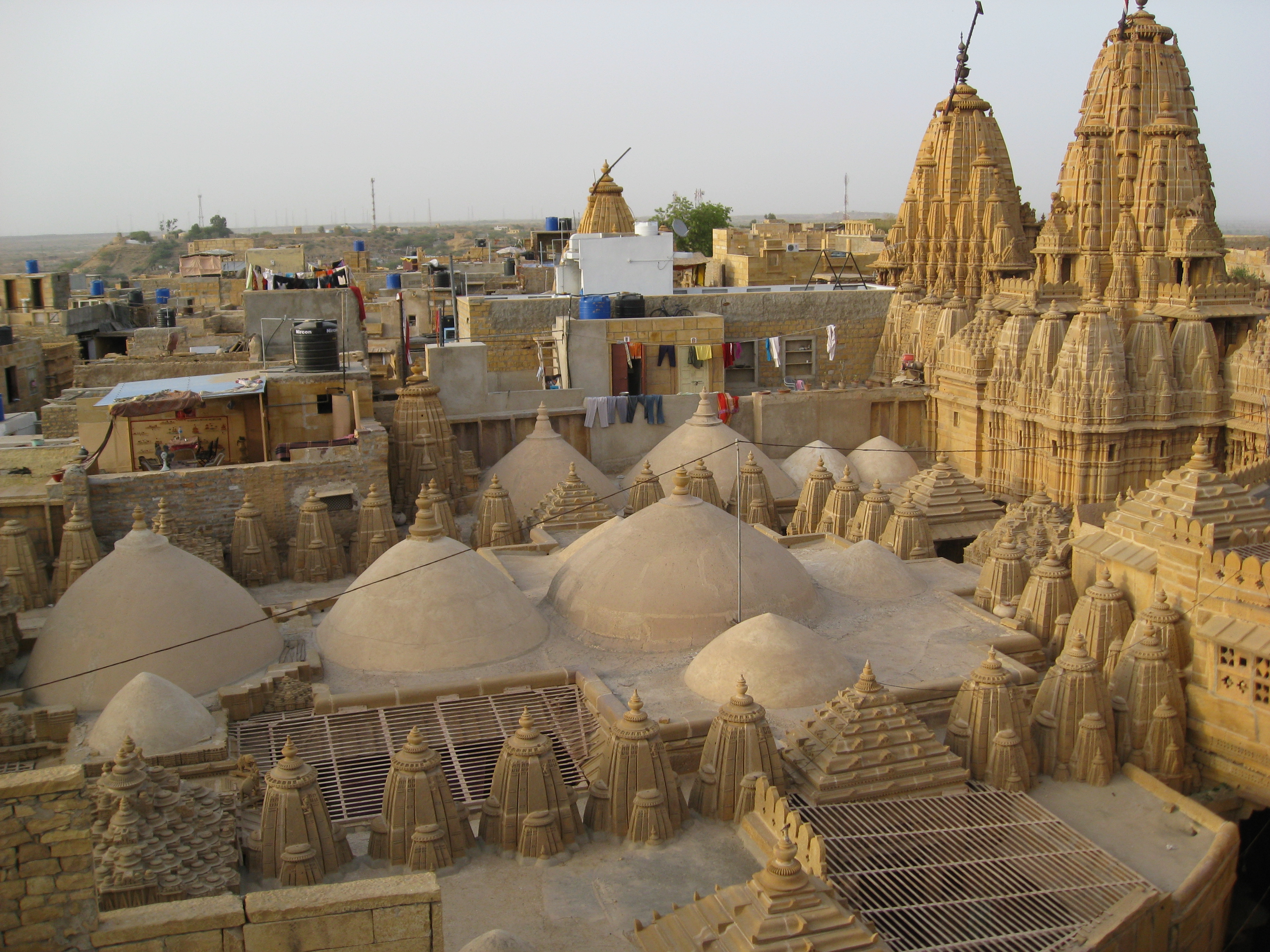
Jaisalmer is magical and outstanding, not least because it was built by yellow sandstone that has given it its nickname The Golden City. Even if Jaisalmer did not make it to my India: Top 10 places to visit, it is one of my favorite places in India.Jaisalmer The Golden CityJaisalmerSoon after its creation in the 12th century, Jaisalmer became an important trade center along the Silk Road. Tons of silk, opium and spices passed through Jaisalmer throughout the centuries. Today, it attracts visitors mainly for three reasons: 1) the location (in the middle of the stunning Thar Desert; great for desert and camel safaris) 2) Jaisalmer fort (India’s last remaining living fort) and 3) architecture (exquisite havelis and elaborate Jain temples). JaisalmerThe Jain temples, constructed between 12th and the 16th centuries, were indeed very impressive. Some 11th century manuscripts written on palm leaves are kept in the temple complex, too. Tip: be aware of the odd opening hours if you are interested in visiting the temples!Jaisalmer Jain temples Jaisalmer Jain templeWe spent two nights in Jaisalmer and loved the fort as well as the city outside the fort. Most of our time was used in walking along the ramparts and tiny streets inside the fort. It felt quite magical and amazing to witness locals, tourists and cows mixing so peacefully. The fort of Jaisalmer reminded me of another fortified city called Bukhara in Uzbekistan, also located along the old Silk Road.JaisalmerJaisalmerEven if we spent most of the time inside the fort, we did walk to the city outside the fort to visit the famous havelis. These 19th century mansions are true pearls and so elaborately carved. Some were open for visits, some weren’t. Haveli in JaisalmerWe also made some great purchases: a bag made of camel skin (we regret of not buying more of those wonderfully handmade bags!!) and silver jewelry. Indeed, shops and bazaars were very well-equipped, making Jaisalmer a great place to buy souvenirs. After all, who wouldn’t be fascinated to revisit the Silk Road trading experience…!?Jaisalmer
PRACTICAL INFORMATION: We slept at Suraj Haveli, which is a 500-year old haveli run by a friendly family. We had the Maharaja room, the biggest, and well, what can I say. It was an extraordinarily beautiful room but there were no amenities. It felt like sleeping in an abandoned house. At night we could hear haunted dogs barking. It was a full moon, the sounds were weird, and had a camel caravan arrived in front of our door, we would not have been surprised. Nothing was spooky, but it felt sort of mystical. Well, I guess authentic places feel that way for one reason: they have an old soul! (http://hotelsurajjaisalmer.webs.com/)

Secondly, the first night we ate at a random restaurant inside the fort and it was so disgusting that we left after taking the first bite. The second night we ate at Trio, outside the fort, and it was amazing. Definitely one of the best meals we had in Rajasthan! We ate at the terrace, the musicians were playing and the dinner came to less than 10€ for both of us. Wish I could relive that moment.

***

Note: This is the 18th post about our trip in Delhi, Agra, Rajasthan and Bombay in March-April 2008. Previous posts are:

Part 1. Arrival in Delhi: first impressions
Part 2. Eight cities of Delhi
Part 3. Road from Delhi to Agra
Part 4. Visiting Agra and Taj Mahal
Part 5. Fatehpur Sikri: what a pearl!
Part 6. Neemrana Fort-Palace: the magnificent 15th century palace
Part 7. Breathtaking Amber Fort
Part 8. Chaotic but charming Jaipur (part 1.)
Part 9. Chaotic but charming Jaipur (part 2.)
Part 10. Hotel Pearl Palace in Jaipur
Part 11. Samode Palace: live like a Maharaja
Part 12. Shekhawati: the Haveli Hub
Part 13. Enchanting Hotel Mandawa Haveli
Part 14. Karni Mata Temple (WARNING: includes images of rats)
Part 15. Subtle charm of Bikaner
Part 16. Bhairon Vilas: sleep like a Prime Minister
Part 17. Fort Pokaran: ideal oasis in the Thar Desert

PS Have you already joined Pearlspotting?

Fort Pokaran: ideal oasis in the Thar Desert

If you are planning to travel from Bikaner to Jaisalmer by road, do not forget that it is a long way: 300km and many, many long hours sitting in the car. In addition, it will probably be rather hot –after all, it is the Thar Desert you will be crossing. India-Pakistan border will be less than 100km on your right side, parallel to the road. You will see more camels than people.Thar desertThis said, no worries, I have a solution for you and it is to organize a stop at Fort Pokaran like we did! Fort PokaranFort Pokaran is an enormous 14th century citadel, which is partially converted into a heritage hotel. Like many other luxury hotels everywhere in the world including Rajasthan, one cannot just walk in. The premises are reserved for paying guests (privacy comes with the package they pay for).

However, based on our observations in Rajasthan (at least in most cases) hotels let you in against a small entrance fee and/or if you agree to spend at the restaurant. And this is exactly what we did with Fort Pokaran: we called them in advance and asked if it was ok that we came to use their pool for 2-3 hours, while promising also to eat lunch at their restaurant. They said yes, so we got to freshen ourselves up, swim in the lovely pool and eat an absolutely delicious lunch, and they got some extra clients. A win-win situation!! Fort PokaranIn the end of our lunch we got talking to the lovely owner, who proudly showed us around the premises. The rooms were elegantly decorated using local textiles and antique objects.

Should we return to this part of Rajasthan, I would definitely arrange to sleep over at Fort Pokaran. An other stunning, Mughal-style palace from the 14th century… a giant pearl in the midlde of the Thar desert!

FORT POKARAN: http://www.fortpokaran.com

***

Note: This is the 17th post about our trip in Delhi, Agra, Rajasthan and Bombay in March-April 2008. Previous posts are:

Part 1. Arrival in Delhi: first impressions
Part 2. Eight cities of Delhi
Part 3. Road from Delhi to Agra
Part 4. Visiting Agra and Taj Mahal
Part 5. Fatehpur Sikri: what a pearl!
Part 6. Neemrana Fort-Palace: the magnificent 15th century palace
Part 7. Breathtaking Amber Fort
Part 8. Chaotic but charming Jaipur (part 1.)
Part 9. Chaotic but charming Jaipur (part 2.)
Part 10. Hotel Pearl Palace in Jaipur
Part 11. Samode Palace: live like a Maharaja
Part 12. Shekhawati: the Haveli Hub
Part 13. Enchanting Hotel Mandawa Haveli
Part 14. Karni Mata Temple (WARNING: includes images of rats)
Part 15. Subtle charm of Bikaner
Part 16. Bhairon Vilas: sleep like a Prime Minister

PS Have you already joined Pearlspotting?

Bhairon Vilas: sleep like a Prime Minister

Bhairon Vilas used to belong to Bikaner’s former Prime Minister. Nowadays, it continues its life as a hotel and is managed by the descendants of the Prime Minister. This charming oasis has a beautiful courtyard and uniquely decorated rooms, making it one of the most memorable hotels we have stayed at in India. See below why!Bhairon Vilas, receptionIn my opinion, Bhairon Vilas is something between a boutique hotel and a bed and breakfast: secluded and quiet. The staff was never present too much during our stay, but always available and helpful whenever we needed something. True Rajasthani hospitality.

We absolutely loved the courtyard. Antique decoration details combined with the rusty pink color made the hotel very welcoming and warm. The sun light was perfect for taking photos…Bhairon VilasWalking around the hotel’s different areas felt like admiring museum objects. Of course one can argue that many hotels in Rajasthan are like that, but this is exactly my point: In Rajasthan you have very affordable, charming hotels all over! And often they are former palaces or residencies of important personalities. Bhairon Vilas Bhairon VilasWe looked at several rooms before choosing where to sleep for one night and finally decided on Room # 101 on the ground floor. This was our entrance: Bhairon VilasAnd this was our room, except that what you see in the photo represents only about one fifth of the room size! Bhairon VilasWe certainly felt very royal and important in our room. Even if the room was very charged and maybe a bit kitch, it was a refreshing change from typical European hotels that these days all look the same!

PRACTICAL INFORMATION: We paid only 1000 INR (12 €/16 USD) for our room (it was off-season so we had some discount) but I can see from the hotel’s website that they have increased the prices. Whatever you decide, I recommended considering Bhairon Vilas as an option. It is conveniently located right next to the fort and you will certainly wake up feeling like the ruler of Bikaner… (http://hotelbhaironvilas.com)

***

Note: This is the 16th post about our trip in Delhi, Agra, Rajasthan and Bombay in March-April 2008. Previous posts are:

Part 1. Arrival in Delhi: first impressions
Part 2. Eight cities of Delhi
Part 3. Road from Delhi to Agra
Part 4. Visiting Agra and Taj Mahal
Part 5. Fatehpur Sikri: what a pearl!
Part 6. Neemrana Fort-Palace: the magnificent 15th century palace
Part 7. Breathtaking Amber Fort
Part 8. Chaotic but charming Jaipur (part 1.)
Part 9. Chaotic but charming Jaipur (part 2.)
Part 10. Hotel Pearl Palace in Jaipur
Part 11. Samode Palace: live like a Maharaja
Part 12. Shekhawati: the Haveli Hub
Part 13. Enchanting Hotel Mandawa Haveli
Part 14. Karni Mata Temple (WARNING: includes images of rats)
Part 15. Subtle charm of Bikaner

PS Have you already joined Pearlspotting?

Subtle charm of Bikaner

One of our biggest regrets about the Rajasthan trip is that we did not spend two nights in Bikaner. Many tourists entirely skip this 15th century town, located on the old trade caravan route, and I think it is a pity. Bikaner is a pleasant oasis in the middle of the Thar desert. Thar desertAfter checking into our hotel, we hopped on to a rickshaw to visit the 15th century Jain temples in the southern part of the town. We met a friendly priest who was flying a kite and despite the lack of a common language we spent a memorable moment together. Jain temples BikanerJain temples BikanerThe walk back to the hotel took longer than we had estimated but it was enjoyable. Streets seemed to create one long bazaar of spices, kitchenware, clothes, car spare parts and textiles. We were definitely viewed as odd tourists who rarely stop by Bikaner, and locals kept looking at us from a distance with a reserved, kind smile.

As we had arrived in Bikaner quite late in the afternoon, there was no time to visit the fort, and this is what I regret. Built in the 16th century, the fort is another architectural masterpiece from the Emperor Akbar era. It is very well preserved because it has never been conquered. One day I will see it from inside.BikanerIn the end we had to catch a rickshaw because the streets never seemed to end. We were covered in dust, hungry, and ready for a luxury dinner at Laxmi Niwas Palace. After all, who would’t use the opportunity to eat where King George V and Queen Mary once enjoyed chicken tandoori and gin & topic?

During our agreeable garden dinner a rare rain storm arrived, transforming the evening very special. I could only think of those people living in the Thar desert and how happy they were. And we were happy too. The dinner, typical Rajasthani dishes, was extremely good, one of the best we had during our journey!

Afterwards we had a private tour of this majestic, glorious hotel. Everything was spectacular, including the billiards room where 15 tiger skins hanged on the wall reminded us of the old days… Laxmi Niwas Palace

So, if you are planning a trip in Rajasthan, do not limit yourself to the Golden Triangle. There is so much to see everywhere and I strongly recommend Shekhawati: the Haveli Hub and Jaisalmer, where our trip continued from Bikaner. Promise to think about it!

Laxmi Niwas Palace: http://www.laxminiwaspalace.com/

***

Note: This is the 15th post about our trip in Delhi, Agra, Rajasthan and Bombay in March-April 2008. Previous posts are:

Part 1. Arrival in Delhi: first impressions
Part 2. Eight cities of Delhi
Part 3. Road from Delhi to Agra
Part 4. Visiting Agra and Taj Mahal
Part 5. Fatehpur Sikri: what a pearl!
Part 6. Neemrana Fort-Palace: the magnificent 15th century palace
Part 7. Breathtaking Amber Fort
Part 8. Chaotic but charming Jaipur (part 1.)
Part 9. Chaotic but charming Jaipur (part 2.)
Part 10. Hotel Pearl Palace in Jaipur
Part 11. Samode Palace: live like a Maharaja
Part 12. Shekhawati: the Haveli Hub
Part 13. Enchanting Hotel Mandawa Haveli
Part 14. Karni Mata Temple (WARNING: includes images of rats)

PS Have you already joined Pearlspotting?

Karni Mata Temple (WARNING: includes images of rats)

Karni Mata Temple (the Rat Temple) is a crazy place, at least in the minds of Westerners. Adjectives used to describe it are: disgusting, horrific, creepy, surreal, shocking and dreadful. The use of these words is understandable, but like many other things in India, it is indispensable to look beyond common Western perceptions. So, follow my story but please leave your fixed beliefs behind. Accept Karni Mata as it is: a very important pilgrimage site to millions of Hindus. Karni Mata TempleThe Rat Temple was constructed in the early 20th century following Mughal style, and it is in fact a pretty temple full of marble and silver decorations. Its floor tiles are very beautiful, too.Karni Mata decorationThere are several legends about the birth of the Rat Temple. One is linked to Hindu mythology and Yama (the God of Death), who saved a stepson of Karni Mata (a female Hindu sage). Following the rescue of this child, Yama decided that Karni Mata’s  sons should all be incarnated as rats. The other legend says that 20,000 soldiers abandoned a battle nearby and escaped to the town where the Rat Temple is located. Thanks to Karni Mata’s kindness, despite the soldiers’ unforgivable act, she decided to save, turned them into rats and gave them a home.

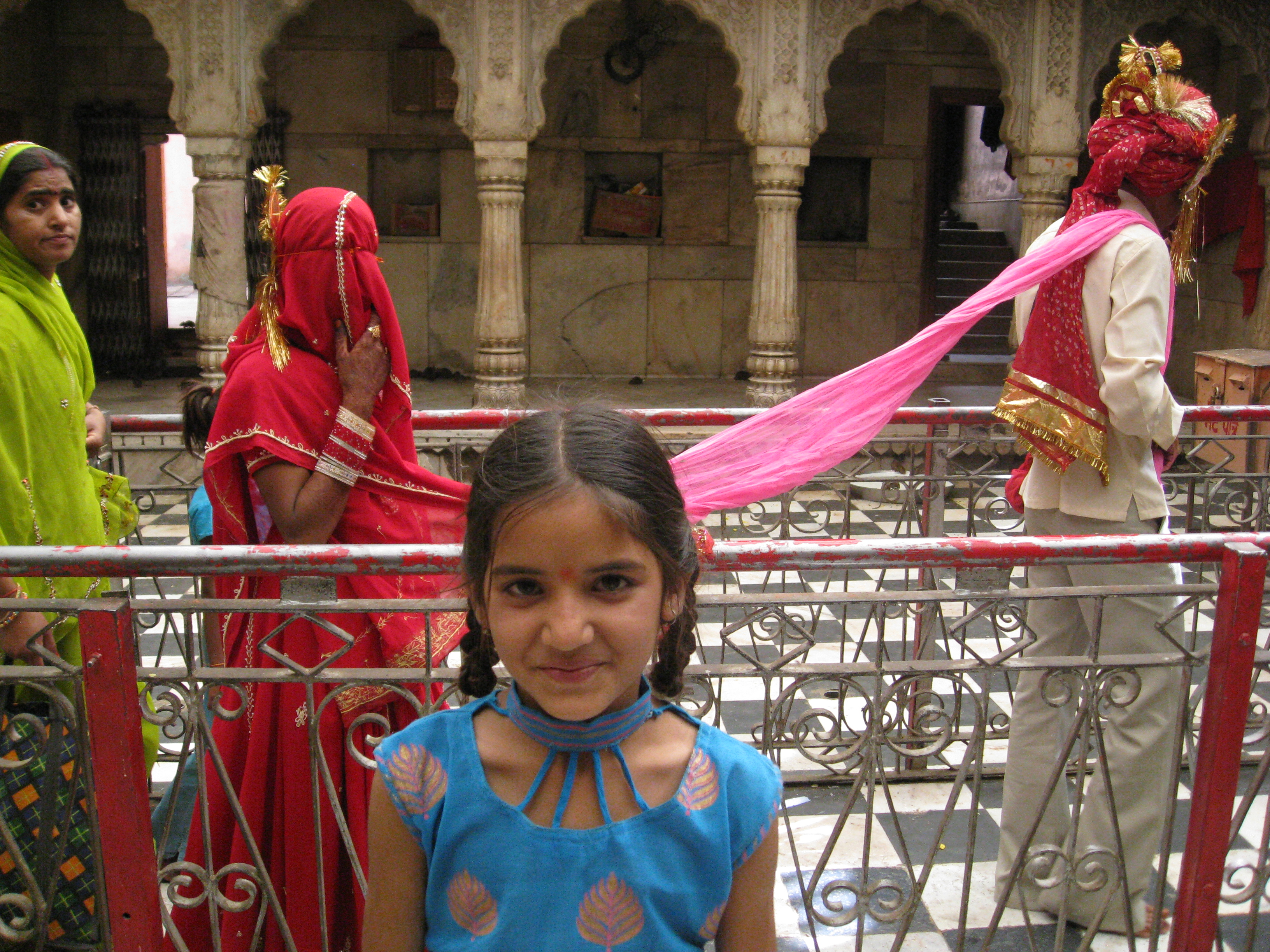
Whatever the truth is, the fact is that there are around 20,000 rats running around the Rat Temple and they seem to like. Undoubtedly it is their home now.Karni MataUpon entering the temple, my first reaction was to throw up. It is not an exaggeration to say that rats are everywhere. In fact they walk on your feet. They touch your legs. If you lied down, they would crawl on you.Karni Mata ratsAfter the initial shock we got used to the rats and wandered around observing the habits of locals. Some came to the temple for a marital blessing, some brought their babies to the priest. Everyone was –of course– very serious about the special power of the temple. Many people were making offerings to rats, either sweets or milk. Karni Mata Rat Temple weddingWe met a lot of really lovely and friendly people at the Rat Temple and spent more than an hour taking photos of each other. Some of these families had traveled from very far away to pay respect to Karni Mata and her rats. However, even if the Rat Temple is quite well-known, it seemed that the locals were as curious about us than we were about the rats! Karni Mata Needless to say, I highly recommend Karni Mata. This is the place where one’s readiness to accept the other –as he/she is– is truly tested. The Rat Temple offers a great insight into Hinduism. And if you are afraid of rats there is nothing better than overcoming your fear. I recommended you to remove your shoes (obligatory), walk inside, keep your eyes open and breath. Start walking and let this wonder of the world embrace you. You won’t regret, I promise.

PRACTICAL INFORMATION: Visiting Karni Mata depends on where you are coming from. We visited it on our way from Mandawa (Shekhawati region to Bikaner. It was extremely hot along the road (it is basically desert) and the last part of the road was very bad. You do not want to have a flat tire there. However, probably the easiest way to visit it is from Bikaner: It is only about 30 km away.

***

Note: This is the 14th post about our trip in Delhi, Agra, Rajasthan and Bombay in March-April 2008. Previous posts are:

Part 1. Arrival in Delhi: first impressions
Part 2. Eight cities of Delhi
Part 3. Road from Delhi to Agra
Part 4. Visiting Agra and Taj Mahal
Part 5. Fatehpur Sikri: what a pearl!
Part 6. Neemrana Fort-Palace: the magnificent 15th century palace
Part 7. Breathtaking Amber Fort
Part 8. Chaotic but charming Jaipur (part 1.)
Part 9. Chaotic but charming Jaipur (part 2.)
Part 10. Hotel Pearl Palace in Jaipur
Part 11. Samode Palace: live like a Maharaja
Part 12. Shekhawati: the Haveli Hub
Part 13. Enchanting Hotel Mandawa Haveli

PS Have you already joined Pearlspotting?

Enchanting Hotel Mandawa Haveli

Mandawa is the most touristic town of Shekhawati and therefore the most common base for exploring this semi-arid region famous for rich architecture and history. There are several accommodation options in Mandawa, and most of them are former havelis converted into hotels. Hotel Mandawa HaveliWe chose Hotel Mandawa Haveli and immediately fell in love with it. Design was stylish and there were small architectural details everywhere to discover. After visiting different rooms, we decided to take the slightly more expensive Haresh Room. It was large, the bed was comfortable and it felt like sleeping in a museum.  Our door was elaborately carved and I bet it was more than 150 years old.Hotel Mandawa HaveliWe spent one night in Mandawa, but could have stayed for two nights. Dinner was served at the hotel and it was honest, local Rajasthani food. Very lovely. There was also a rooftop terrace where one can watch the sunset with a Kingfisher, and where dinner is sometimes served.Hotel Mandawa HaveliI have kept a wonderful memory of Hotel Mandawa Haveli and believe it is one of the nicest hotels we stayed at during our Rajasthan tour. The price was very correct: 2000INR (23€/33USD).

***

Note: This is the 13th post about our trip in Delhi, Agra, Rajasthan and Bombay in March-April 2008. Previous posts are:

Part 1. Arrival in Delhi: first impressions
Part 2. Eight cities of Delhi
Part 3. Road from Delhi to Agra
Part 4. Visiting Agra and Taj Mahal
Part 5. Fatehpur Sikri: what a pearl!
Part 6. Neemrana Fort-Palace: the magnificent 15th century palace
Part 7. Breathtaking Amber Fort
Part 8. Chaotic but charming Jaipur (part 1.)
Part 9. Chaotic but charming Jaipur (part 2.)
Part 10. Hotel Pearl Palace in Jaipur
Part 11. Samode Palace: live like a Maharaja
Part 12. Shekhawati: the Haveli Hub

PS Have you already joined Pearlspotting?

Shekhawati: the Haveli Hub

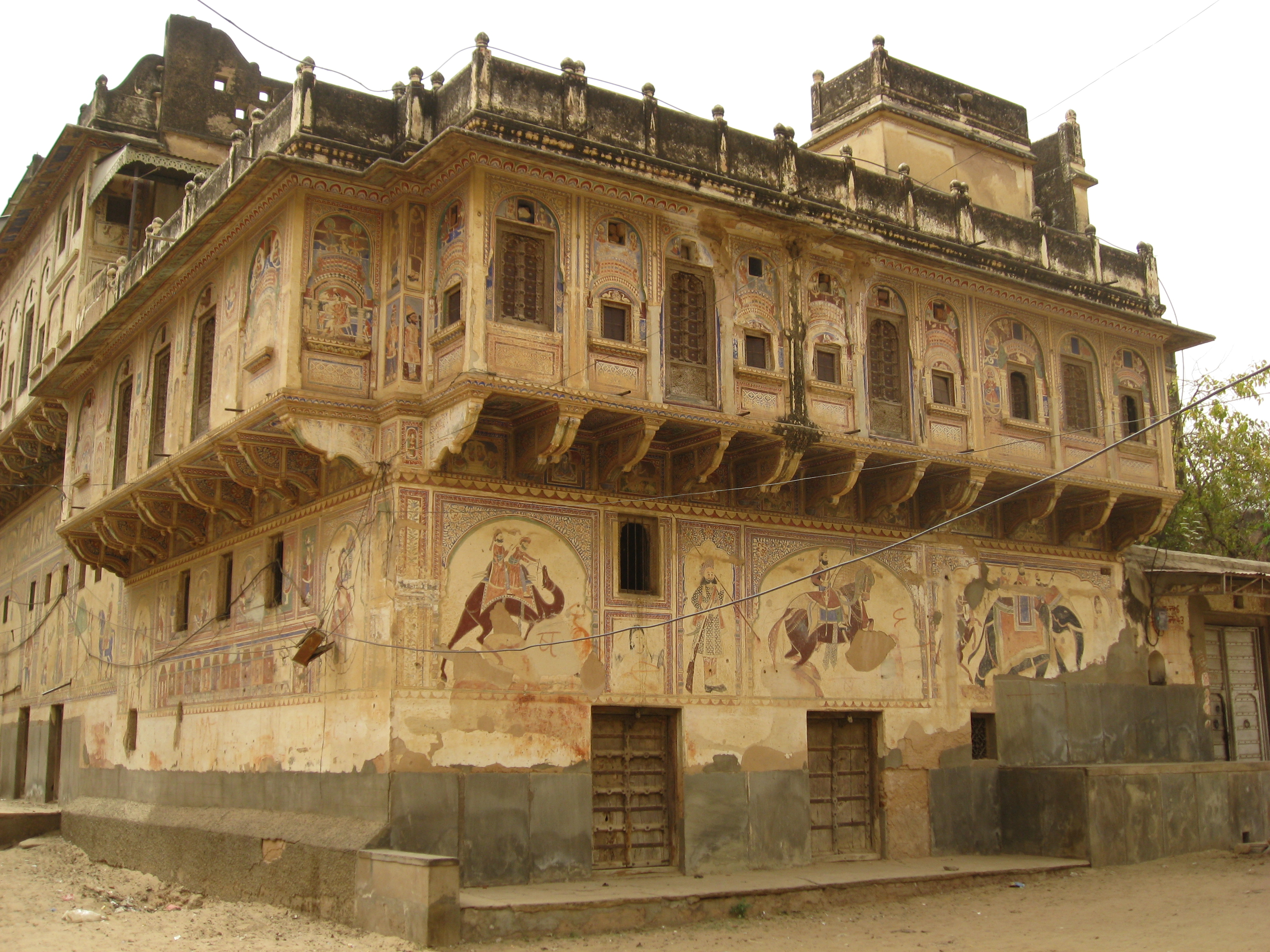
I listed Shekhawati in my India: Top 10 places to visit because I believe it bares extraordinary historical and architectural value. The region is not along the most usual tourist route of Rajasthan but it definitely is worth the detour. If you are in Jaipur and planning to continue to Bikaner and Jaisalmer (like we did) then Shekhawati is perfectly on your route! ShekhawatiLocated on an old trade route, Shekhawati consists of many small towns. Your driver may not be familiar with the region, so have a good map in order to be able to enjoy your visits. Most of the guidebooks at least mention the region but my favorite is DK Eyewitness India, which has a very useful map of the region, including a 111 km-long tour with details. haveli, ShekhawatiThe region is an architectural pearl because each town is full of spectacular houses called havelis. These havelis were built by their previous owners (important merchants and industrialists) from the late 18th century to the early 20th century. 

The fascinating part of the story is that a lot of the businessmen from Shekhawati had moved to Bombay and Calcutta, becoming influenced by the wave of industrialization and the British lifestyle. So, whenever these businessmen built a haveli in their home region, it became a reflection of these new trends, habits and technological inventions they had learnt about while away from home. This is why you can spot cars, airplanes, European clothes etc. on the walls and ceilings of havelis. Intriguing!   Haveli in ShekhawatiIndeed, the havelis in Shekhawati are real storyboards and their frescoes often tell a story of the late 19th century industrialization. A lot of frescoes contain more traditional “Indian style” images, but in most cases, especially if you look closer, you will witness a blend of cultures and countries.

Maybe the globalization started in Shekhawati….?   Shekhawati regionAs you have seen, I put a high value on Shekhawati and think –once again– that it should be on one’s Must List when planning a tour in Rajasthan. After all, it is only three hours away from Jaipur (just over 150 km). Think about it!

FYI: We were coming from Jaipur and our first stop in Shekhawati was Sikar. From there we moved onto Lohargal, Nawalgarh and Dundlod before reaching Mandawa where we were planning to sleep (Enchanting Hotel Mandawa Haveli). When we left Mandawa, we only stopped at Fatehpur. However, there are many small, interesting towns to stop by, so if you are staying longer in the region, do your Internet research. For example, I would have liked to visit Lachhmangarh, Parsurampura and Ramgarh…

***

Note: This is the 12th post about our trip in Delhi, Agra, Rajasthan and Bombay in March-April 2008. Previous posts are:

Part 1. Arrival in Delhi: first impressions
Part 2. Eight cities of Delhi
Part 3. Road from Delhi to Agra
Part 4. Visiting Agra and Taj Mahal
Part 5. Fatehpur Sikri: what a pearl!
Part 6. Neemrana Fort-Palace: the magnificent 15th century palace
Part 7. Breathtaking Amber Fort
Part 8. Chaotic but charming Jaipur (part 1.)
Part 9. Chaotic but charming Jaipur (part 2.)
Part 10. Hotel Pearl Palace in Jaipur
Part 11. Samode Palace: live like a Maharaja

PS Have you already joined Pearlspotting?

Samode Palace: live like a Maharaja

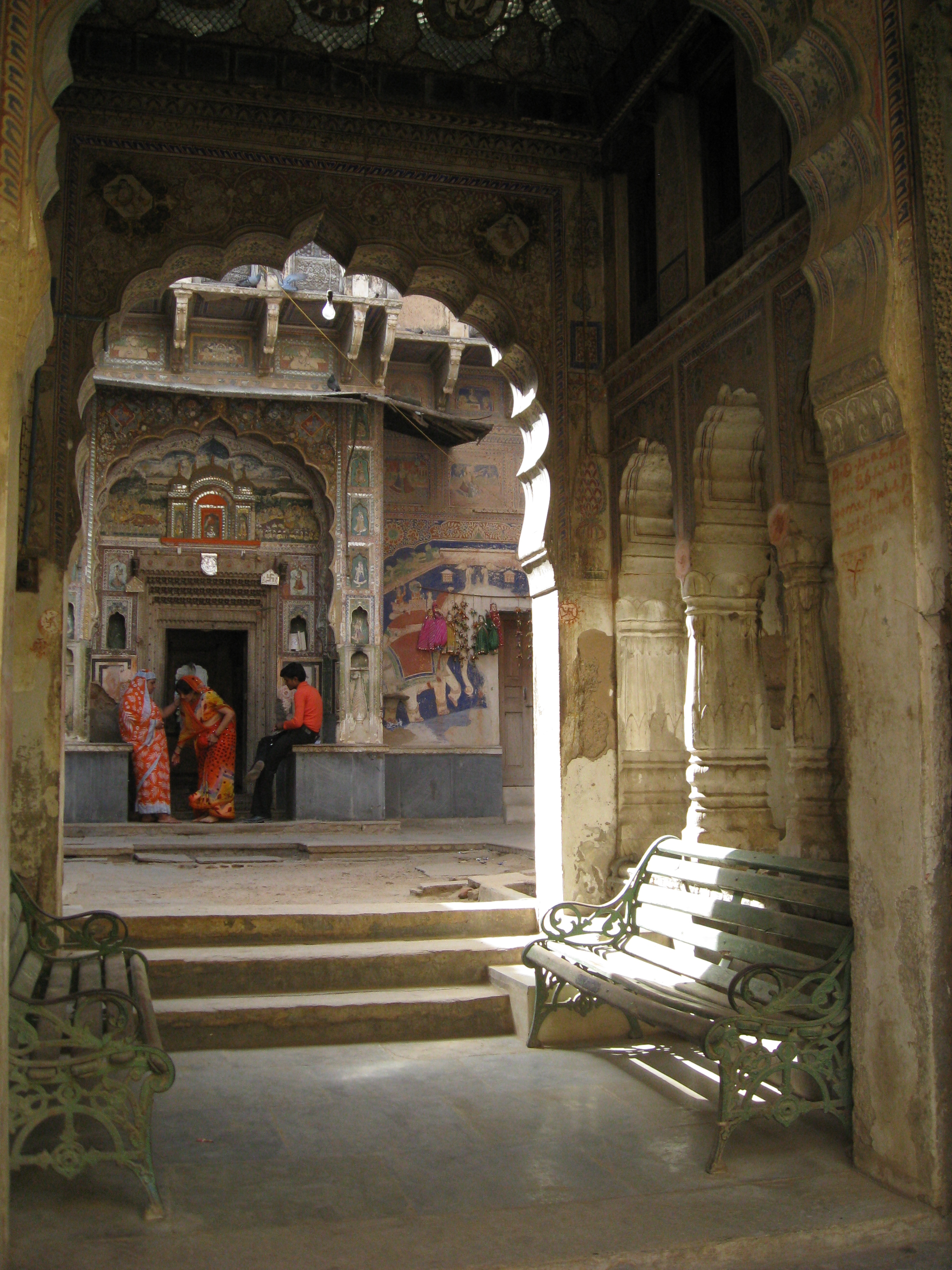
Rajasthan is full of havelis (former private mansions) converted into hotels. Some are more modest than others, while some are extravagant in every sense. In most cases they all have one thing in common: each haveli is a masterpiece of design and architecture, through which it tells a story to its visitor. A visit in Rajasthan would not be complete without sleeping in a haveli!Samode PalaceFrom Jaipur our journey continued to Shekhawati region, but along the route we had planned to stop at Samode Palace, located just over 40km north of Jaipur. Samode PalaceSamode Palace is arguably one of the most famous hotels in Rajasthan. It is stunning and full of curious, wonderful and elaborate decorations. Even if you don’t stay with them, you can do as we did: pay an entrance fee (at the time of our visit it was 500INR per person) against a private tour of the premises. In most cases, and this was true at Samode Palace, too, you can spend that amount toward food and beverages, so I would suggest using the moment as your breakfast or lunch break! Samode PalaceOur stop at Samode Palace lasted for just over an hour and we left the premises breathless. This is exactly the type of place where one comes for a honeymoon or a wedding anniversary. Or just to spend a few nights in order to understand how it felt to be a maharaja in the past…. Samode PalaceThe more I think about, the more I conclude that it was only after visiting different parts of India that I truly learnt to understand the richness of hotel accommodation in Rajasthan. In fact, it is very easy to find affordable and beautiful hotels to sleep at in almost every city, town and village of Rajasthan, and to me this is one of the main reasons why I love Rajasthan….  

SAMODE PALACE: http://www.samode.com/ (they have four properties in Rajasthan, so check the website for more information)

***

Note: This is the 11th post about our trip in Delhi, Agra, Rajasthan and Bombay in March-April 2008. Previous posts are:

Part 1. Arrival in Delhi: first impressions
Part 2. Eight cities of Delhi
Part 3. Road from Delhi to Agra
Part 4. Visiting Agra and Taj Mahal
Part 5. Fatehpur Sikri: what a pearl!
Part 6. Neemrana Fort-Palace: the magnificent 15th century palace
Part 7. Breathtaking Amber Fort
Part 8. Chaotic but charming Jaipur (part 1.)
Part 9. Chaotic but charming Jaipur (part 2.)
PArt 10. Hotel Pearl Palace in Jaipur

PS Have you already joined Pearlspotting?

Hotel Pearl Palace in Jaipur

During our stay in Jaipur we slept at a nice, clean and cute little hotel called Hotel Pearl Palace. We had chosen it for four reasons: excellent Tripadvisor reviews, reactive management (fast email responding), location in a quite neighborhood and the rooftop terrace restaurant. In the end of our stay we felt we had made the right choice. Hotel Pearl PalaceJust before I started writing this post I returned to Tripadvisor website to check the ranking of Hotel Pearl Palace. To my delight, I saw that it is considered to be the sixth best hotel among Jaipur’s 300 hotels! Right after the Oberoi and the Taj. Impressive!

We felt that the staff was really friendly and helpful. The building itself was in a good condition and corridors were decorated with lovely objects and furniture. The rooftop terrace (restaurant Peacock) was a lovely oasis where we had dinner every night. Moreover, we felt that it was nice to have a quiet hotel where to return in the evening –Jaipur is a bit hectic and can feel overwhelming.Hotel Pearl PalaceOur room was a standard double room (#301) and we paid 800INR (9.40€ or 13USD). It was a rather simple but comfortable room with a nice bathroom, and we considered it excellent value for money. There are many different types of rooms, all displayed on the hotel’s website.Hotel Pearl PalaceThis said, there really isn’t anything negative to say about the hotel. Well, it doesn’t have a pool, but if it had one, the prices wouldn’t be the same… Should I return to Jaipur and needed a hotel in this price category, I would definitely return to Hotel Pearl Palace.

HOTEL PEARL PALACE: http://www.hotelpearlpalace.com/

Note: This is the tenth post about our trip in Delhi, Agra, Rajasthan and Bombay in March-April 2008. Previous posts are:

Part 1. Arrival in Delhi: first impressions
Part 2. Eight cities of Delhi
Part 3. Road from Delhi to Agra
Part 4. Visiting Agra and Taj Mahal
Part 5. Fatehpur Sikri: what a pearl!
Part 6. Neemrana Fort-Palace: the magnificent 15th century palace
Part 7. Breathtaking Amber Fort
Part 8. Chaotic but charming Jaipur (part 1.)
Part 9. Chaotic but charming Jaipur (part 2.)

PS Have you already joined Pearlspotting?

Chaotic but charming Jaipur (part 2.)

Our second day in Jaipur begun with a breakfast at our hotel’s rooftop restaurant –a small oasis in the middle of a hectic city. So important when traveling in India!

We had nothing special planned for the day, apart from visiting the world-famous Hawa Mahal and continue exploring the city. Hawa Mahal, commonly known as the Palace of Winds, is the monument that appears in almost all commercial photos one sees about Jaipur. It is dedicated to Hindu god Krishna. Constructed in the late 18th century, the palace has a curious history and design: its latticed windows were built in a way that allowed the veiled women of the royal harem of observe the outside life without being seen!Hawa MahalRenovations were going on during our visit, but visitors were allowed to climb to the top floor and enjoy viewing Jaipur and imagining how these women felt looking down to the street. A monument not to be missed!Hawa MahalAfterwards we decided not to visit Jantar Mantar (the observatory), and instead headed outside of the city to visit Jal Mahal, the 18th century Water Palace. On our way back we stopped at a textile shop to buy some local clothes (half silk half linen, apparently). Looking at colors available was mind-blowing!!! textile shop, JaipurAs Jaipur is world-famous for precious stones and jewelry making (many of the ornaments worn by maharajis come from Jaipur!), we stopped by a few shops to better understand the centuries-old jewelry-making tradition. What we saw was breathtaking  but since we are not professionals, we did not buy anything too expensive. If you like design and jewelry, do visit one of the jewelry houses even if you have no intention ob buying. Most shops are used to tourists and happy to show you around.Jaipur precious stonesFor the rest of the day we visited old havelis (old private houses) converted into hotels (like the one in the photo). Rajasthan is full of havelis, and Jaipur has a fair share of them. They are an integral part of the region’s history and usually full of antique furniture and stylishly decorated, respecting the local traditions. If you are into architecture, I would strongly consider visiting these historic and lovely pearls. haveli in JaipurWe spent two full days in Jaipur and could have stayed longer. It is the most accessible city in Rajasthan if you are coming from Delhi, but regardless of tourism masses, Jaipur has remained rather pleasant. Our only regret was that we didn’t buy more souvenirs in jaipur –its bazaars are really fantastic. As other towns in Rajasthan do not necessarily have same products, think of filling your suitcase with souvenirs from Jaipur!

Note: This is the ninth post about our trip in Delhi, Agra, Rajasthan and Bombay in March-April 2008. Previous posts are:
Part 1. Arrival in Delhi: first impressions
Part 2. Eight cities of Delhi
Part 3. Road from Delhi to Agra
Part 4. Visiting Agra and Taj Mahal
Part 5. Fatehpur Sikri: what a pearl!
Part 6. Neemrana Fort-Palace: the magnificent 15th century palace
Part 7. Breathtaking Amber Fort
Part 8. Chaotic but charming Jaipur (part 1.)

PS Have you already joined Pearlspotting?