
It hasn’t yet felt very springlike in Paris but it seems France is not an exception. In Helsinki, the capital my home country, it snowed a few days ago, and no, snow doesn’t cover streets all year around over there! I bet many Europeans are at the moment eagerly waiting to see some more green color, flowers blossoming, birds singing… not forgetting the sun! If you have no time or money to buy a ticket to the Caribbean, I suggest you get a feeling of the approaching summer in the Conran Shop in the 7th arrondissement (http://www.conranshop.fr). They organized une soirée privée last Thursday that we could not attend (busy eating tajine instead…) so we took the opportunity to visit the shop last Sunday.
Some of my personal highlights are presented below.
I come from Finland so I adore this table, and even if I didn’t originate from Finland, I still would! Surely many of you recognize it, but if not, check it out on internet (google Tulip Table Saarinen). Eero Saarinen, the architect born in Finland, designed this table in the mid-fifties for Knoll and today, almost 60 years later, it is as modern as ever.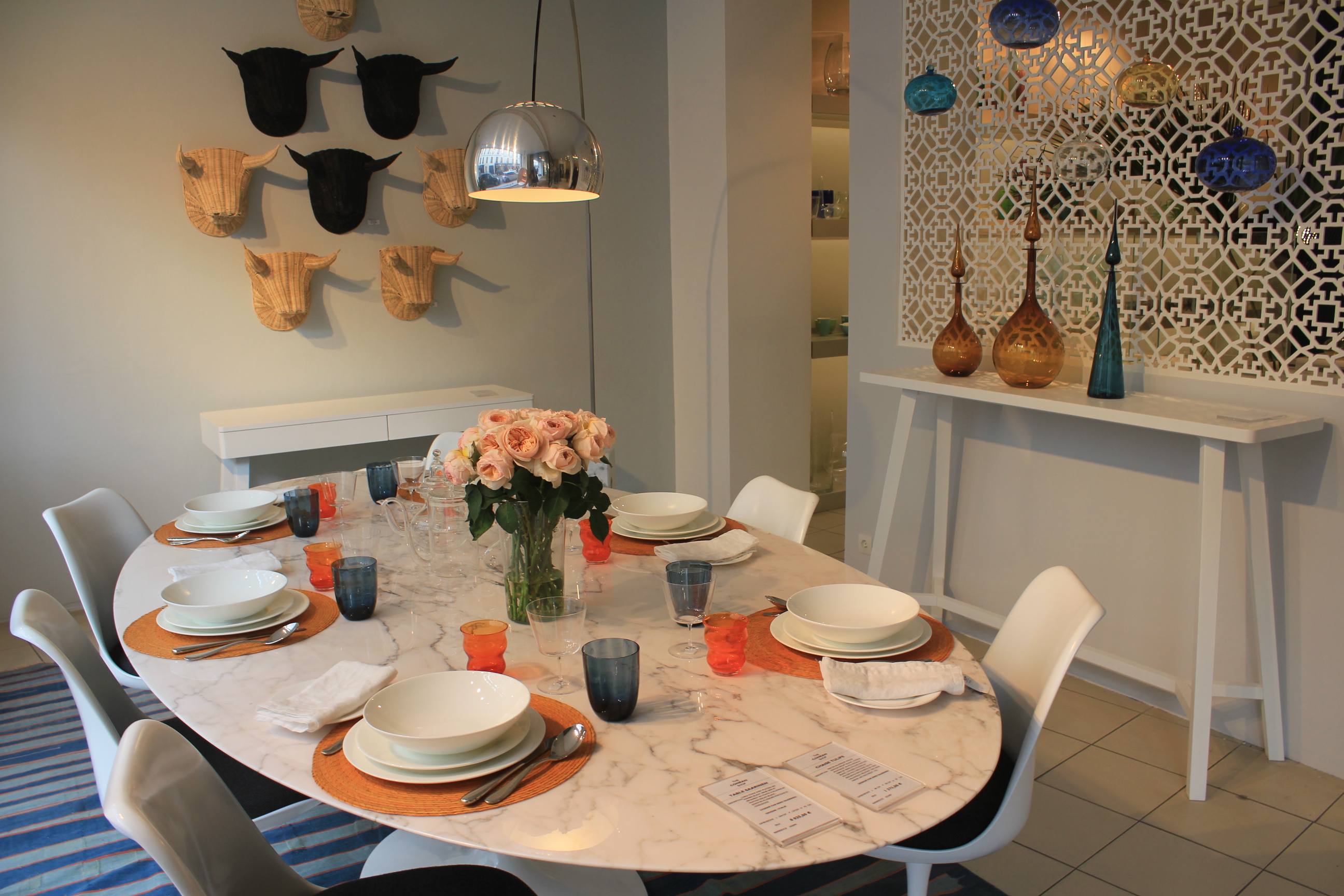 FYI: Those stylish bull heads on the wall are called Trophée Taureau and sell for 135€/head.
My next stop in the Conran Shop was related to animals too: I found canned fish in super-cute packaging:

 José Gourmet (http://www.josegourmet.com) is a Portuguese brand that produces jam, wine, olive oil, vinegar, canned goods, etc. with elegant and fun design. Their canned fish selection resembles more a Japanese restaurant than a traditional tin: Sardines roe in olive oil, Chub mackerel fillets in olive oil, Trout fillets in Escabeche, Ventrusca tuna fish, etc. (but where is the famous Portuguese morue?). I absolutely love the graphic design and I wish I could draw like that! Each fish seems to have his distinct personality.
As soon as I got home I started googling their website. The words mentioned are fair trade, handmade, added value, and the raison d’être of the company seems to be how to capitalize on the Portuguese traditional products, while dressing them according to our century. Sounds inspiring, and makes me want to travel to Portugal to have the entire José Gourmet selection in front of me!
Third object that I found interesting comes from Alife Design (http://www.alifedesign.com), headquartered in Seoul, South Korea. Their concept was born out of hidden needs in everyday life and implementing something sophisticated to satisfy the needs. Today their industrial design items are found in nearly 30 countries, mainly in Europe.  These travel organizers (picture on the right) come in almost all the rainbow colors and help you keep your travel documents in order. In fact there is a full range of products that promise to make traveling easier: luggage belts, luggage tags, luggage identifiers; you name it. The company website shows that travel accessories are not Alife Design’s only product line, but this is what the Conran Shop had chosen to their collection.
PS The Conran Shop offers 15% discount on selected items until (including) April 15.
You visited Cambodia, returned to Paris, and would like to revisit the famous culinary Khmer experience but have no idea where to go? Indeed, when every other restaurant asiatique in town serves all types of Asian foods, one does become suspicious. Why are the Chinese making sushis and sashimis? Why does a restaurant menu mix Thai, Vietnamese and Chinese food? Cannot they just focus on one thing? I understand the region’s culinary history is intertwined, but I personally have more confidence in a restaurant that has one specialty (with maybe one exception, which is Lao Lane Xang).
Bayon is a famous Angkor temple –temple of faces, but also a restaurant located in the southern end of Rue Monge, 5th arrondissement of Paris. When Jean-Marc Tang, the owner of Bayon, had to choose a name for his restaurant, he chose Bayon in order to honor his family who used to live near the Bayon temple. Bayon (http://www.restaurant-cambodgien.com) is a fairly new to the Parisian restaurant scene (it only opened 2 1/2 years ago) but it is already recommended by Le Fooding (http://www.lefooding.com/restaurant/restaurant-bayon-paris.html).

For starters, we ordered Chom Houk A Mok (cod, bell pepper, bamboo, herbs, coconut milk) and Pler Ko (lemongrass beef salad). Amok was really tasty and served in a banana leaf. Jean-Marc explained to us that they use cod because it is difficult to get access to the fish he would use back at home, but that cod 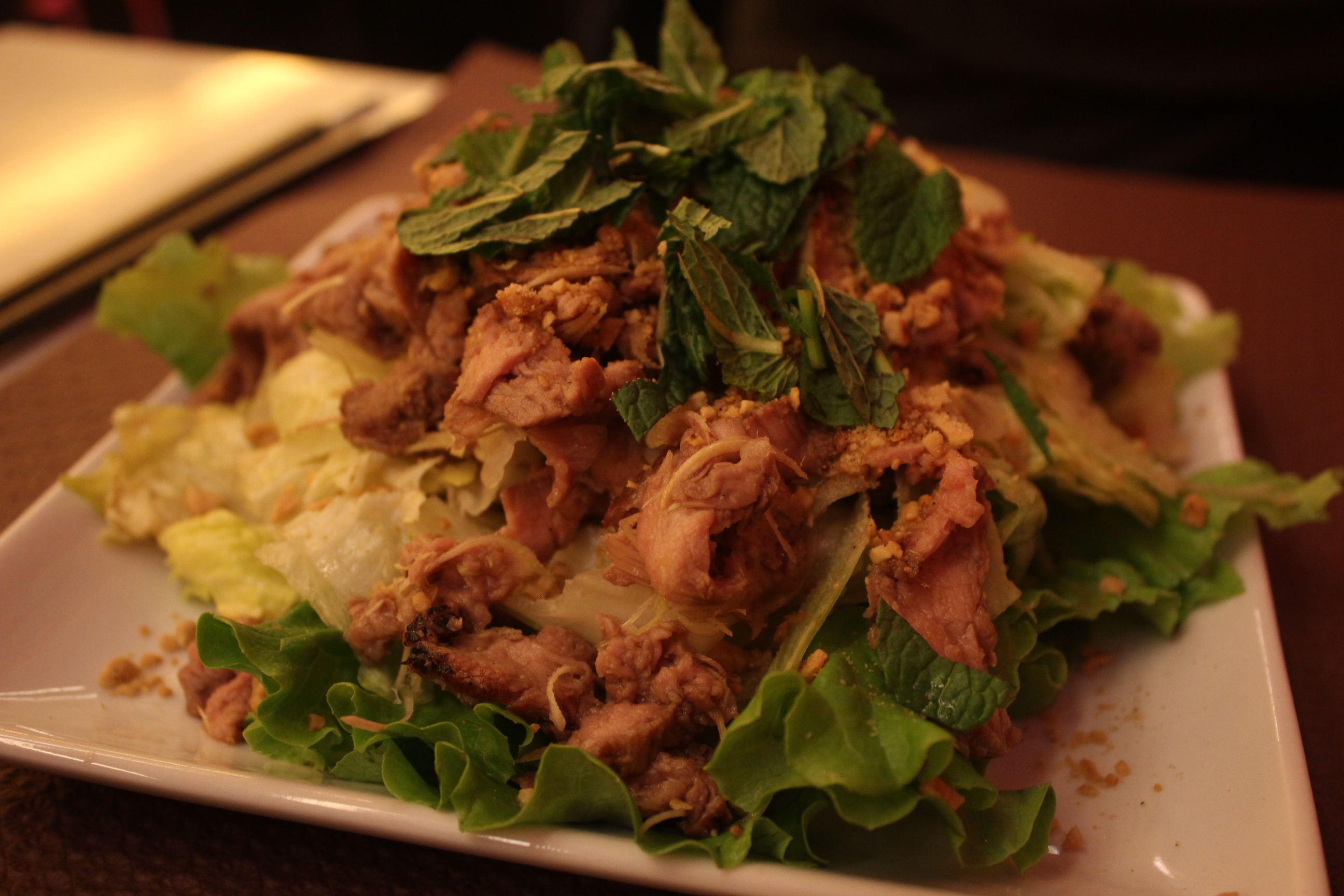 serves the purpose very well as its taste is quite neutral. Our lemongrass beef salad tasted really fresh: something you would want to eat when it is really hot in Paris. Salad was particularly crispy, beef tender and there was a lot of mint. Both starters were copious and very, very good. Nothing was spicy, but Cambodian food is not traditionally very spicy compared to for example Thai food.
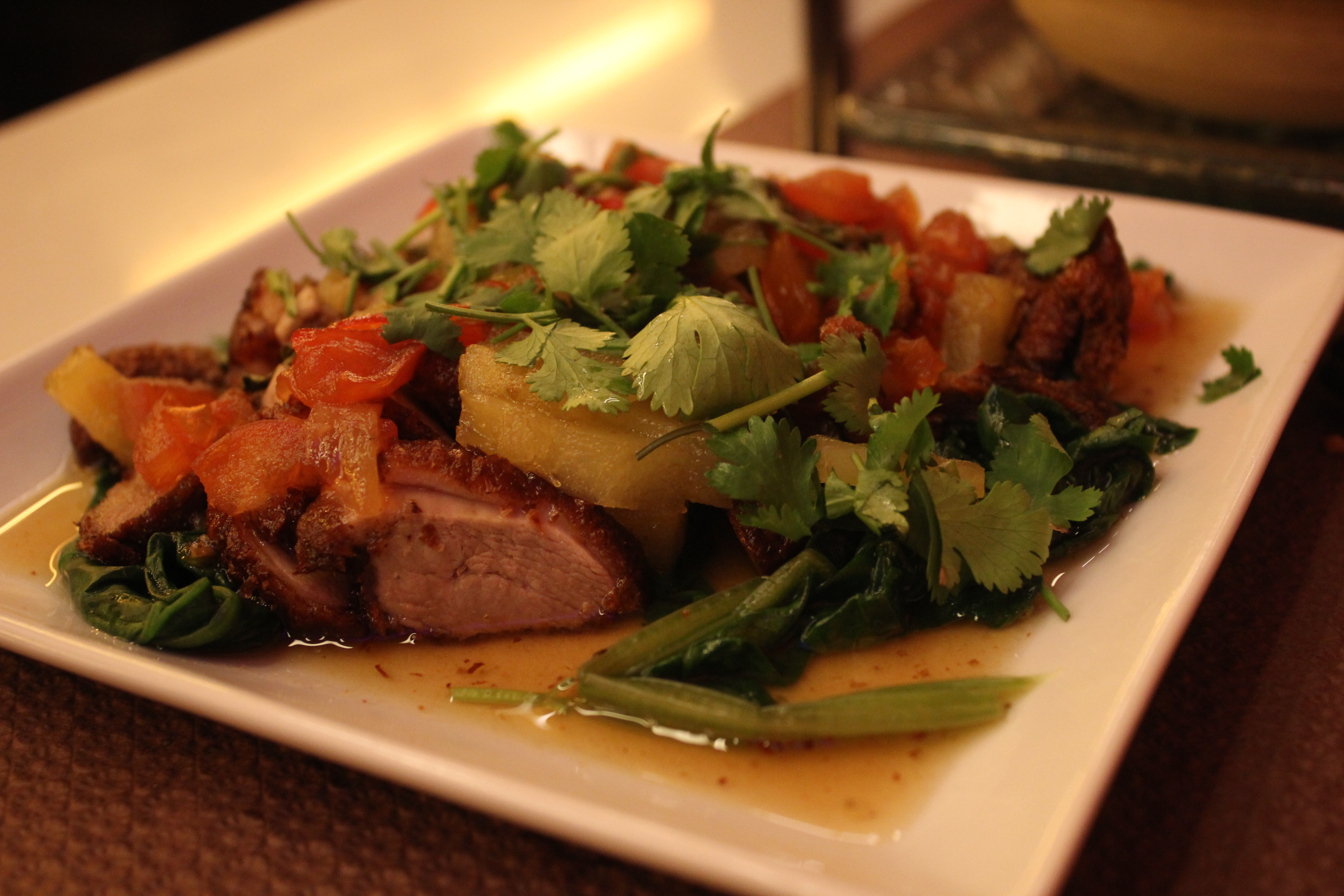
For main course, we ordered Tear bom pong empile thom (duck in tamarind sauce, green vegetables, dried basil leaves and coriander) and Curry sach moan (chicken, potato, carrot, coconut milk curry).
We were particularly interested in tasting the tamarind duck, because it is our favorite dish at an other Asian restaurant (Lao Lane Xang). The Bayon version was slightly different and had pineapple in it. I was surprised of this addition, because in Cambodia I never had pineapple in anything I ate, but Jean-Marc assured me that pineapple is traditionally used in the Khmer cuisine.
Our second main course, the curry, was full of potatoes and carrots, as we had had it in Cambodia. Jean-Marc explained that usually sweet potatoes are used in this type of a curry, but that due to its scarcity in Paris, potatoes make a good replacement (and I could not agree more!). We found this curry delicious but unfortunately could not finish it (portions are quite large and size-wise there is no big difference between starters and main courses).
We indeed had a very lovely Saturday evening. The setting is not particularly romantic (it is more cafe-like), and even the outside appearance may make you wonder where you are walking into, but what you eat inside is authentic and savory. It is always a good sign when tables are filled with locals and I now mean Cambodians! (FYI: there is a new, additional page to the menu, which specializes in dishes even more authentic, like fermented fish etc.)
Bayon Restaurant: 121 rue Monge, 75005 PARIS. Metro: Censier-Daubenton and Les Gobelins. Open daily 12h-15h & 19h-22h30. Closed on Sunday and Monday evening. Tel: 01 43 36 67 43.
If one day there is a competition for The Ultimate French Meat Dish, I know the winner will be the Côte de Bœuf! And many French and international chefs seem to agree. When interviewed and asked about their favorite meat dish, or what meat they serve at a casual friends get-together, they often refer to this beautiful chunk of beef meat that comes with a bone. In English this piece of meat is called “a rib-eye on the bone” (http://www.jamieoliver.com/magazine/blogs.php?title=what-s-your-beef) or “a T-bone steak”, but I will stick to its French name.
We usually prepare the côte de bœuf once a month and serve it with salad and 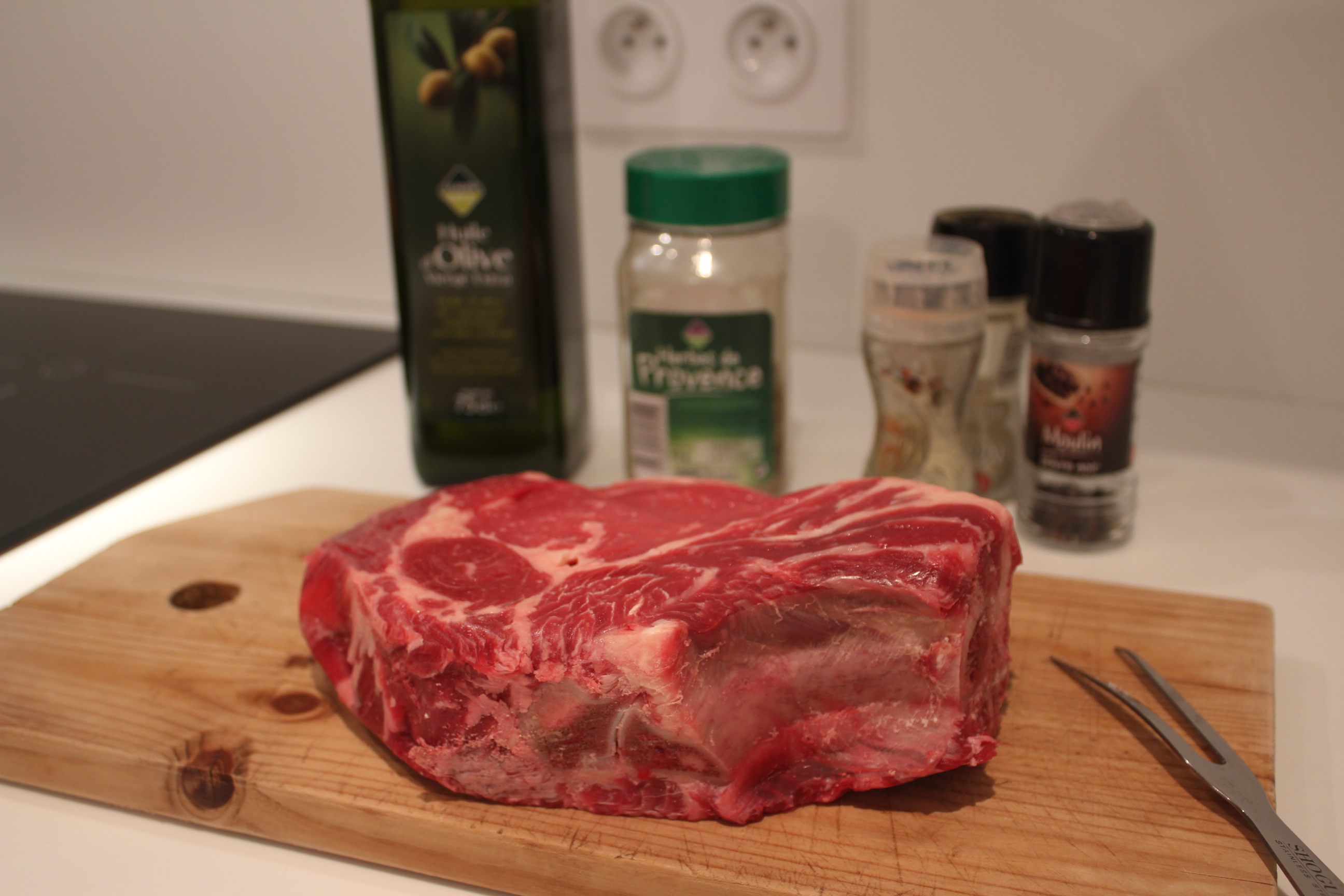 a nice bottle of red. I am very bad at following any recipe (I prefer to invent them myself) and I am equally bad at writing them down (I never do that either) so if you have difficulties following the recipe I am trying to compose here, do not hesitate to email me should you have any questions.
1. Buy a nice-looking piece of meat, not too much of fat, but with a bone, and leave it at room temperature for 2-3 hours. The piece we buy usually weighs around 1kg, sometimes 1,2kg (the bone included). If you serve potatoes as a side dish, the côte de bœuf can serve four people. If you are two and cannot finish it all, think about eating it cold with mustard the next day…
2. Start heating the oven (around 200C-225C). Prepare olive oil, peppers (usually black and white, but I use Iranian green, too, that I recently bought in Dubai) and Herbes de Provence (oregano, thyme, basil, rosemary, satureja and marjoram). We never add salt at this p oint (as you keep reading, you will see why). Cover the côte de bœuf with pepper and herbs, and remember: the more, the merrier! Herbs are good for you!
3. Admire your beautiful côte de bœuf and smell the herbs. Have un apéritif, maybe a glass of rosé from the South of France? Make sure that you have opened the bottle of wine that you will serve for dinner (just don’t drink it yet!).
4. If you have more people coming over to eat, or if your côte de bœuf is particularly small, then you can serve potatoes with it. We find that a salad is enough and makes the dinner less heavy. However, should you want the potatoes, halve them and put them in the oven before the côte de bœuf as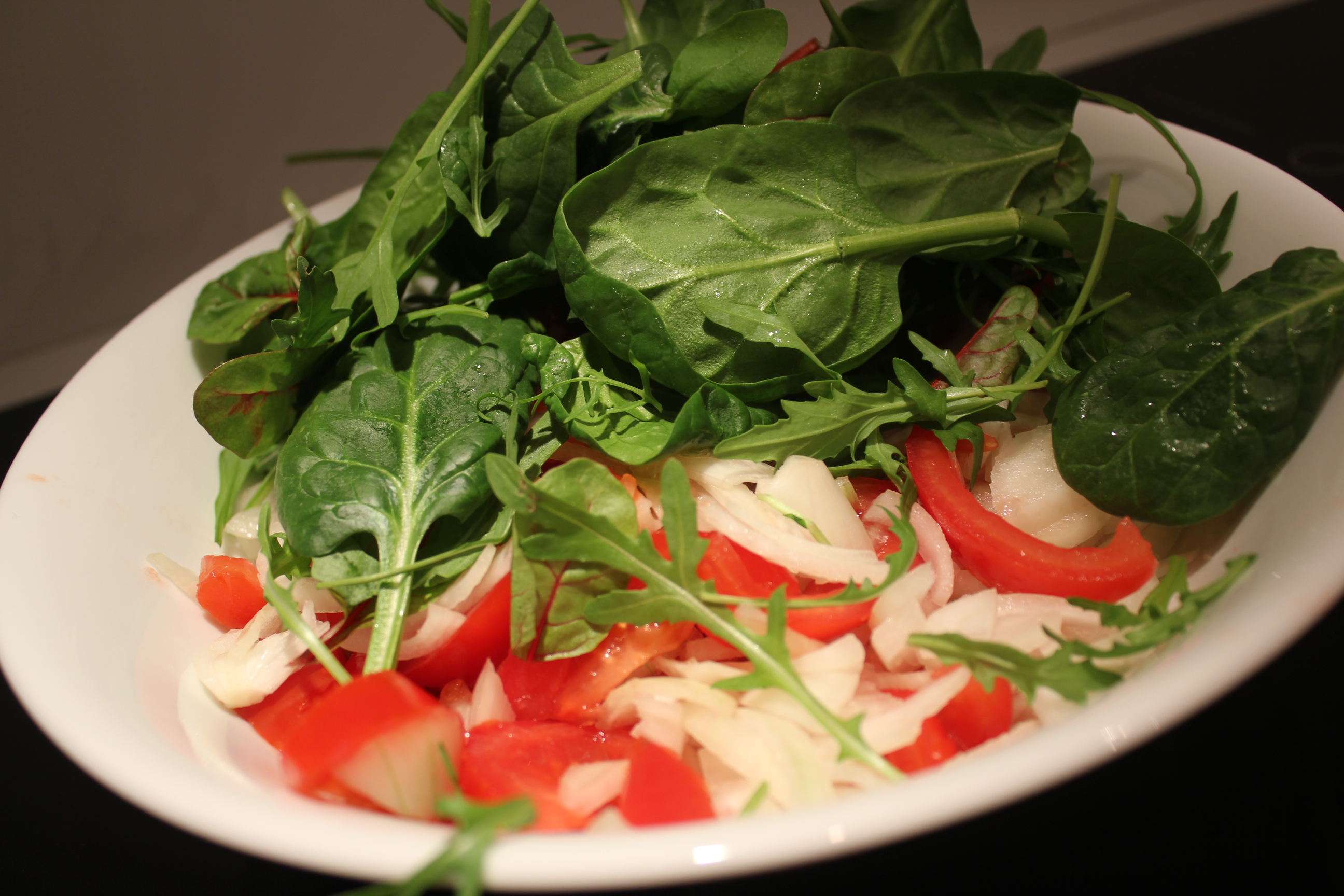 they take longer to be cooked. Place the potatoes in an oven bowl in the lower middle part of the oven so that while the côte de bœuf is being grilled, its extra fat runs on the potatoes.
If you skip the potatoes part, then start preparing the salad. We like it very simple: roquette, beetroot and spinach leaves, mixed with slices of tomatoes and onions.
5. Every cooking experience has un moment stratégique. Putting the côte de bœuf in the oven is one of those moments, because from now on you have to start watching your clock. Depending on the size and thickness of the chunk of meat, your oven, your taste, etc., the côte de bœuf should be in the oven for approximately 20 minutes, maximum 30 minutes. 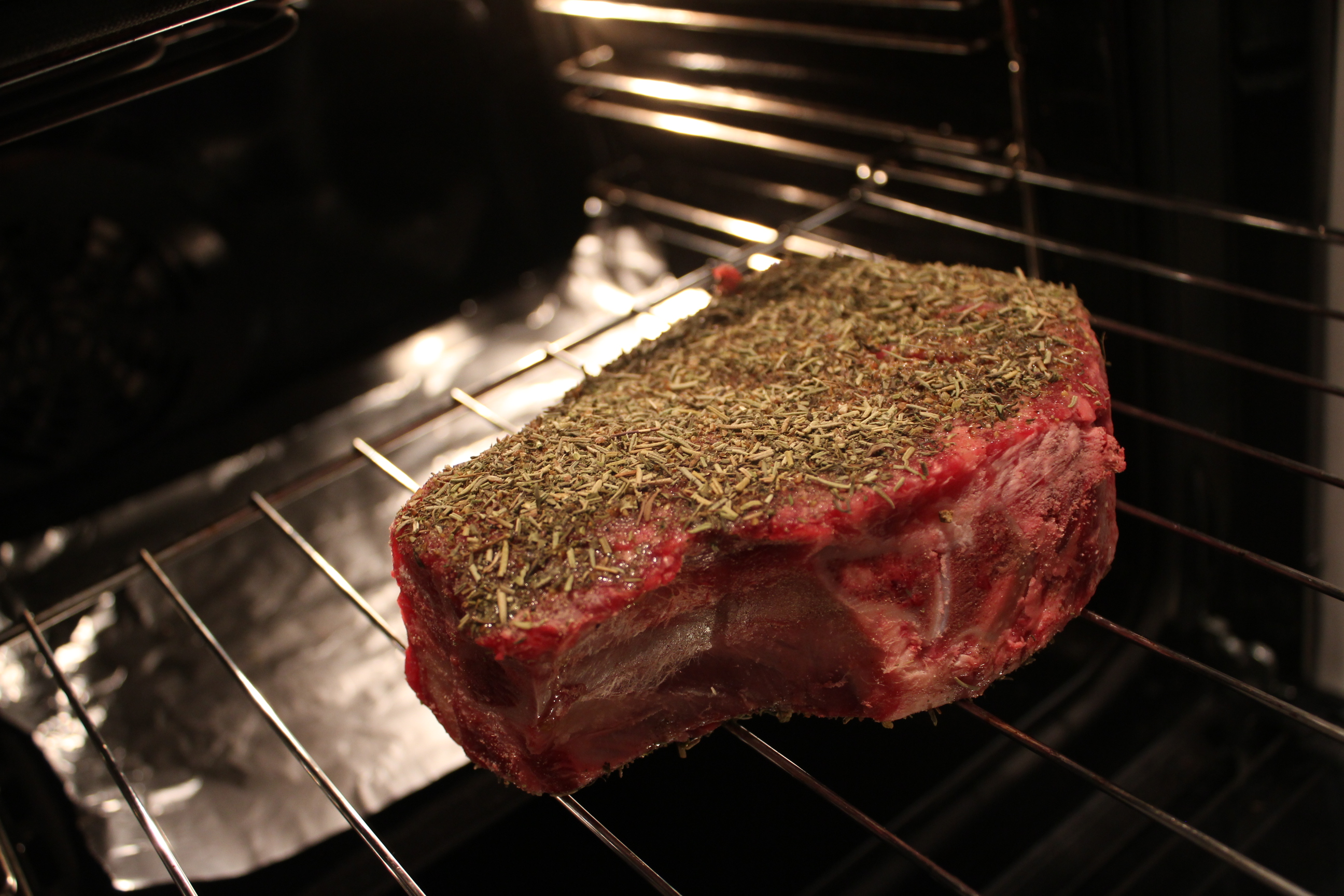
Place the oven rack on the upper middle part of the oven, and put the côte de bœuf directly on the rack (the aluminium foil that you see in the photo is only to cover the bottom part of the oven from the fat!). Cook it for 10-15 minutes on each side. Depending on the greasiness of the meat and the general quality, you may have a lot of smoke coming out when you open the oven, so keep the kitchen windows and ventilation on!
6. Get the côte de bœuf our of the oven. For juiciness, it is recommended to wrap the meat in aluminum foil for 15 minutes before serving it, but I rarely do it.. Maybe I do 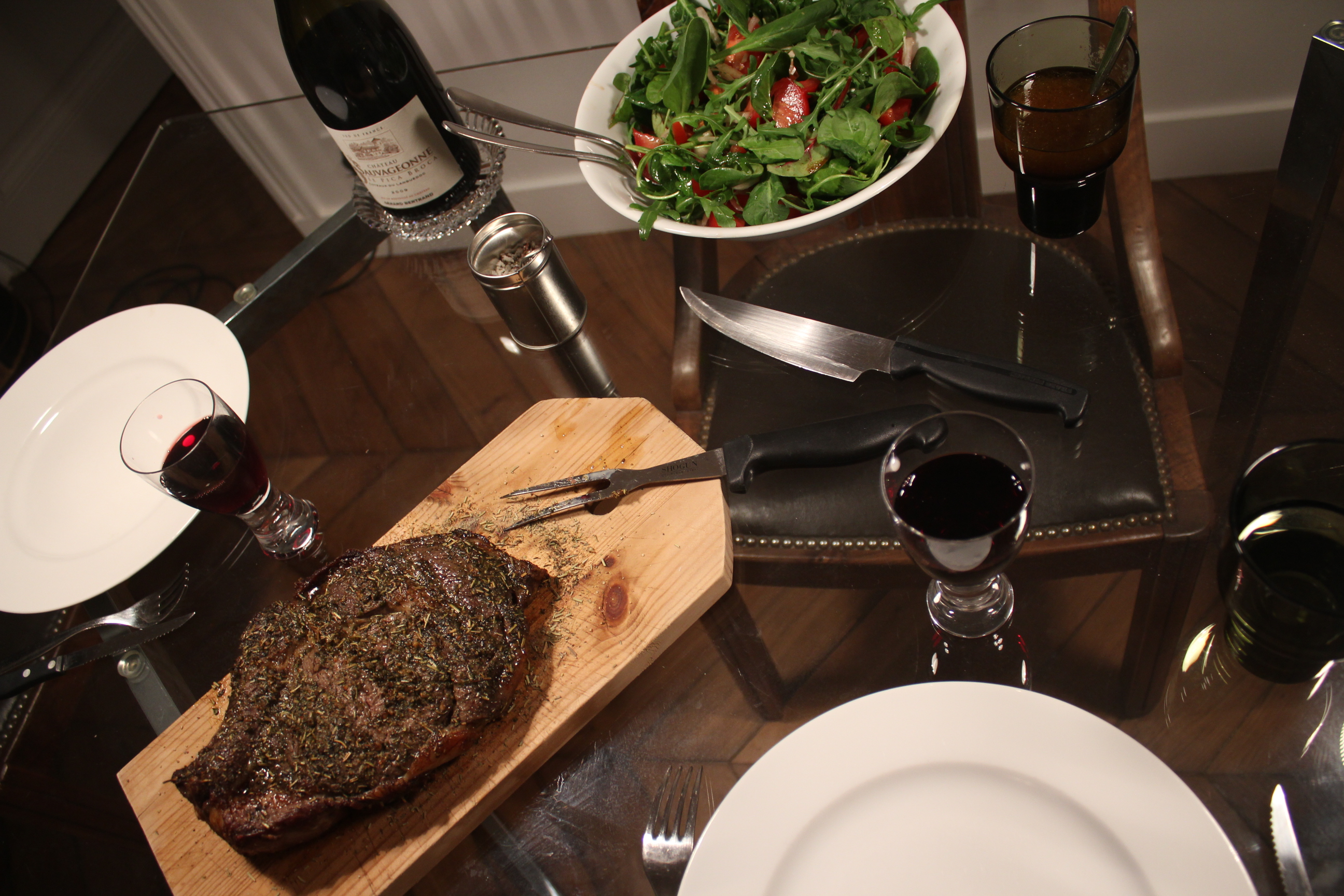 something wrong, but to be honest, I don’t see the difference it is supposed to make, so I don’t do it. So if you like, you can do as we do, and bring your côte de bœuf to the table and cut it into thin slices in front of everyone.
It is only at this point that the salt is added: the type of salt that is sprinkled on the côte de bœuf is coarse sea salt. If you want to make your dinner even more perfect, buy the salt that comes from Guérande, located in the Southern part of Brittany where salt making goes back to the Iron Age (http://www.leguerandais.fr).
7. Serve the salad (and potatoes if you made them), not forgetting the wine. We had purchased a bottle of red from 2009, Château la Sauvageonne, Cuvée Pica Broca, Langu edoc Roussillon, Coteaux-du-Languedoc AOC (http://www.1907.fr/nos-domaines/domaine-la-sauvageonne/domaine-la-sauvageonne-pica-broca-terrasses-du-larzac-rouge.html). This time it was not a bottle of independent winemakers, but one of Gérard Bertrand, a big name in the French and European wine merchant business (http://www.gerard-bertrand.com).
I hope you enjoy this very-easy-to-make meat dish as much as I do, and Bon Appétit!
 Le Baron Rouge is an excellent wine bar located at 1 Rue Théophile Roussel, 75012 Paris (near le marché d’Aligre) open all year around but if you love oysters and live nearyby in Paris, hurry up! Tomorrow is the last day they sell oysters that come from Le Cap Ferret.
Vignerons Indépendants (http://www.vigneron-independant.com/) is a network of independent winemakers who are present in France through eleven regional federations. Their aim is to produce authentic wine with personality and the process that brings the winemakers to this result is protected by a Charter of thirteen principles. To show a potential consumer that this is serious business that gives a guarantee of quality, the network puts its logo on each bottle they produce.  For example, we buy wine in Paris at our caviste who is specialized in the wines of independent winemakers, but if we need to buy wine elsewhere, we try to look for bottles with this logo as it most probably increases our satisfaction level (and contributes to the sustainable development of viticulture).
We had been offered complimentary tickets to visit Le Salon des Vignerons Indépendants (http://www.vigneron-independant.com/auxsalons/), so there was no better way to spend a Sunday afternoon than head to the Northwestern part of Paris, Porte de Champerret. As soon as we walked in, I was reminded of how fun it is to talk with people who truly love what they do. Moreover, I think working so closely together with the nature, whether animals or plants, gives a person some perspective and makes him often humble…. Of course, amongst 1,000 winemakers present in the Salon, we also met those who did not bother presenting their products, but in general we met lovely and friendly wine producers. In fact, if you read the Charter, you see that an independent winemaker should respect his customers and be someone who “is happy to welcome you, to give you advice about wine tasting and introduce you his production“. If you stopped reading after “1,000 winemakers” and are now worrying about how to navigate through so many producers from eleven different regions, do not worry. It can be overwhelming but the best thing you can do is to remember enjoy it. There is (almost) nothing worse than a wine snob who doesn’t know much but pretends to know it all! Our idea was to choose approximately ten stands, and maintain a healthy balance of visiting wine producers we really like (that we want to buy from) and visiting new ones (trying to learn more). I am hereby presenting three winemakers whose wine we tasted, liked and bought, but I know there are many other excellent wines out there!
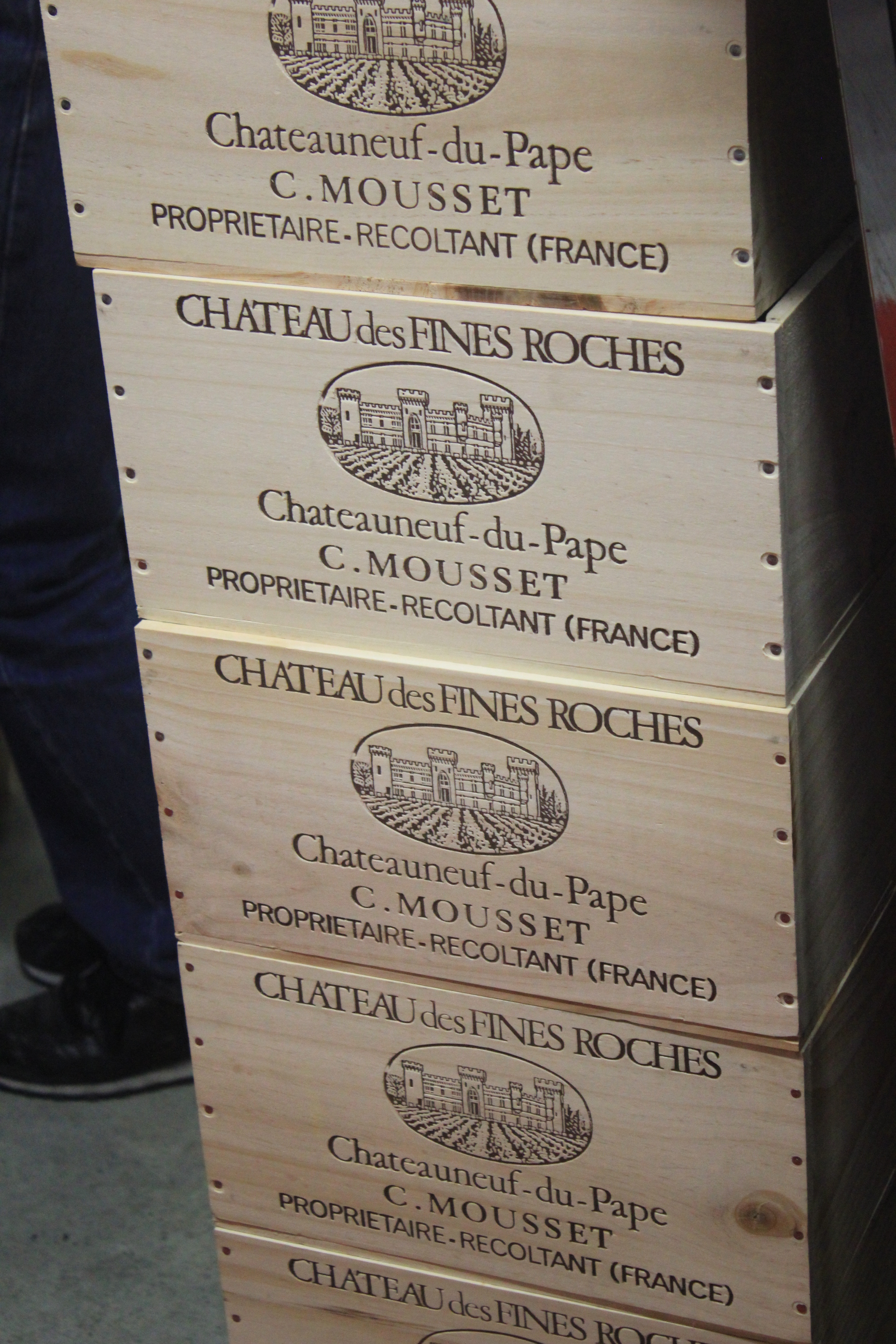 1. Vignobles Mousset-Barrot, Châteauneuf-du-Pape (AOC) & Côtes-du-Rhône-Villages (AOC)
Vignobles Mousset-Barrot (http://www.vmb.fr/) is a family business that has vines growing around three château in the southern Rhone Valley of France. Grapes that grow near Château des Fines Roches and Château Jas de Bressy make red and white wine and fall under the appellation of Châteauneuf-du-Pape AOC. Château du Bois de la Garde produces all three colors but in terms of the appellation we are no longer longer talking about Châteauneuf-du-pape but Vin de pays de Méditerranée, Côtes du Rhône and Côtes du Rhône Villages. A common factor between all of these wines is that they grow around Châteauneuf-du-Pape, which is not only a world-famous appellation d’origine contrôlée (AOC) but also a small town near Avignon. Its history is intertwined with the Popes: in the 14th century the Popes temporarily lived in Avignon and were big supporters of the wine produced in the region.
We were particularly interested in AOC Châteauneuf-du-pape Château des Fines Roches, because a few summers ago we had a superb lunch at this château (www. chateaufinesroches.com) that overlooks the vineyards. After a pleasant tasting of several reds, we ended up buying a 16.50€ bottle of red from 2010 (http://www.vmb.fr/sites/default/files/FR_roug.pdf) that goes perfectly with saucy game meat, like wild boar or rabbit stew. The next time we are in the region, we will definitely try to stop at Château Jas de Bressy, where the Vignobles Mousset-Barrot wines are stored and sold (http://vmb.fr/en/access-map).
2. Domaine Les Luquettes, Bandol (AOC) & Vin de Pays du Mont Caume (VDP)
From Châteauneuf-du-Pape in the Rhone Valley we moved towards the French Mediterranean and a seaside town called Bandol. We know the region quite well, and many long lunches, and even longer dinners have been enjoyed in that region and in the company of une bouteille de rosé. Moreover, a few years ago we were invited to a wedding in a private island (owned by Paul Ricard) called l’Île de Bendor (www.bendor.com), ovelooking Bandol. 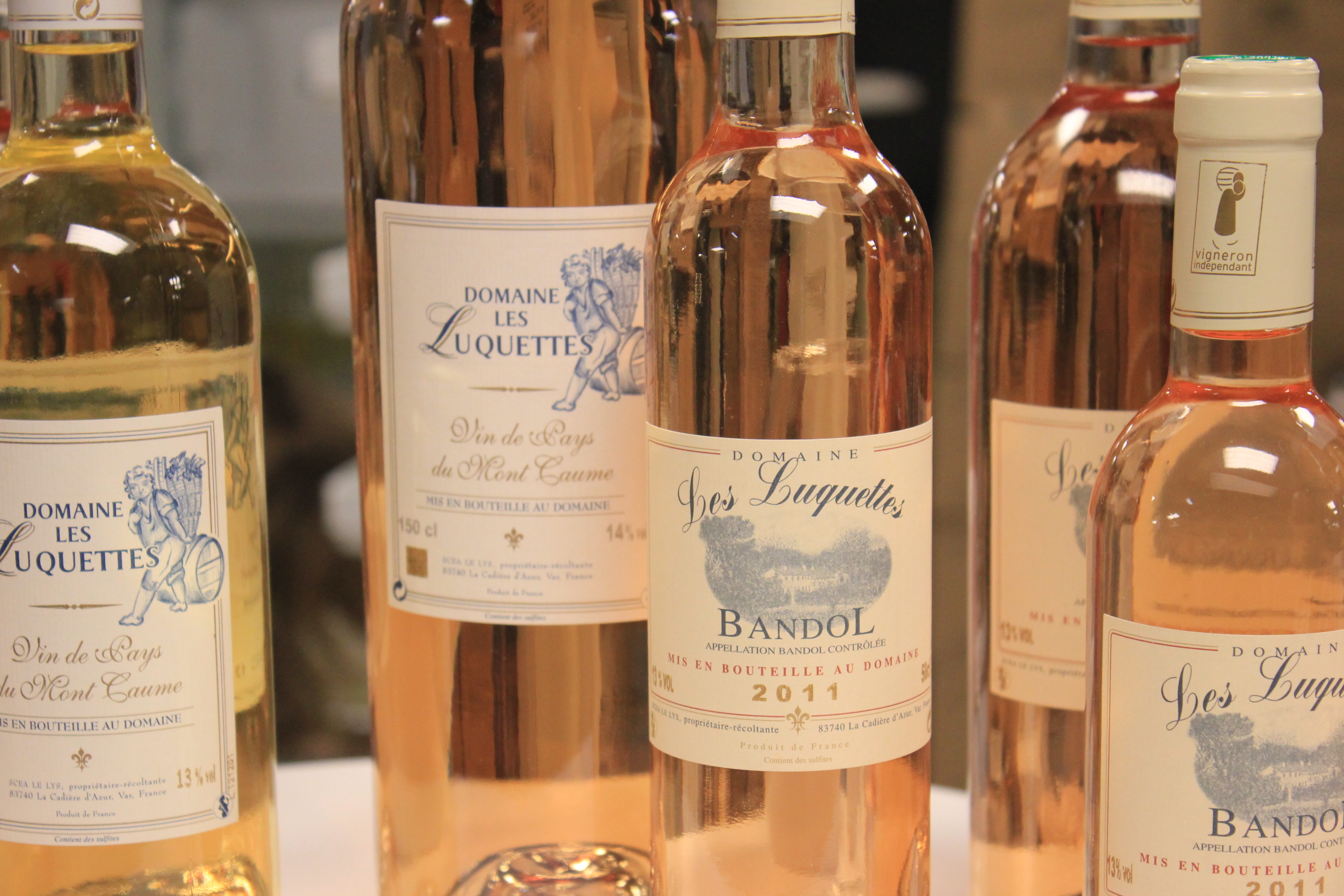 So when Elisabeth Lafourcade, the owner-manager (propriétaire récoltante) of Domaine Les Luquettes (http://www.les-luquettes.com) smiled at us as we were walking by, we didn’t hesitate to stop at her stand. Before we realized, we were tasting their different wines while listening to a crash course to wine history of the region. We learned that in 600 BC Ionian Greeks from Phocaea planted the first vines in the region. When Romans arrived less than 400 years later, they found vineyards doing very well; so well that the wine was ready to be exported, and this is exactly what the Romans started doing. Originally Bandol was famous for its red, and the rosé came later. Because of its history, geographical location and centuries-old tradition, the Bandol wine has become so special that it was one of the first wines to receive its own appellation (AOC Bandol) in 1941 (http://www.vinsdebandol.com/aoc/decret-du-11-novembre-1941/?lang=en).
 Wine-making history at Domaine Les Luquettes goes back generations; their cellar was built in 1852. Today their two primary appellations are Bandol (AOC) and Mont-Caume (VDP). In 1997 the first bottles of Domaine Les Luquettes were released and today they are exported to Canada and the UK.
Optimists as we are, we decided that the sun will soon start shining in Paris and we can start enjoying our new balcony, so we bought two (rosé) bottles of Vin de Pays du Mont Caume for 6€ per bottle. Now the only thing missing is the temperature to reach at least 15C (and preferably 20C…)!
3. Clos des Augustins, Languedoc Pic Saint Loup (AOC) & Vin de Pays du Val Montferrand (VDP)
At Clos des Augustins (http://www.closdesaugustins.com), located some 20km North of Montpellier, the vines are grown according to organic methods; “reasonable culture” (culture « raisonnable ») as the owners call it. In 2004 they decided to go even further to show their commitment and respect of nature: biodynamic viticulture was introduced.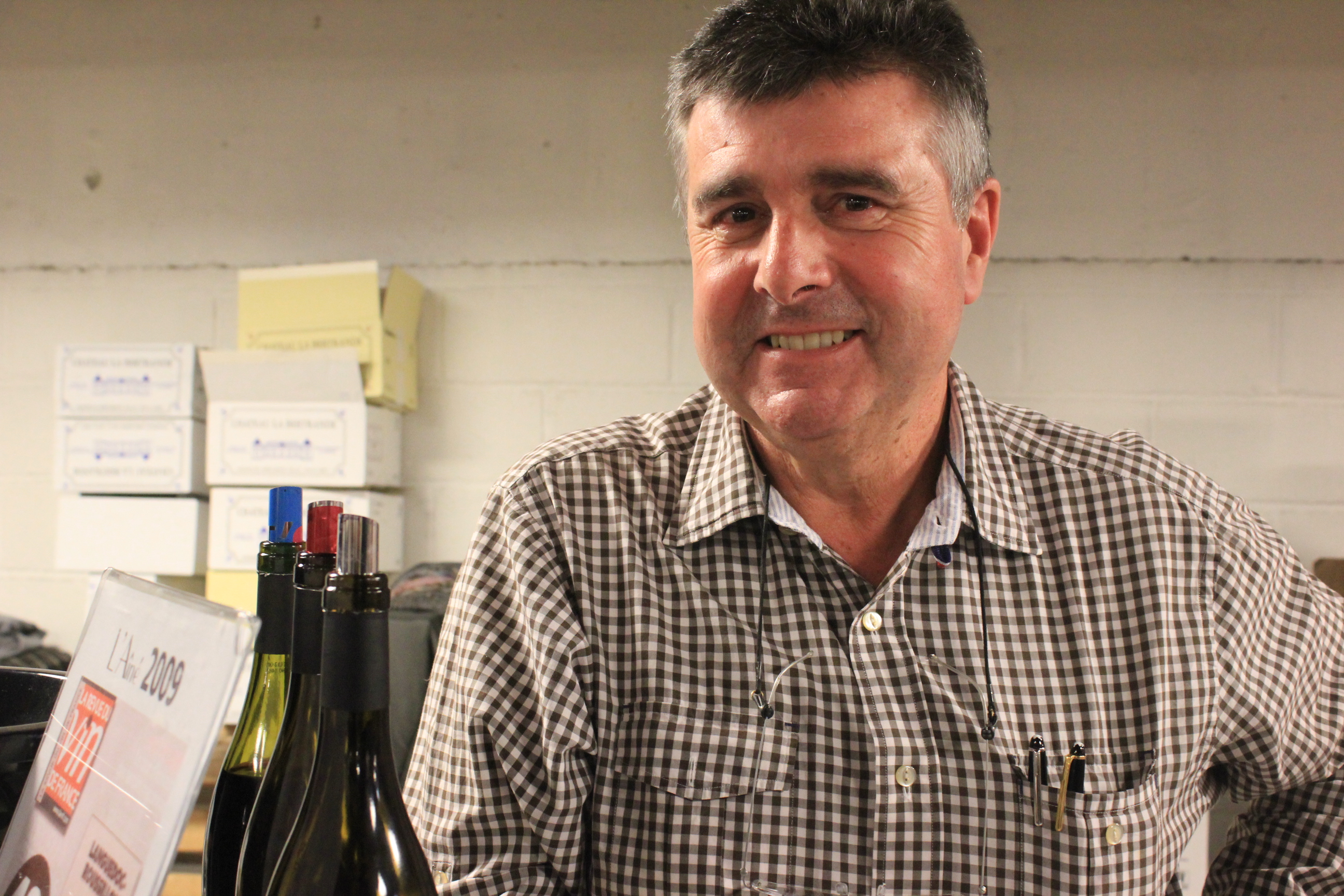 But what does biodynamic viticulture mean? The father of the biodynamic agriculture is an Austrian philosopher Rudolf Steiner who suggested that the nature should be seen from a spiritual and philosophical perspective as well. In my own simplistic words, I say that he wanted us to see the nature beyond green leaves and black soil –to realize that there are forces beyond our knowledge and no matter how much medicine we give to a sick plant, it won’t work unless we do it in respect of these spiritual forces living in the nature.
How does this then translate into a wine producer’s daily life? Well, he needs to practice his profession according to the lunar calendar and the alignment of planets. For example, only certain days are good for bottling wine. This may all sound a bit weird especially in the beginning, but biodynamic wines have indeed proven skeptics wrong by doing really well in blind tastings! (useful information can be found here:
http://www.boissetfamilyestates.com/press/FortuneBiodynamics.pdf) The owner, Roger Mezy, offered us to taste all three colors produced by Clos des Augustins. In terms of the appellation, we were now talking about Pic Saint Loup (AOC), Val de Montferrand (VDP) and Coteaux du Languedoc (AOC). Our bags were already very heavy but white wine was something we had not yet bought, so we purchased two bottles of “vin de copains” (something to be drunk with friends): Les Bambins Clos des Augustins, Vin de Pays du Val de Montferrand (2011). We paid 8.50€ per bottle and the bottles are in the fridge waiting for maybe a fish dish, or simply for friends to come over!
PS If you are interested in wine and are planning to come to Paris in the autumn or spring time, try to coincide your visit with one of the wine salons. It really is a lot of fun and provides an excellent way to learn more. And if you are just driving around France, do not be afraid to stop to buy wine directly from the producers. It is best to call in advance, but no one says you cannot stop by and ask if this is a good time to visit. Lastly, if you are interested in individual making of things, do not forget to do a little bit of research in order to find the logo of Vignerons Indépendants in the bottles you buy!
L’Île Saint-Louis and le Marais
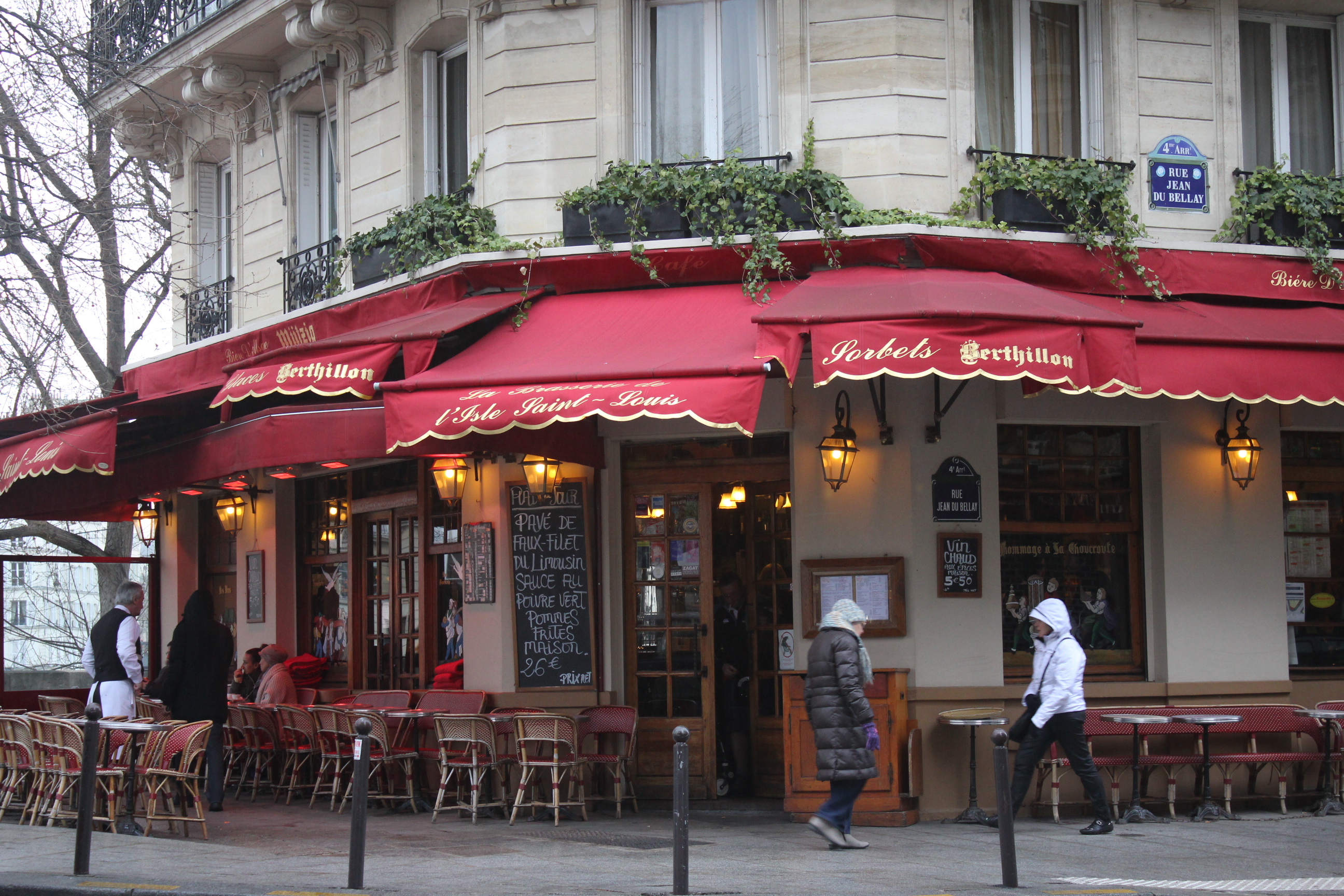
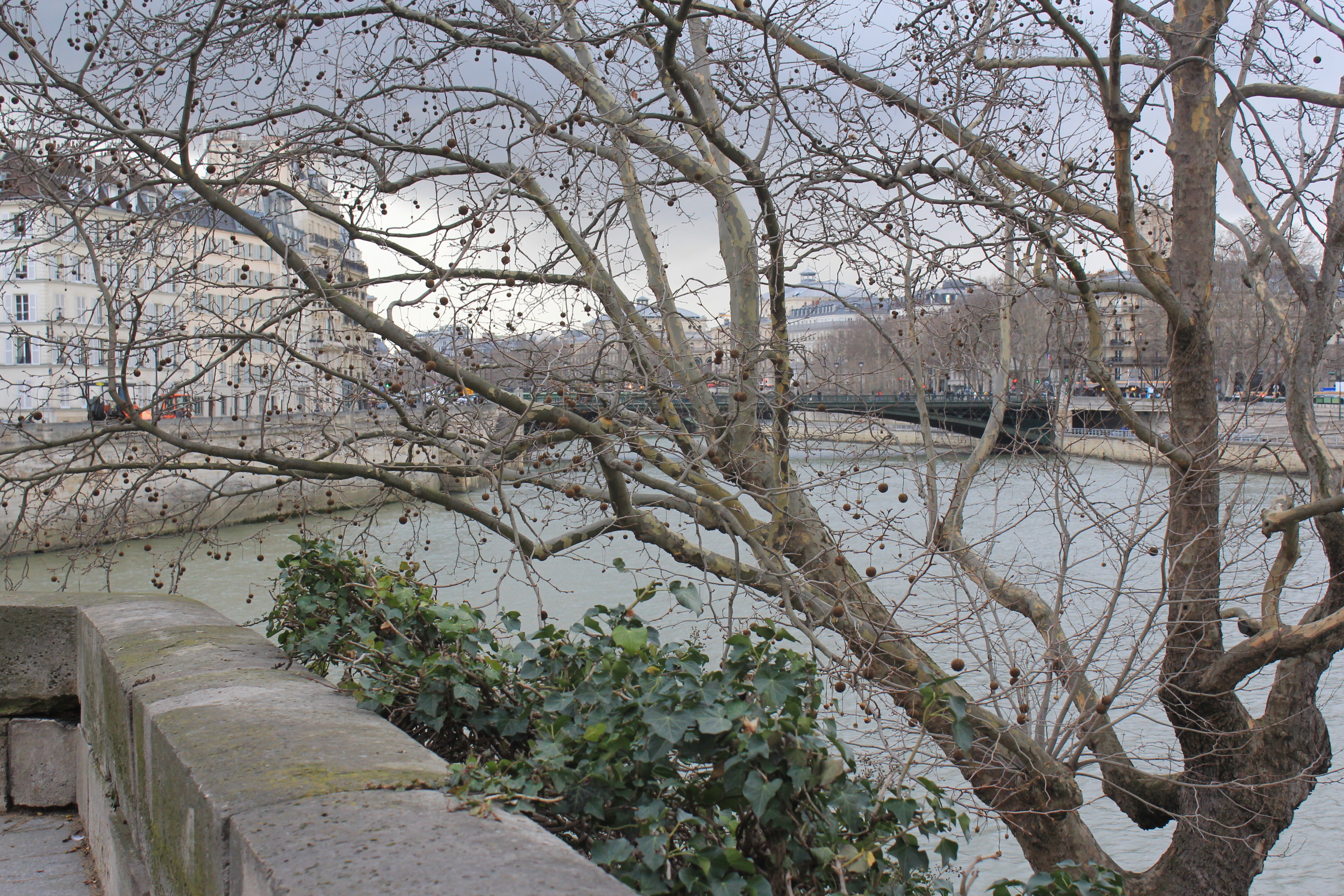
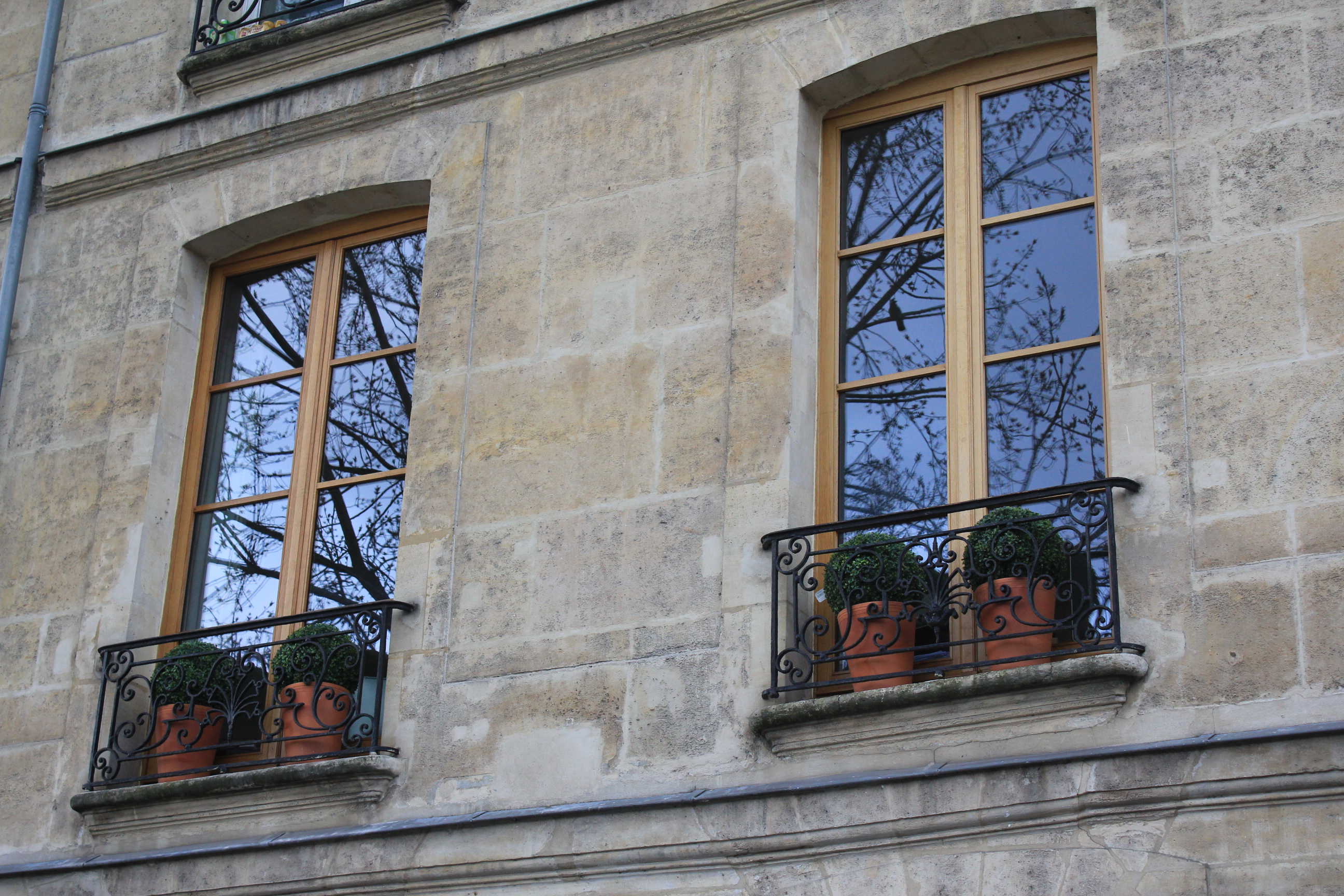
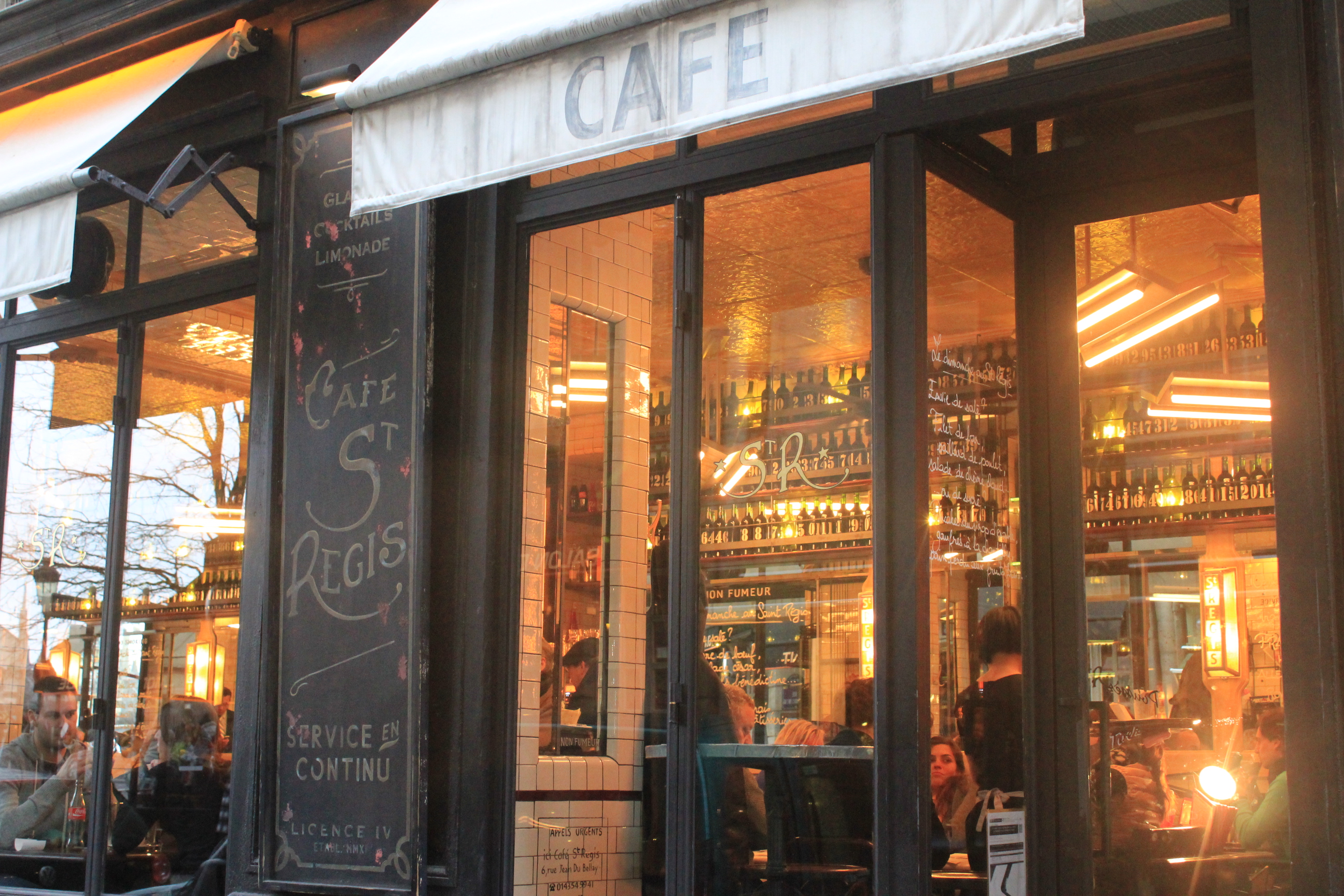
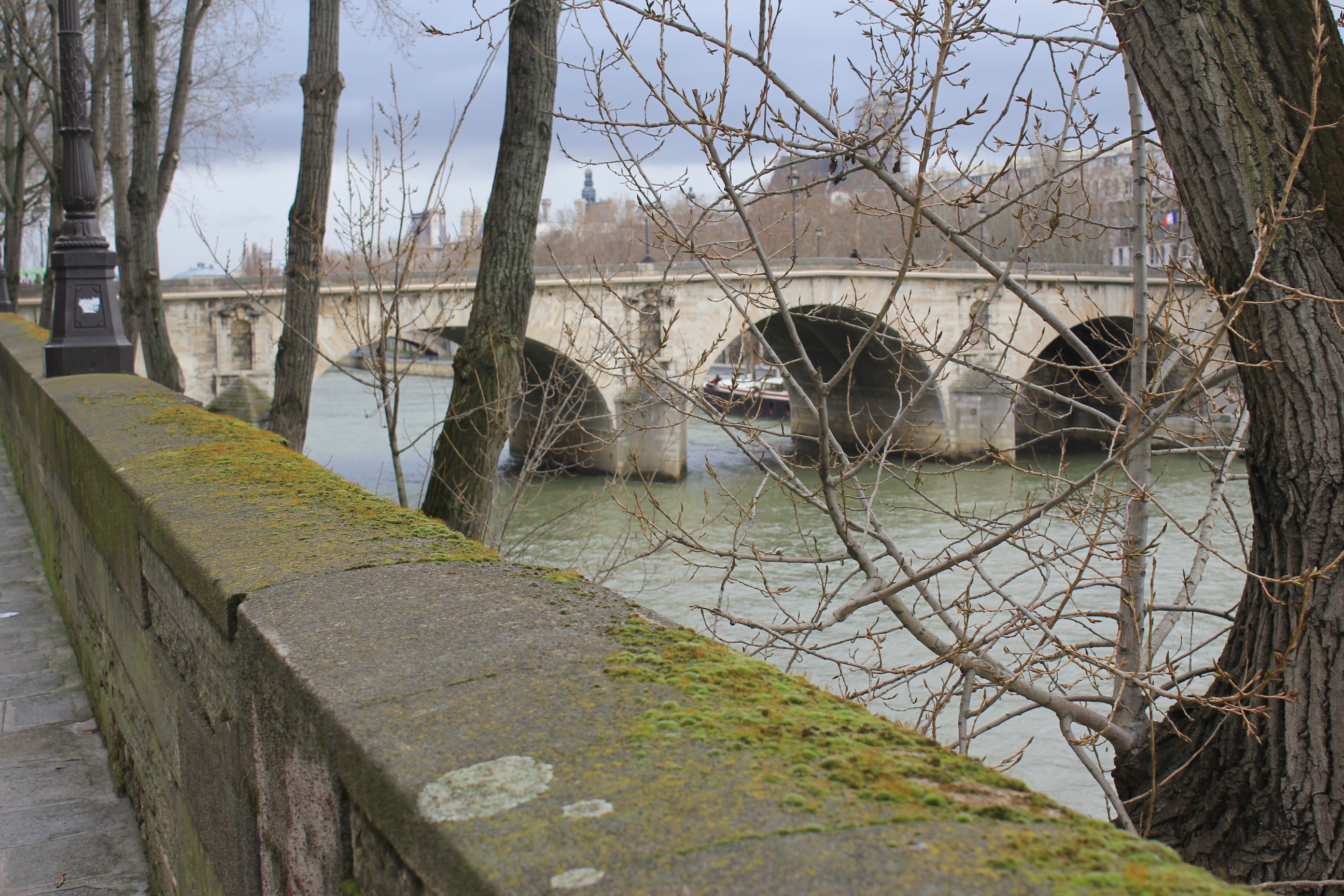
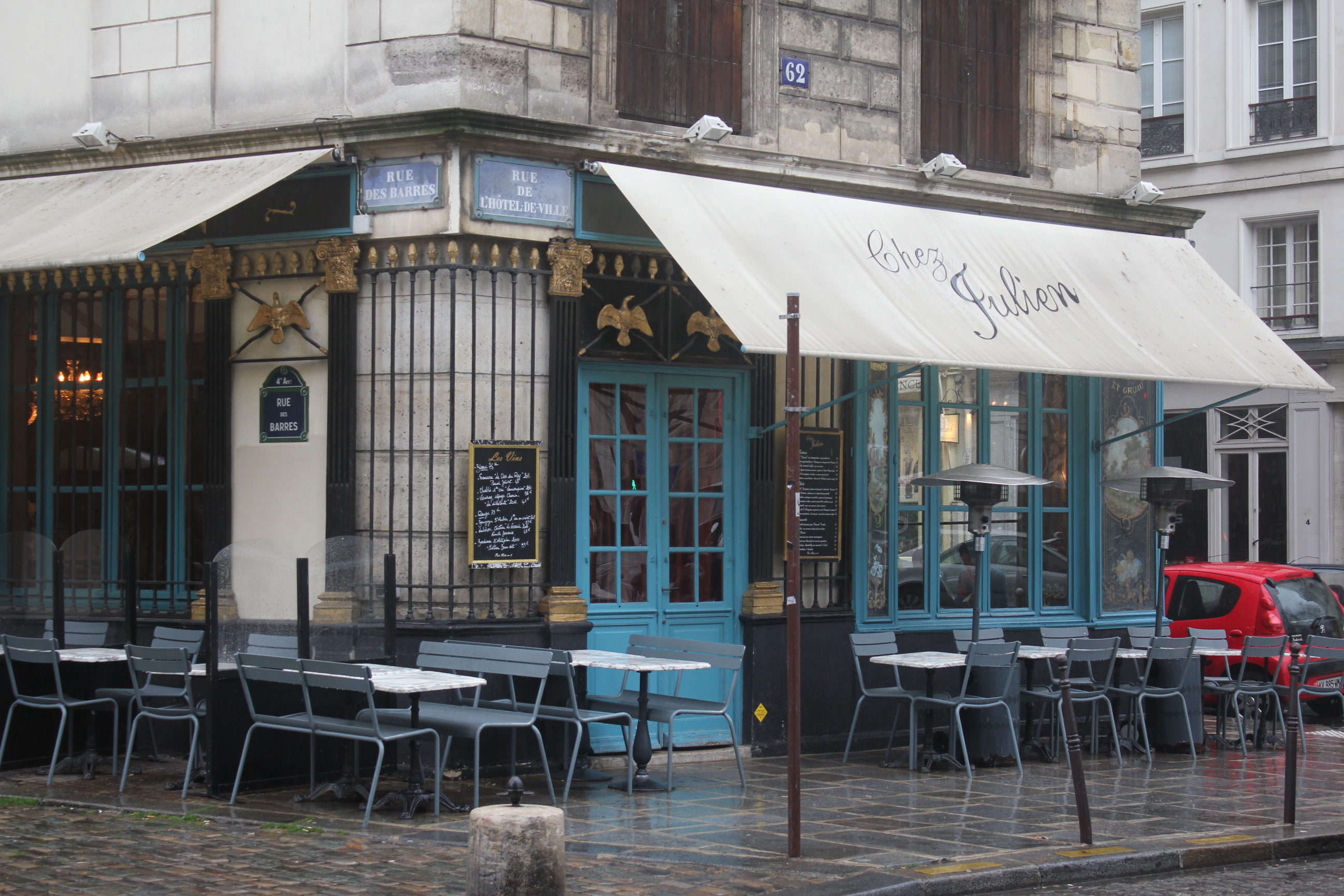
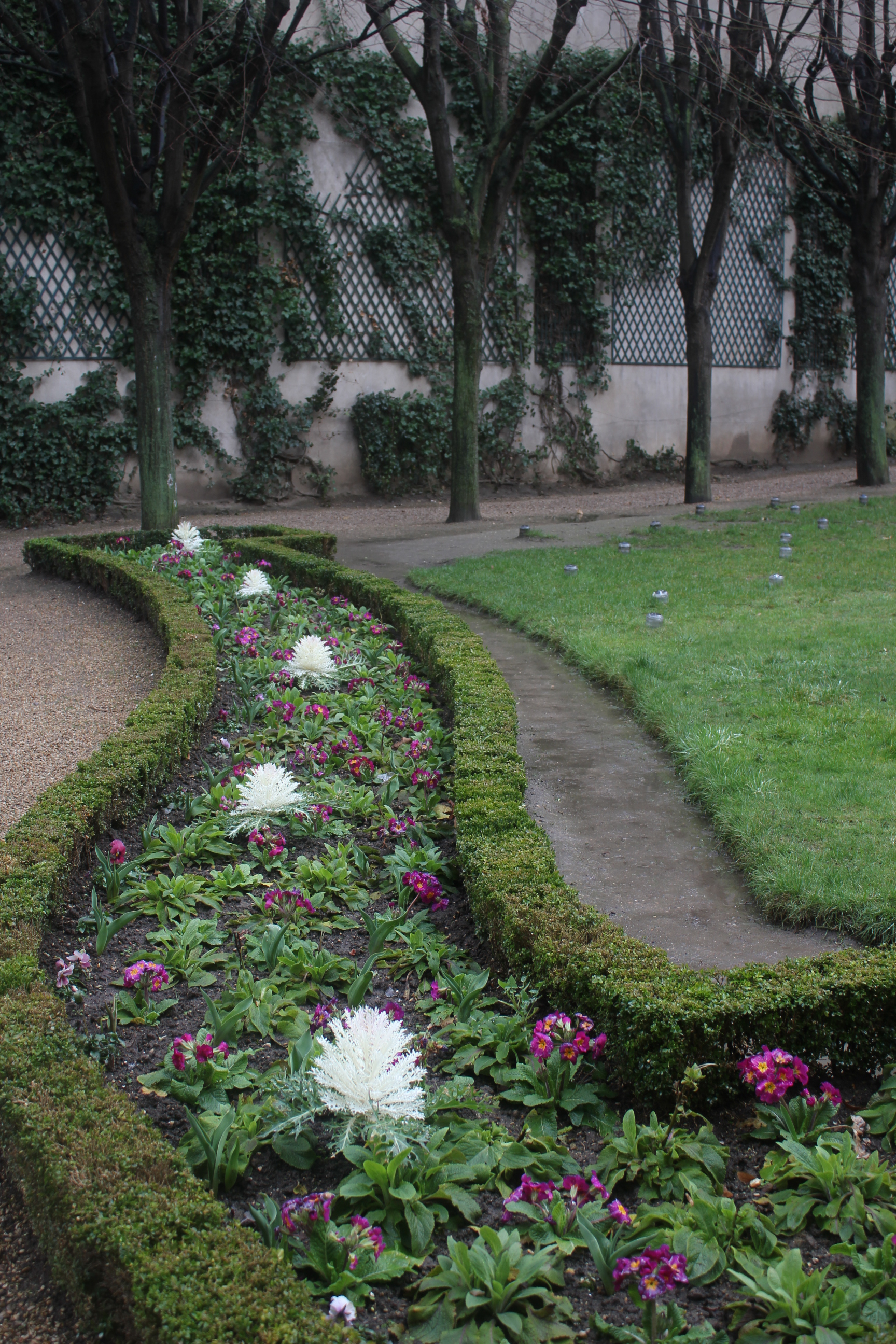
Le Marais and la Place des Vosges
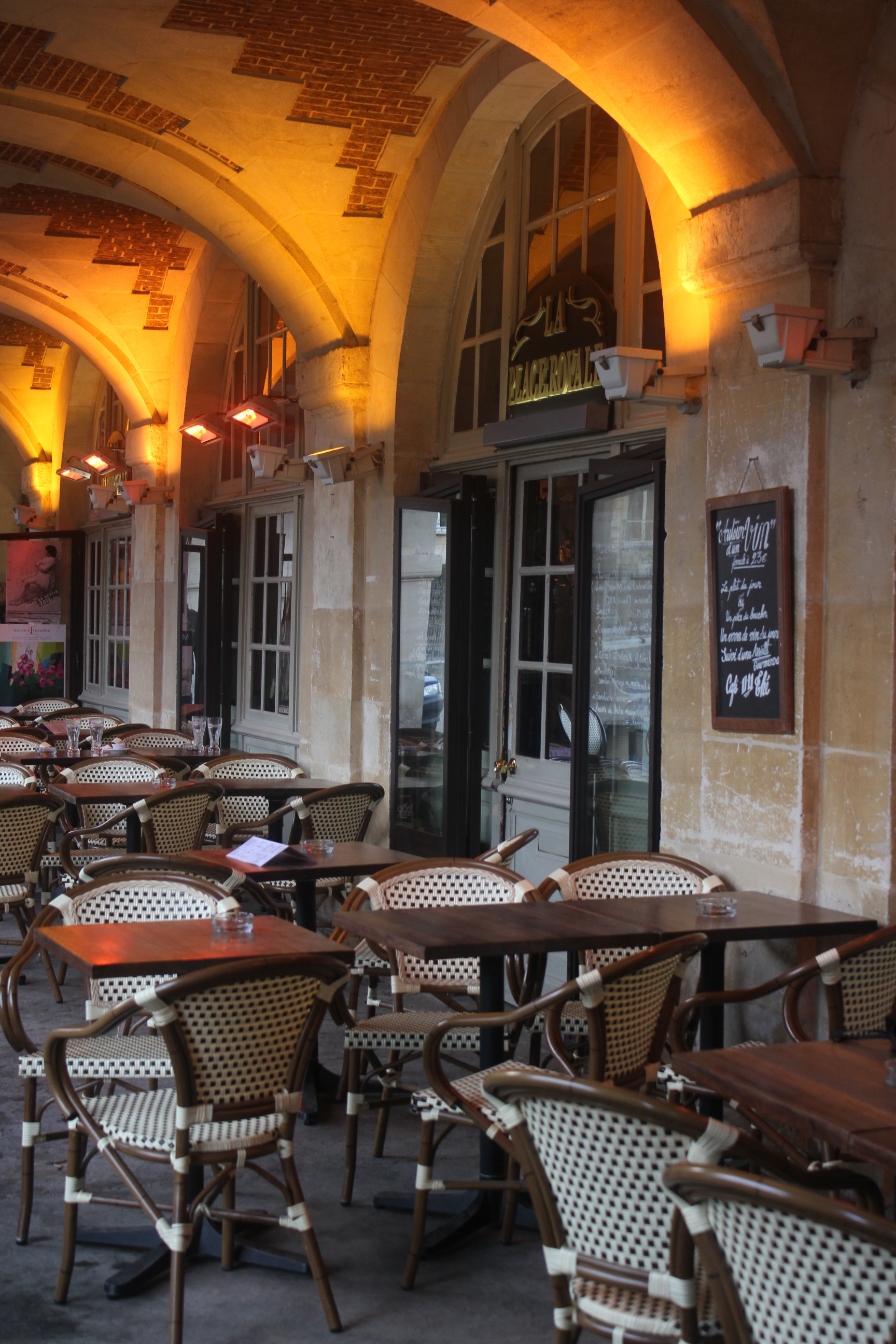

 There are many superb old-fashioned cafes in Paris that I like going to especially with friends visiting Paris. As a bonus, I get to play tourist, too. During these last two days, I have been to Le Petit Marcel near the Pompidou Centre, Cafe de la Mairie near the Eglise Saint-Sulpice and La Palette in the Saint-Germain-des-Prés.
La Palette, like many other similar cafes, was frequented by Picasso and Hemingway, amongst other famous names. When we walked in, the lunch hour was just ending and the waiters were getting ready for their own lunch pause. The snow was falling outside but inside the paintings and their yellow and orange colors warmed us up. Large mirrors on all walls were very scratched. There was a charismatic-looking American couple and us. It was an odd hour for an apéritif, but that is all we felt like having, so deux kir s’il vous plaît Monsieur!

After my last blog writing, my husband asked me if I am ever going to write about anything else but food… So, here you go, I will write about Finland and carpets, inspired by today’s snow fall  which still continues in Paris.
In Finland we have a tradition with carpets in winter. Maybe people in other countries do it too, but since I am originally from Finland, I talk about Finland now. When temperature falls, we take carpets to the balcony because the cold weather cleans them, kills the bacteria. My parents actually throw carpets outside and leave them rest on the snow. I can still remember that particular fresh, cold odor of carpets when they were brought inside. (ok, you may find this weird, but please continue reading)
So, every winter in Paris I eagerly wait for the cold that allows me to practice this tradition I learned in Finland. Over my years in P aris, I have also learned not to say it aloud because the city is not equipped for the snow and cold weather and wishing for cold weather is considered almost comparable to wishing for bad luck… But I keep observing the weather forecast, hoping the temperature to drop below zero at least once a year… It is my little secret.
This said, it is happening today! I woke up and learned that it may drop even to minus 6 during the early hours of  Wednesday. So this morning, after learning about the opportunity, I took every single carpet to the balcony. They are still there, getting a special snow and cold treatment. Everyone is happy.
PS For those interested to know, the first carpet comes from Istanbul, one of my favorite cities in the world. The second fragment comes Kyrgyzstan and we use it currently on the sofa. The third carpet comes from Istanbul, too. The last one is also a fragment and I purchased it in Baku, Azerbaijan (another fascinating city!).
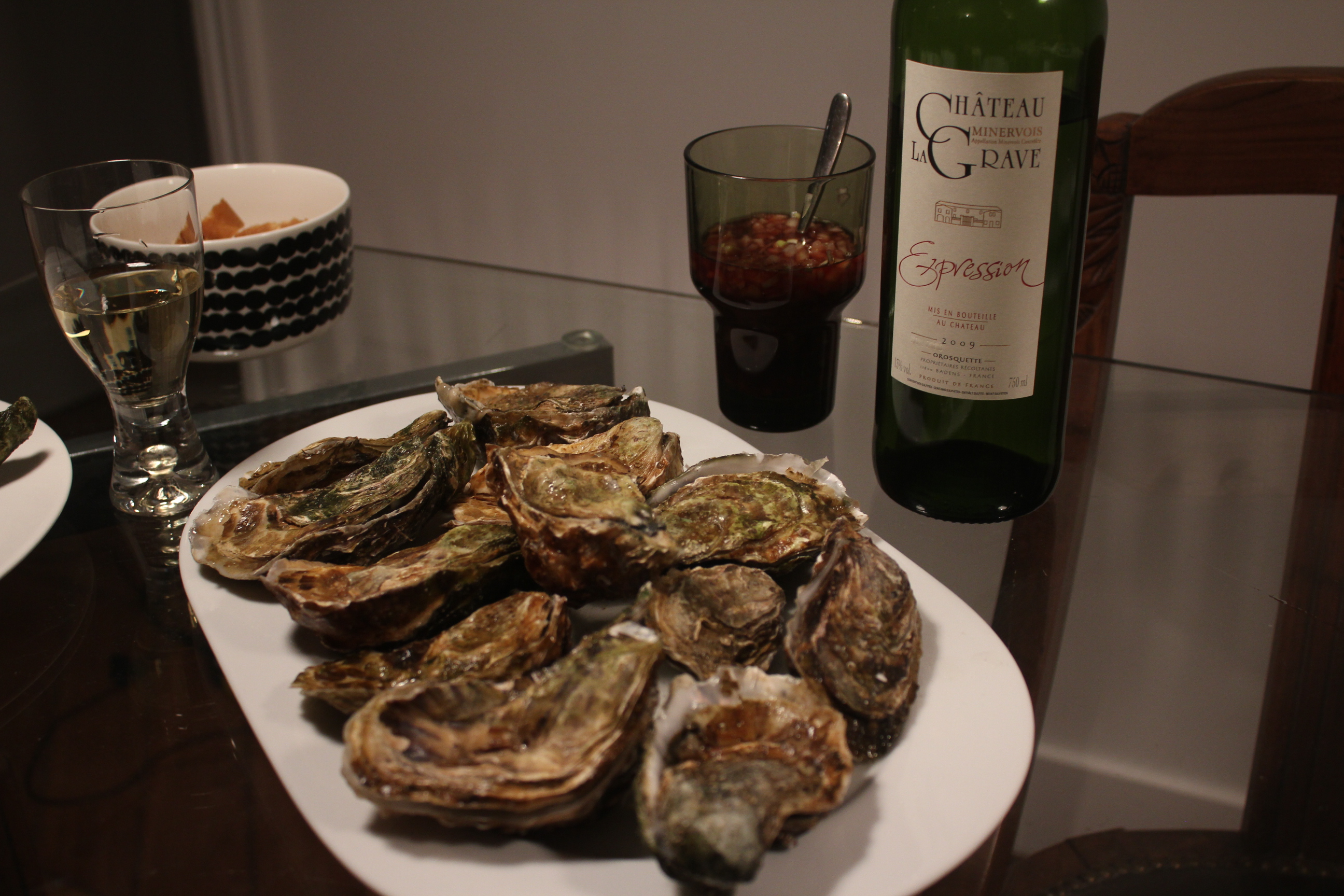
Something that I missed a lot while in Southeast Asia is oysters. Amongst many other benefits, raw oysters are one of the best sources of zinc and I just love the iodine-rich sea water taste. In my opinion, they are best eaten nature, and at most with vinaigre aux échalotes. No t forgetting bread and salted butter, and a bottle of white wine, of course! These oysters come from the Oléron Island, which is France’s second biggest island after Corsica, located off the Atlantic coast roughly speaking between Bretagne and Bordeaux.
To complete the meal, we had chosen three different cheese: Bethmale from the Pyrenees, Manchego from Spain and Ossau Iraty from the Basque country. A perfectly happy marriage between France and Spain and the region in between!
Our local caviste in the 15th arrondissement had suggested an excellent bottle of white wine to go with the oysters: Chateau la Grave ‘Expression’ Minervois 2009 (http://www.chateau-la-grave.net/wines/expression-blanc.html). For the cheese, we had bought Buzet Les Prieurs de Fonclaire 2010 (http://www.nouvelle-epicerie.fr/fr/sud-ouest-provence/5201-buzet-les-pieurs-de-fonclaire-2010-rouge.html). Both bottles cost less than 10€ and far exceeded our expectations.
 pearlspotting