During my last visit to Helsinki I did something that I recommend every tourist to do. I visited some of the most important art museums of the Finnish capital: Ateneum Art Museum, Design Museum and Kiasma Museum of Contemporary Art.
This may sound like a lot of museums to do in one trip, but in my opinion these museums provide interesting insight into what Finland used to be, how it has evolved, what it represents today and where it is heading to. In fact, I would even go as far as to say that what you will learn about Finland through art in these museums will lay foundations for your further encounters in Finland and make you better understand this sparsely populated but geographically big country, sometimes also described obscure.
My first mission was to visit Ateneum and particularly its “Highlights of the Collections” section. To me this is where I would get to the roots of Finland; time travel to the Romantic Nationalism era of the late 19th century when Finnish artists begun to praise local traditions and culture. Kalevala (the national epic) and its mythology, lakes, majestic scenery, peasants, folklore and nationhood were recurring themes in the paintings of Akseli Gallen-Kallela, Eero Järnefelt, Albert Edelfelt, Helene Schjerfbeck, Hugo Simberg, to mention a few. As every Finn, I have seen these masterpieces thousands of times, but I wanted to revisit them to see what they can explain to me about my country of origin. As I continued observing, I was reminded of the harsh living conditions of this northern country, the period of the Swedish and then Russian rule, as well as of the solitary personality type of a Finn who still often is more relaxed alone (or in the nature) than with other people.
Wandering in front of some of the most famous Finnish paintings did open the door to the Finnish soul and I understood that what these artists expressed more than 100 years ago is still very much alive. Today, the Finns continue to love the nature and lakes, and forest is a place of meditation. Indeed, this is why in Finland there are about 500,000 summer houses, sacred places where Finns jump into their dear lake in all weathers, often naked as in this painting.  On my way out of Ateneum my mind was stuck on Finland that was an agrarian state much longer than its neighbors. How did this country that was so poor just over 100 years ago became one of the richest and most gender-equal nations of the 21th century? The answer to this question was to be found in my next destination, Design Museum, where I was going to witness the transformation that Finland underwent. First around its independence in 1917 and second immediately after the Second World War that left the country ruined and badly injured physically and psychologically.
 Already during the Russian rule Finland had taken steps toward showing its distinctiveness. The artistic triumph of the Romantic Nationalism era culminated in the Paris World’s Fair in 1900 when Finland made its international breakthrough: “we are culturally different from Russia” was what Finland was saying to the world and the world loved the message.
When Finland gained its independence seventeen years later, architecture and design played an important role in the identity making. The poor, agrarian past remained in the back of the mind of designers, encouraging them to create simple and practical but aesthetic objects, often in harmony with the nature and natural materials. The predominant Protestant religion further directed the designers toward plain and unornamented creations. The years following the Second World War filled Finnish homes with tears and poverty, but some comfort was brought to the Finns by the international success of Finnish design. The postwar period in Finland is called the Golden Age of Finnish Design and for a good reason. This is when Artek, Arabia and Marimekko became internationally sough-after brands. The Aalto vase, created in 1936, continued to travel around the world, and Jackie Kennedy stood by her husband wearing a Marimekko dress in 1960. The Finns were slowly but surely recovering from the wounds of the war.
Finnish design continued to strengthen its domestic and international position in the ’60s, ’70s and ’80s. New materials like plastic emerged, creating new opportunities for designers like Eero Aarnio and Yrjö Kukkapuro who became forerunners of plastic chair design. As Finland grew richer, design expanded to home appliances (for example, Fiskars scissors) and various aspects of daily life (for example, Helsinki got its funky orange metro in 1982).  Indeed, during many decades Finnish design and art were seen as means to serve everyday needs, and everyday needs were seen as opportunities to create design and art. Convenient! Very Finnish! The moment I understood this idea, I understood a lot about Finland. Art and design were always meant to be available for everyone, regardless of person’s social class. The fact that every Finnish home is full of “design objects” is probably one of the best proofs of successful nation building that is equal and democratic…?
Now, let’s fast forward to the ’90s. Once again Finland took big international steps and Finnish design contributed to the success of the world’s most famous telephone, the Nokia phone. However, this was not all that was happening. During the ’90s Finland embraced the world in an unseen way. Finland’s EU negotiations coincided with the construction of Finland’s first truly international museum, Kiasma. Curiously, but as a reflection of the spirit of the time, it was designed by an American architect.  Some have compared Kiasma to Espace Louis Vuitton and Pompidou Center, but during my visit I realized that there was something particularly Finnish about Kiasma’s approach to contemporary art. Its desire to create a dialogue. In fact Kiasma is a platform where a dialogue between decision makers, artists, audience and society takes place, and as a demonstration of its ideology, I stumbled upon an exhibition curated by Finnish daycare children. Talking about participation and engagement!
While I admired Steven Holl‘s minimalist hence oh-so-Finnish architecture, I realized that Kiasma played and still plays a very symbolic role: it is a prime example of Finland’s forward-looking attitude. Finland has strongly tied its development to the future (as opposed to some countries that are more past-focused) and is open to the world. As Ville Kylätasku, an aspiring, young Finnish artist residing in Berlin told me, “To me, Kiasma is like a window through which Finland looks at the outside world”.
So, what did visiting these museums teach me about Finland? That art has played a strong role in the Finnish identity making. That art is practical and accessible. That often design objects and daily needs look the same. That Finland is a young country still looking for its place. That even after Nokia Finland will continue making international headlines. That there is nothing more sacred than a lake (and if you a foreigner visiting Finland, do jump –preferably naked– into that lake!).
Ateneum: http://www.ateneum.fi
Design Museum: http://www.designmuseum.fi
Kiasma: http://www.kiasma.fi
***
Note: The idea behind this write-up was to see what kind of Finland-related emotions and ideas these three museums bring to me –“me” being someone who left Finland in the ’90s, travelled the world and settled (at least for the time being) in Paris. “Me” being someone who finds herself no longer fully Finnish and not yet (and maybe never?) French, but who is interested in individual and national identities.
Do notice also that I am not an art historian. I have tried to check facts and figures, but as always, do your own research and certainly do not take every word and sentence I wrote as a representative of the absolute truth. These are my ideas and should be taken only as such.
Lastly, I would love to hear your opinion about Finland and Finnish art! Please do so by writing your comment below this post, by Facebook (Pearlspotting) or by Twitter ()!

 This is the weekend when Finland shuts down. As early as Thursday afternoon people started migrating to summer houses by the lake or the sea, and they will stay there until Sunday. Activities include sauna, swimming, outdoor games, fishing, water sports and barbecue. It is the weekend when the sun never seems to set.
  The Midsummer holiday (Juhannus in Finnish) is full of symbolism and magic. Some villages prepare a hug bonfire, kokko, which usually burns by the water. In addition, there are other traditions and rituals that include running around naked, looking deep into water, collecting flowers and placing them under the pillow and observing the direction of the bonfire smoke, to mention a few, and all these rituals are for the purpose of finding a decent husband and getting a hint of who he may be. Indeed, Midsummer is originally a pagan celebration.
 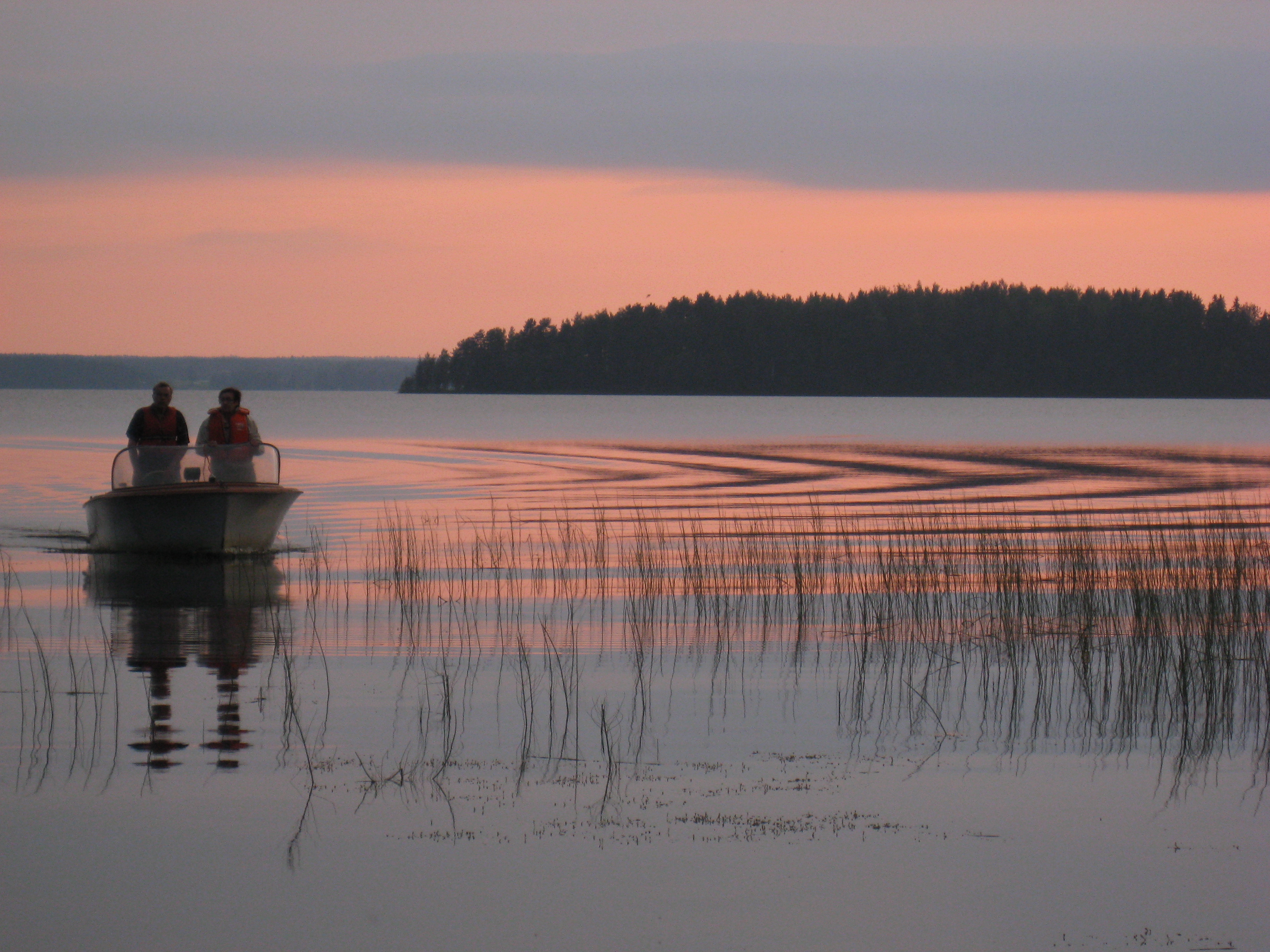 I have not been able to join Midsummer celebrations in Finland for a long time and it is a pity. It really is one of the happiest celebrations in Finland (even if every year someone gets too dunk and drowns…). Now that I am thinking about it, I realize I am more nostalgic about Juhannus than I am about Christmas! And to be very honest, uploading these photos (taken at the summer house) made me cry a bit. To me this is the most beautiful place in the world.


 pearlspotting