Tag Archives: recipe

My chili con carne

“If It’s Chili, It’s Personal” runs the title of a recent article by The New York Times. And this is exactly what I was thinking last Thursday when I was home alone, preparing Chili con carne at 10 pm. Make it personal, use your imagination.

My chili con carne:

1. Saute two large sliced onions until they get nice brown color. Add garlic, cumin-coriander powder, Indian chili powder, lots of dried marjoram, paprika powder and Jamaica pepper (also called “allspice”). Add minced beef meat (about 600g). Keep stirring.

2. Add slices of raw carrot (I used two medium-size carrots).

3. Add slices of celery (I used an entire celery stalk, about 20cm, not forgetting the leaves).

4. Add 2dl of tomato purée.

5. Add about 2dl of Slow-roasted cherry tomatoes.

6. Add two large cans of red beans and one can of white beans. chili con carne7. If you are in a hurry, the meal is ready. If you can wait, let it simmer for 30 more minutes. Add salt to your taste, if necessary.

8. I added one glass of Cahors red wine in the end.

Lastly, serve hot with crème fraîche.

And as a meal like this would not be complete without a glass of wine, I had some very lovely red Bordeaux 2006 from Château Thieuley. Recommended in the 10€+ category!Chateau Thieuley

The NY Times article: http://www.nytimes.com/2014/02/12/dining/if-its-chili-its-personal.html?_r=0

The wine: http://www.thieuley.com

What is a whelk?

A whelk looks strange. It is slimy. It smells like sea and mud. Some call it ugly. Just look at this photo!a whelk

But a whelk is also delicious! Especially with homemade mayonnaise! Moreover, it is rich in protein: around 20g of protein per 100g, which is more than what lamb contains. Would you have believed? In addition, a whelk is rich in vitamin B12, copper and zinc, making whelks more than ten times richer in B12 than beef. Impressive how good these slimy creatures are for us!

You can buy raw whelks and boil them for a few minutes with salt and black pepper, but supermarkets in France sell them ready-cooked. This is what we did yesterday: we purchased shrimps and whelks and ate them with mayonnaise. Afterwards we had a cheese platter with salas. Such a perfect dinner. Easy (no cooking needed), affordable, tasty, healthy. And as a bonus, gluten free. shrimps and whelks for dinner

If you are interested in whelks, maybe you would like to read this article by the New York Times: http://www.nytimes.com/2012/12/19/dining/whelks-are-coming-out-of-their-shell-and-onto-your-plate.html (December 2012). Apparently the whelk has surfaced on cutting-edge menus in the US, and chefs are creating some very interesting-sounding dishes of them. Why not to try when you next time see them on the menu?

Tip number 1: The only thing you really need to be aware of when eating whelks is that little tiny “lid”. It is the thin top part of the whelk, and should be removed by your fingers and thrown away.

Tip number 2: You need special equipment to eat whelks with. A normal fork won’t do it. Tiny forks or pins are the only efficient ways to pull the whelk from its shell, believe me.

PS Have you already tasted a whelk? What was your impression? How was it prepared and eaten? Did you have red or white wine with it? We had biodynamic red (Côtes du Roussillon, Marie Gabrielle Cazes, Languedoc), creating a nice match.

If you haven’t yet tasted the whelks, do you think you will one day?


Slow-roasted cherry tomatoes

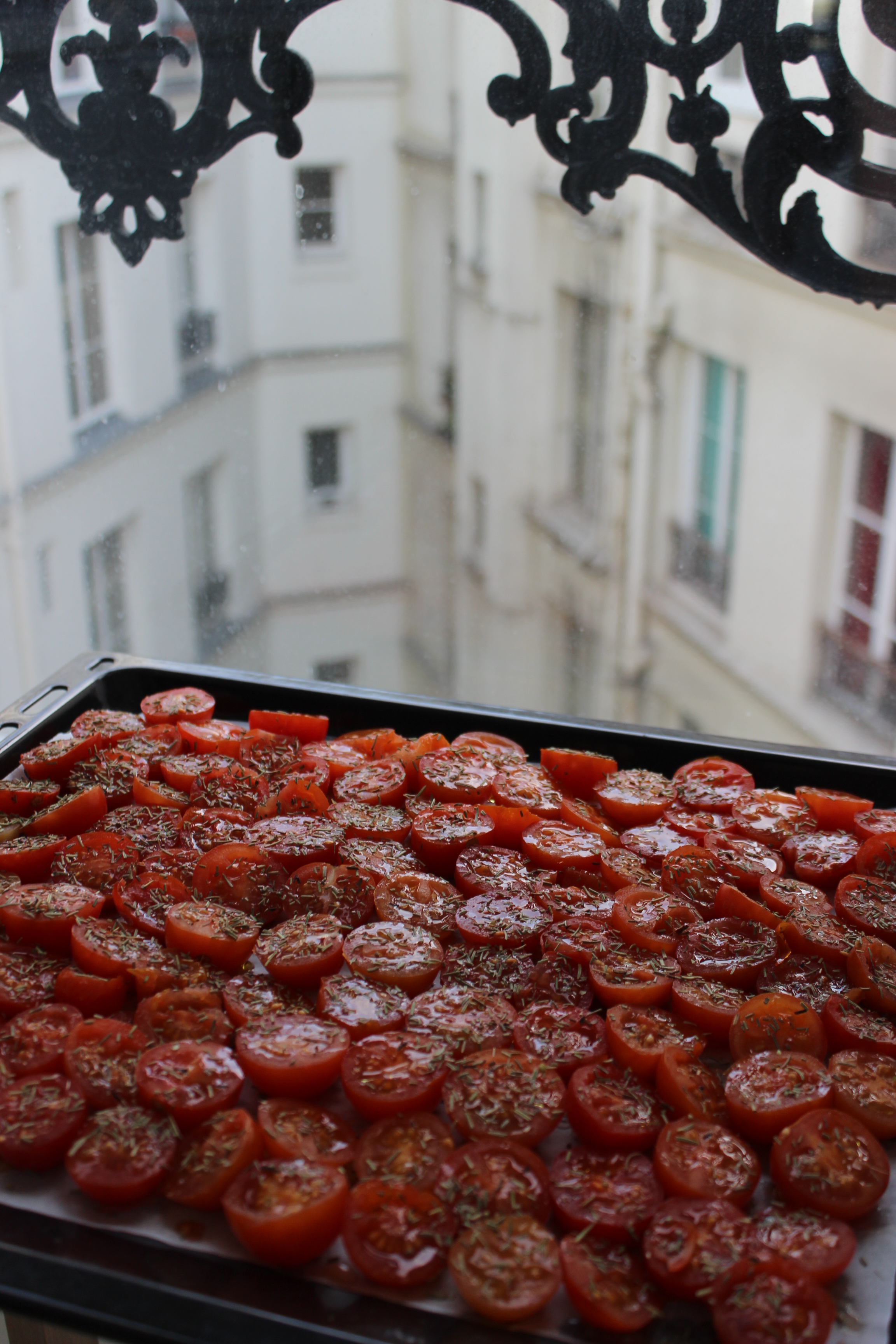
The great thing about food markets is that you never know what you end up buying! Yesterday the Bastille market seemed full of cherry tomatoes, and we purchased one big box of them. The question what to do with them was answered when I stumbled upon a Low and Slow Semi Dried Tomatoes recipe, and thanks to Sip Chomp Chew blog, I now have hundreds of delicious cherry tomatoes in the fridge!

So, here you go, my recipe (with some modifications compared to the Sip Chomp Chew’s recipe):

1. Cut cherry tomatoes in half and place them onto baking sheet.roasted cherry tomatoes

2. Sprinkle with olive oil (I used olive oil from Crete: the best olive oil in the world!)

3. Sprinkle with Herbes de Provence. If the mix does not include oregano, add. Add also black pepper. I did not use salt.Herbes de Provence on cherry tomatoes

4. Roast in oven for a loooong time. My first set of cherry tomatoes stayed 4 hours in oven (130C), but I did increase the temperature to 150C for my second set. This made the cooking time considerably shorter (3 hours) and the cherry tomatoes did not burn. Try and see!

roasted cherry tomatoes

5. We ate the cherry tomatoes like that, and added some to a salad. The more obvious ways to use them are in pizza, ratatouille, salad, pasta, etc., but I would like to experiment using them in amuse-bouche, moussaka, Mediterranean fish dishes, chicken….

Whatever you do, but be careful. These little creatures are so yummy that you may just want to eat them directly from the baking sheet!


Easy oven-roasted cauliflower

A friend recently sent me a recipe, which included broccoli, but since I had cauliflower at home, I used that. Since that day I have made the recipe several times and cannot seem to get enough. Some people eat chocolate for a snack, I opt for cauliflower!

So, how to begin? Buy a large cauliflower. Cut it into florets. Place them in a large oven-safe bowl. Sprinkle olive oil, black pepper and salt. Add crushed garlic. Roast in the oven (225C) for 30 minutes (cooking time depends on your taste and on the size of florets, so taste to see how you prefer your cauliflower). oven-roasted cauliflowerOnce the florets have obtained nice color, remove the bowl from the oven. Immediately after, sprinkle with Parmesan cheese (again, add according to your taste). And voila, the dish is ready to be served!! See, super easy and fast to make! oven-roasted cauliflowerFYI: the original recipe said squeeze a lemon at the same time when adding Parmesan cheese, but I have not yet done that. Maybe one day.

PS In case you are wondering, the tiles (carreaux ciment) are from a shop called Mosaic del Sur. Their production takes place in Andalusia, Spain and Morocco. If you are looking for original and beautiful tiles, this is The Place! They have a showroom in Paris, and even if you are not renovating at the moment, stop by to admire these elegant pieces of art! (http://www.carreauxmosaic.com)

***

If you are on Facebook, why not to check Pearlspotting’s Facebook page?

What to drink with foie gras?

To pair food and wine is not always straightforward. Even if my principle is “pair it as you like, what you personally prefer”, there are some foods that are trickier than others and deserve more thinking. Foie gras is one of them.

We served foie gras yesterday with toasted pain d’épices (sweet, spicy bread) and coarse salt (sea salt). I had prepared a tomato-onion salad to go with.foie gras and wine

We enjoyed the foie gras with Loupiac (AOC), Château Martillac 2012, and considered it was a successful match (7.80€ the bottle).Loupiac 2012

However, one does have many choices apart from Loupiac, and below you have a list of my favorite foie gras & wine pairing options. I have tried to mention wines that are fairly easily available, too.

1. Champagne: the emperor of the drinks, goes with everything, anytime! If you don’t like sweet wines (the rest are sweet and white), then opt for champagne.

2. Sweet Jurançon: Located in the southwestern part of France, near the Pyrenees, this AOC is probably my favorite among sweet wines. In addition, it has an interesting history: “Jurançon wine occupies an auspicious place in French history. As the story goes, when the future King Henry IV was christened in 1553, his infant lips were touched with a drop of Jurançon wine, which was said to give him lifelong vigor. This practice is repeated to this day at many local christenings.” (http://www.winesofsouthwestfrance.com)

3. Sweet Côtes de Gascogne (IGP): Located in the same region as Jurançon, but a little bit more north, this is another excellent, slightly less-known wine-producing zone.

4. Sweet Monbazillac (AOC): 100 km east from Bordeaux, this is another excellent sweet wine.

5. Sweet Sauternes (AOC): very near Bordeaux, this is probably the most common sweet wine to go with foie gras.

The list is obviously not exhaustive and of course there are many other great wines like for example Le Rêve de Pennautier, “Vendanges d’Après” Vin de France by Maison Lorgeril from Languedoc-Roussillon that I enjoyed over Christmas. This said, what you serve with your foie gras?

PS A tip for the non-French: if you want sweet wine, look for the word vin moelleux in the bottle.

Twisted cauliflower risotto

Last fall, upon my brother’s recommendation, I visited a blog specializing in the Paleo diet and found a cauliflower risotto that contains no rice. Today I finally decided to try the recipe, but me being the rebel I am, I had hard time following the instructions. My cauliflower risotto (or a cauliflower side dish, if you prefer) became something between Oriental and Indian, and it is delicious!! Here you go: modified cauliflower risotto

1. Sauté finely chopped onions, garlic, fresh ginger, leek and celery in a pan with coconut oil until the onions turn golden brown.

2. While sautéing, add turmeric, Indian chilly powder, black pepper and Himalayan salt. I added extra ginger powder because I did not have enough fresh ginger root.

3. Add fresh lemon juice and stir. I used an entire lemon.

4. Add raw cauliflower chunks and mix well.

5. Add coconut milk and let it simmer until the cauliflower is soft. Unfortunately I cannot give you the exact duration: it depends on the quantity and how you like your vegetables (I don’t like mine too soft).

Enjoy with whatever your imagination sees it with! We had salmon.

PS If you don’t want your dish turn yellow, then skip turmeric. I added it because it is super good for health.

Cauliflower risotto recipe by Paleokeittiö that I found last fall: http://paleokeittio.fi/2013/10/02/kaali-riisista-risotoksi/ (in Finnish)

Health benefits of turmeric: http://theflexifoodie.wordpress.com/2013/01/15/why-turmeric-is-the-new-kale/


Healthy Salmon Salad

Venice was wonderful and I only have only complaint: there is so much wheat everywhere! Of course nobody forced me to eat all that pizza, pasta, cicchetti and tramezzino, but there is something in the human nature called temptation…

So, this week has been about avoiding gluten. Tonight I prepared a salad that I improvised for my parents over Christmas: it includes salmon, vegetables and nuts, and I am pretty sure it would win the prize for the healthiest salad in the world. This is what it looks like and what you need for making it: healthy salmon salad

Healthy Salmon Salad: 

Mix these ingredients in a big bowl:

  • celery (raw, cut into slices)
  • leek (raw, cut into slices)
  • broccoli (boiled or raw, cut into chunks)
  • flax seeds (I used crushed ones)
  • walnuts (I used entire ones; they look prettier)
  • garlic (crushed)

Add according to your taste:

  • olive and nuts oil
  • Herbes de Provence, oregano, dill, black pepper
  • lots of fresh lemon juice
  • a tiny bit of balsamic vinegar

Let them marinate for some time.

Next: I had salmon from our lake in Finland, brought to me by my parents before Christmas (Bringing a little bit of Finnish Christmas to Paris), so I baked an entire salmon in the oven, let it cool down, cut it into small chunks and added them to the salad when they were lukewarm. Alternatively, you could use cold smoked salmon (or any other smoked fish).

Lastly, depending on the type of fish you use, add salt. I sprinkled the salad with truffle-flavored salt, which gave it a very subtle final touch.

***

Lastly, following a common recommendation of French doctors, I suggest you eat the salad with a glass of white wine, ideally organic and French. I had vin primeur by Domaine La Grave, Coteaux de Peyriac (Hauts de Badens) (see Marriage of oysters and nouveau wine) but only your imagination is the limit!

Bon Appétit.

PS The wine glass is Finnish design by Tapio Wirkkala, 1952 (http://iittala.fi/web/Iittalaweb.nsf/fi/tuotteet_juominen_erikoisjuomat_tapio).

Christmas meal essentials!

One of my favorite things to do in Paris is visiting La Grande Epicerie de Paris. Their recent renovation is so stylish and the service impeccable. Not forgetting their sophisticated food items’ offer and regular dégustations…

To add that extra touch of elegance and perfection to our Christmas meal, I did a bit of groceries at La Grande Epicerie de Paris on the Christmas Eve and this was the result: Christmas essentials from La Grande Epicerie de Paris

From left to the right:

  • Bordier butter: the butter of “the real chefs”; the best butter in the world
  • Grey salt from Guérande with summer truffle by Maison de la Truffe: an absolute cooking must! (if you like truffle, do not miss their restaurant at 19, place de la Madeleine)
  • Balsamic vinegar from Modena by Fernando Pensato: a fine product of Italy, used by the most elegant restaurant and hotels of the world
  • Extra virgin olive oil with white truffle: another cooking must by Maison de la Truffe. Particularly good with the Finnish sweetened potato casserole
  • Organic Boletus-mushroom mustard by Savor & sens: excellent with smoked salmon
  • Onion confit by Le Coq Noir: an essential companion to foie gras
  • Scallops-flavored tarama: a bit more original than the ordinary tarama (also exists in truffle and other flavors)

La Grande Epicerie de Paris: http://www.lagrandeepicerie.com/en.html

French Christmas meal: stuffed goose from Les Provinces

Traditional Finnish Christmas meal includes an oven-cooked ham but my parents happily followed French traditions while in Paris. Good for me, as I do not eat pork! Les Provinces

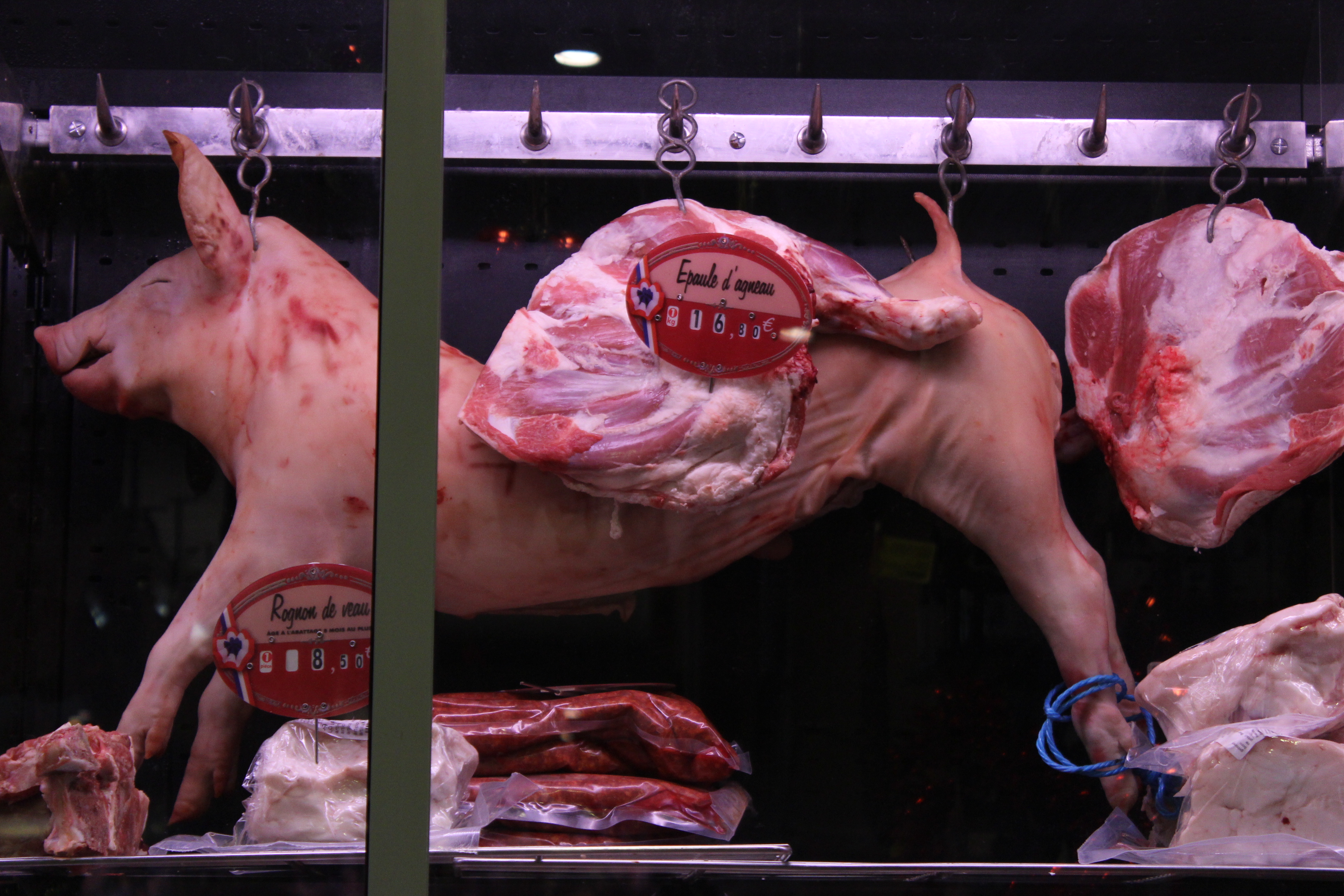
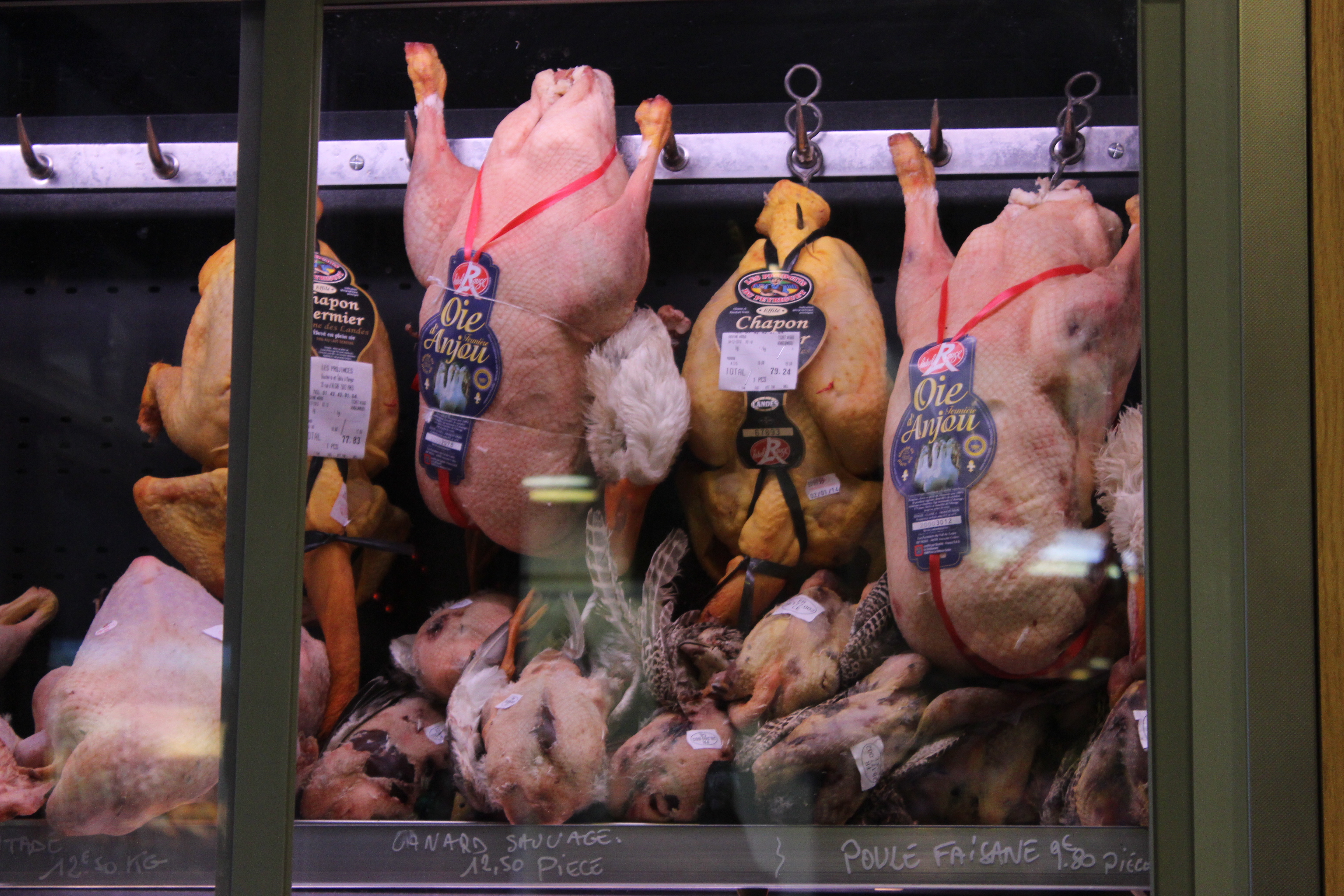
One week before Christmas we visited the boucherie-restaurant Les Provinces near Marché d’Aligre to see what our options for the Christmas meal are. The most typical French Christmas meat (poultry) is capon, a castrated rooster, but the butcher suggested we buy goose. After discussing the choice between the capon and the goose with everyone, we agreed that we prefer goose. Price-wise there was no difference and we had a feeling that the goose will be more original –the goose meat is more reddish brown (similar to duck or duckling) whereas the capon remains white as chicken (but is more fatty). So, “Prepare us a nice big goose with stuffing” we told the butcher and left a 10€ prepayment!Les Provinces

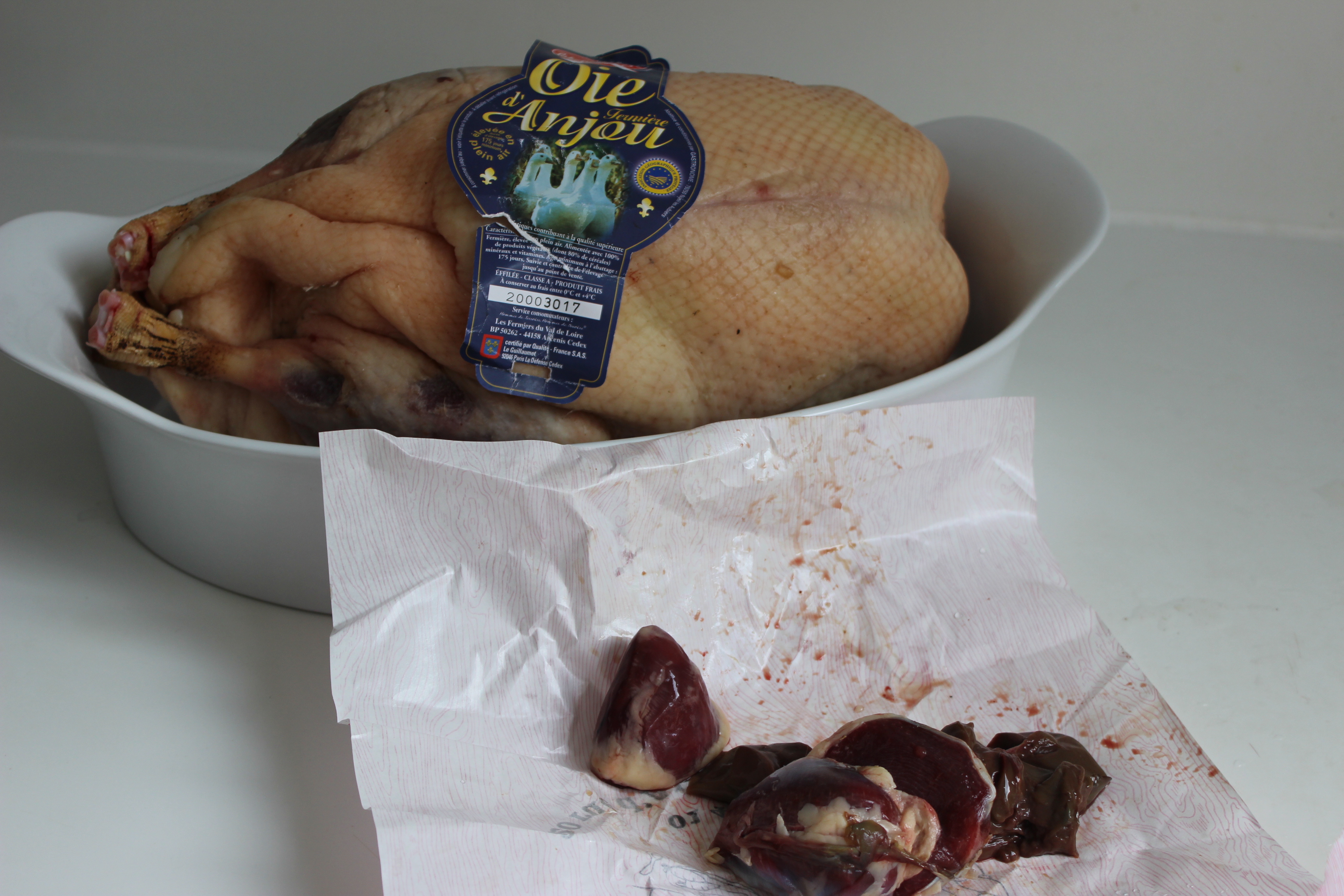
In the afternoon of the Christmas Eve we returned to fetch our stuffed goose and in the late morning of the Christmas Day we opened the package to find a beautiful, fat goose from Anjou with some organs aside for those who appreciate them.stuffed goose from Anjou

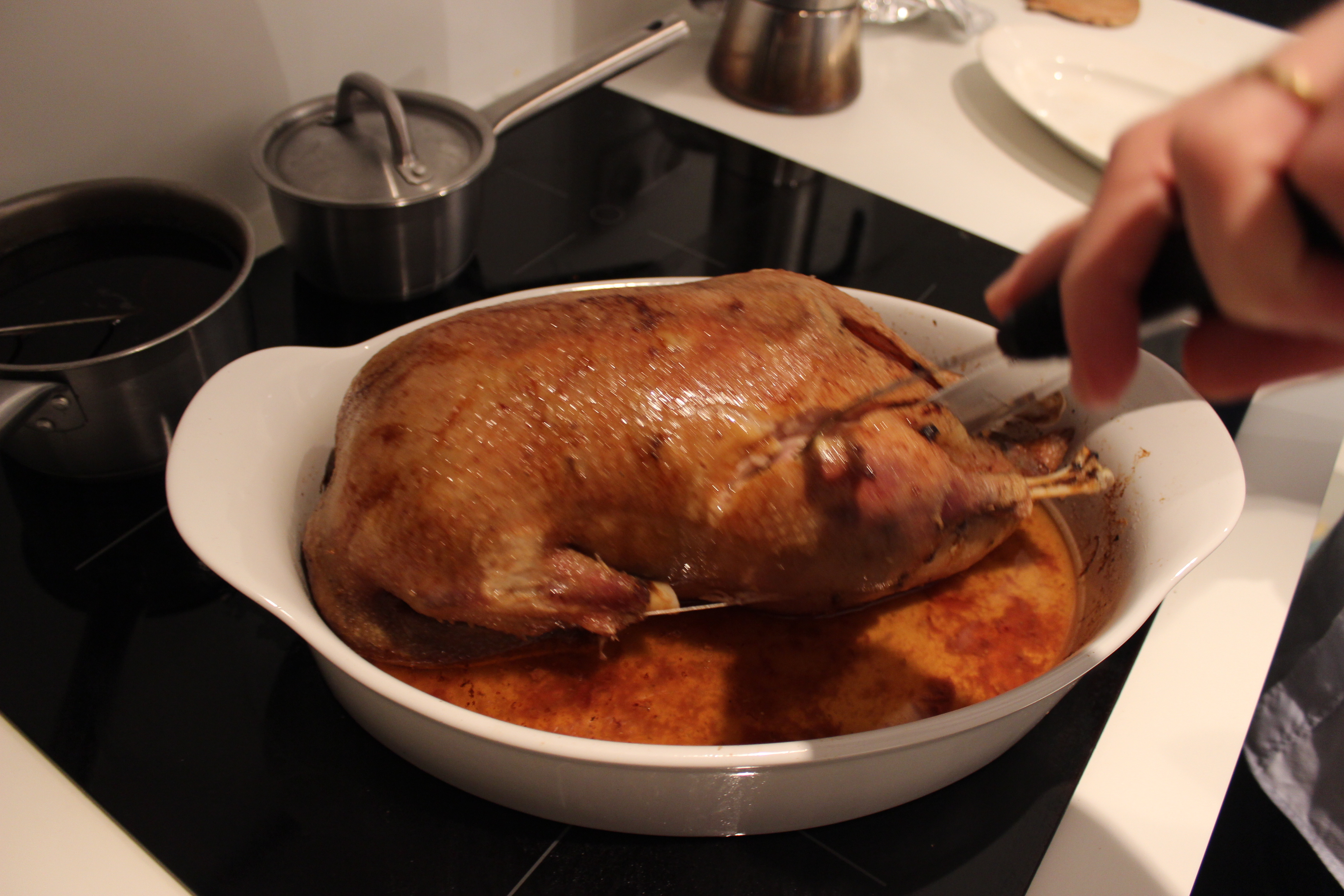
We followed the roasting instructions: higher temperature in the beginning that gives the goose golden color and crispy texture, and lower temperature during the rest of the time with the aluminium foil. We added a glass of water in the casserole and kept moistening the goose with this water (some fat drained from the goose and mixed with the water). 2 1/2 hours later our goose left the oven and was ready to be cut. Such a beautiful piece of goose it was! roasted goose

Everyone loved the goose and it will surely find its way to our Christmas table again in future! We enjoyed it with sweetened potato casserole, a Finnish dish, but you could also serve roasted carrots and potatoes or other vegetable with it. The red wine we had was Mas des Montagnes, “Terroirs d’Altitude” AOC Côtes du Roussillon Villages, and it was really excellent!!

The stuffing our goose had included veal, poultry liver, onion, alcohol, herbs and spices, and no pork, but remember that nothing prevents you from creating your own stuffing…

Boucherie-restaurant Les Provinces: Easy Saturday dinner from the Aligre Market

Wine: Maison Lorgeril from Languedoc-Roussillon and http://www.lorgeril.com/2-35542-Terroir-d-Altitude.php

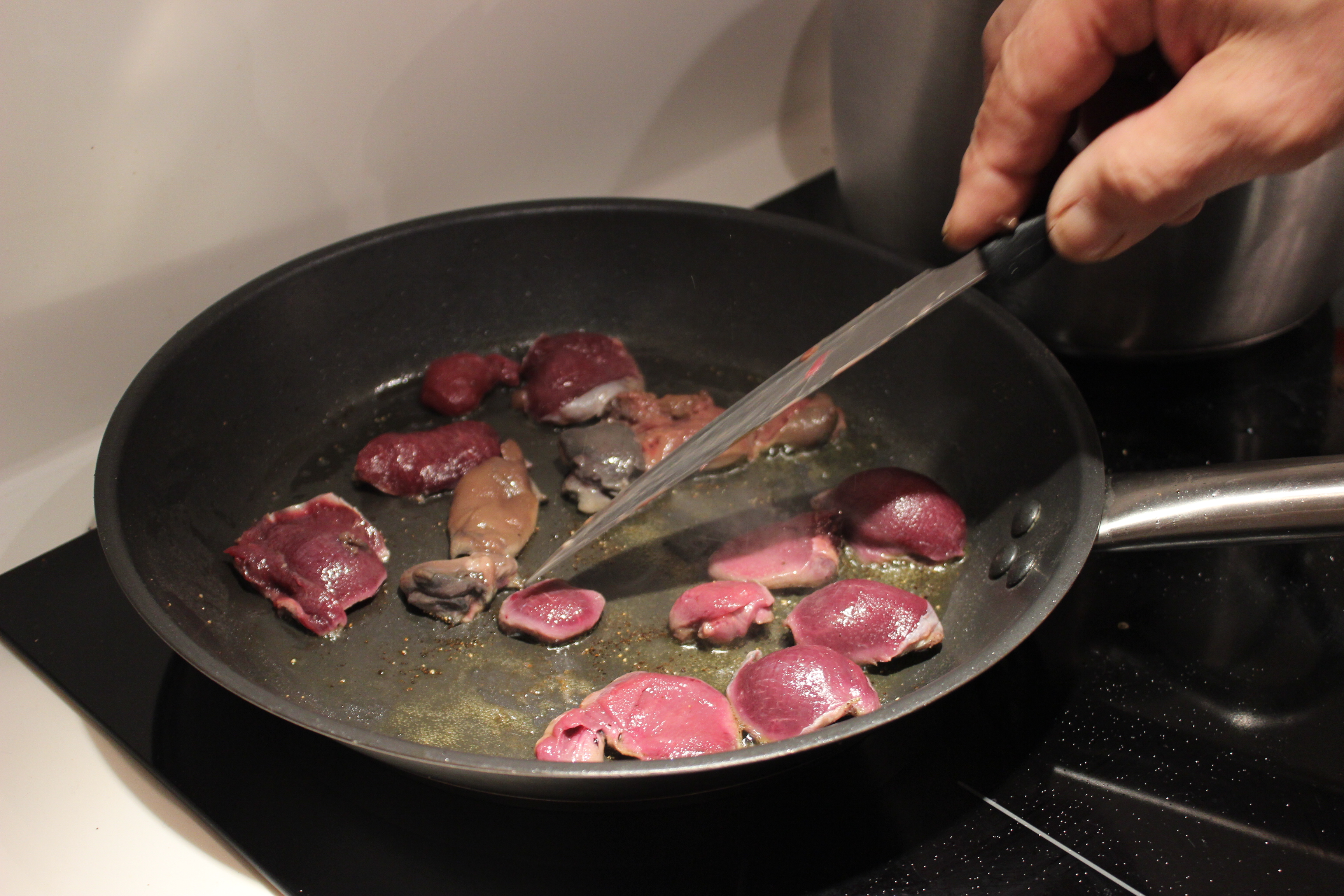
PS As a bonus, here you go with a photo of the organs we prepared some days after Christmas. We recognized liver and gizzard but were not sure about the rest. Do you have an idea? goose organs

Elegant amuse-bouche recipe for Christmas

Our Franco-Finnish Christmas meal begun with an amuse-bouche of quail eggs. These eggs make an elegant alternative to normal eggs and are pretty easy to find everywhere. We had tarama and black caviar as a topping but only your imagination is limit! Here you go with my recipe:

1. Boil the eggs for 5 minutes. I was under the impression that I should put the eggs into boiling water but when I did this, they cracked. Thankfully I had bought a dozen of eggs, so I boiled new eggs but this time in cold water and in lower temperature. The second time no egg cracked.quail eggs amuse-bouche2. Peel the eggs. Keep the eggs in cold water for a good 10-15 minutes before you start peeling the shells off. Change the water to keep it cool, if necessary. Once you start peeling, be careful. This is the trickiest part as you can see in the photo above….

3. Cut and place the eggs on a serving platter or a cocktail plate. A tip: have you ever wondered how to make an egg stand still? By cutting a tiny slice off of its bottom!

4. Be a Michelin-starred chef! Think of the presentation and colors. Green always looks great with yellow and white, so I added slices of leek and cucumber.quail eggs with cucumber

5. Topping: I added scallop tarama and black Russian caviar on both eggs, with a sprinkle of dill, but I am sure that herring, salmon, dried and smoked meats, cream soft cheese etc. would all marry well with quail eggs! And if you want to make the amuse-bouche a bit more heavier, place the egg slices on a blini….quail eggs with caviar and tarama

Voila, the easiest and classiest amuse-bouches are ready to be served with French champagne! Happy Boxing Day everyone.