If one day there is a competition for The Ultimate French Meat Dish, I know the winner will be the Côte de Bœuf! And many French and international chefs seem to agree. When interviewed and asked about their favorite meat dish, or what meat they serve at a casual friends get-together, they often refer to this beautiful chunk of beef meat that comes with a bone. In English this piece of meat is called “a rib-eye on the bone” (http://www.jamieoliver.com/magazine/blogs.php?title=what-s-your-beef) or “a T-bone steak”, but I will stick to its French name.
We usually prepare the côte de bœuf once a month and serve it with salad and 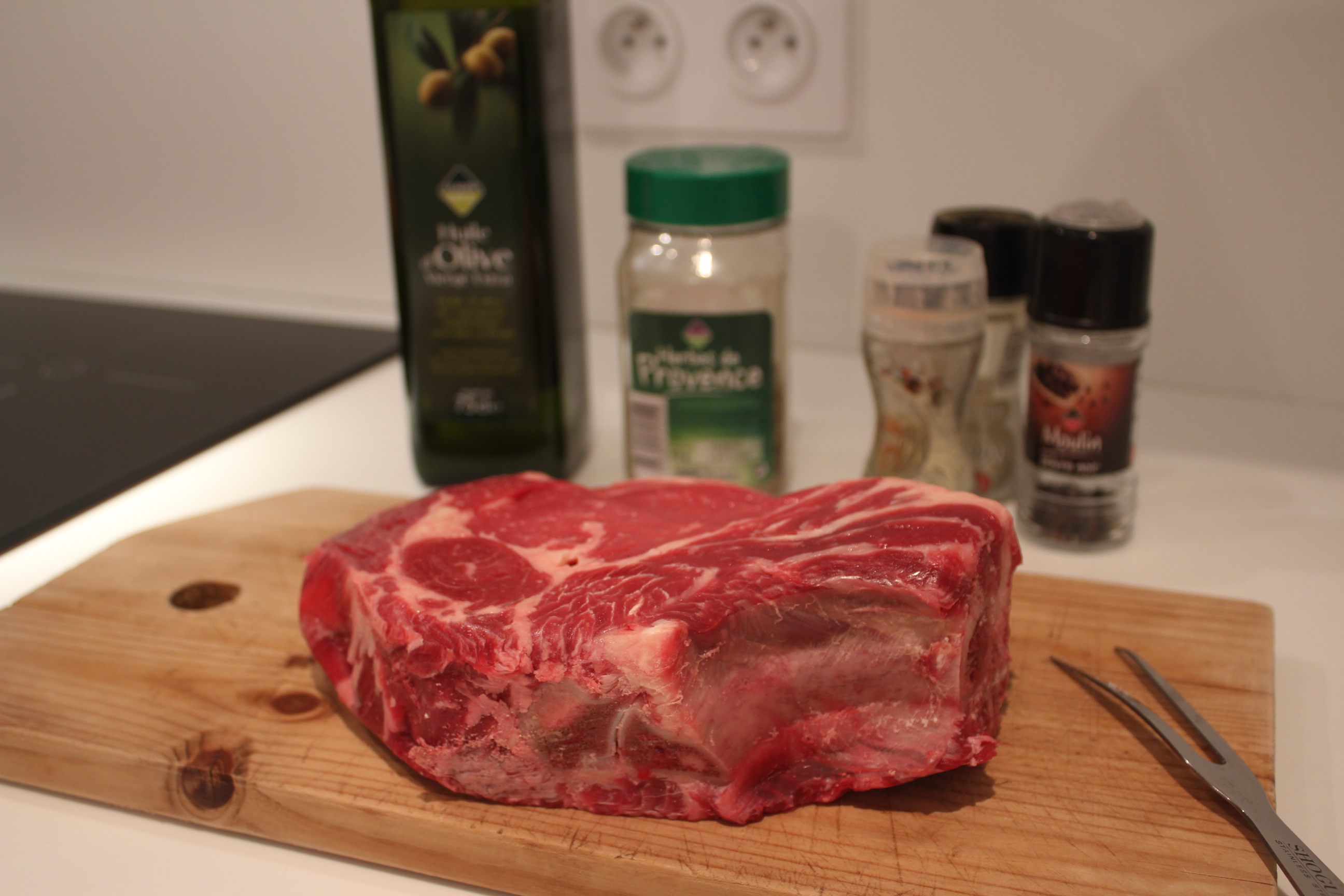 a nice bottle of red. I am very bad at following any recipe (I prefer to invent them myself) and I am equally bad at writing them down (I never do that either) so if you have difficulties following the recipe I am trying to compose here, do not hesitate to email me should you have any questions.
1. Buy a nice-looking piece of meat, not too much of fat, but with a bone, and leave it at room temperature for 2-3 hours. The piece we buy usually weighs around 1kg, sometimes 1,2kg (the bone included). If you serve potatoes as a side dish, the côte de bœuf can serve four people. If you are two and cannot finish it all, think about eating it cold with mustard the next day…
2. Start heating the oven (around 200C-225C). Prepare olive oil, peppers (usually black and white, but I use Iranian green, too, that I recently bought in Dubai) and Herbes de Provence (oregano, thyme, basil, rosemary, satureja and marjoram). We never add salt at this p oint (as you keep reading, you will see why). Cover the côte de bœuf with pepper and herbs, and remember: the more, the merrier! Herbs are good for you!
3. Admire your beautiful côte de bœuf and smell the herbs. Have un apéritif, maybe a glass of rosé from the South of France? Make sure that you have opened the bottle of wine that you will serve for dinner (just don’t drink it yet!).
4. If you have more people coming over to eat, or if your côte de bœuf is particularly small, then you can serve potatoes with it. We find that a salad is enough and makes the dinner less heavy. However, should you want the potatoes, halve them and put them in the oven before the côte de bœuf as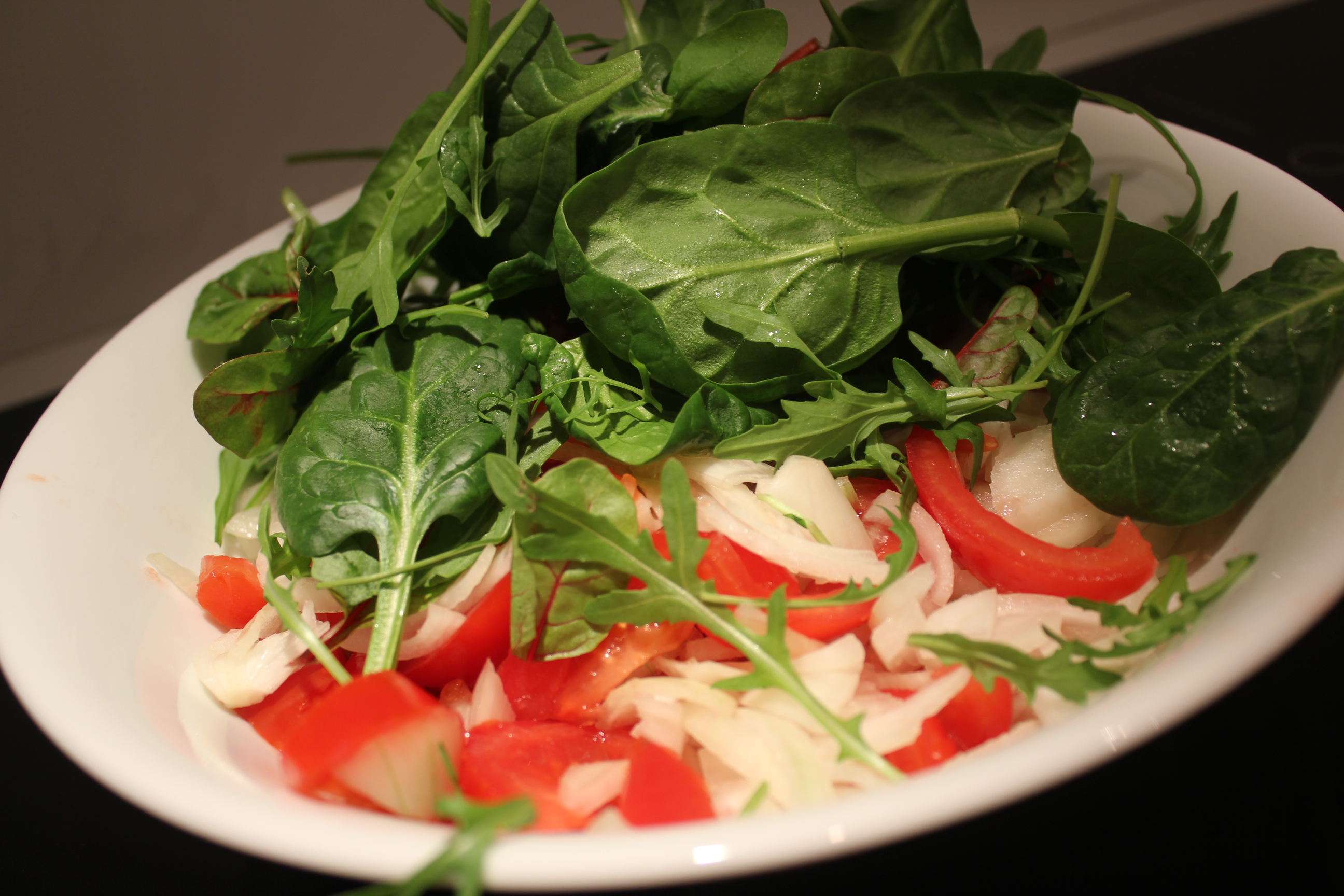 they take longer to be cooked. Place the potatoes in an oven bowl in the lower middle part of the oven so that while the côte de bœuf is being grilled, its extra fat runs on the potatoes.
If you skip the potatoes part, then start preparing the salad. We like it very simple: roquette, beetroot and spinach leaves, mixed with slices of tomatoes and onions.
5. Every cooking experience has un moment stratégique. Putting the côte de bœuf in the oven is one of those moments, because from now on you have to start watching your clock. Depending on the size and thickness of the chunk of meat, your oven, your taste, etc., the côte de bœuf should be in the oven for approximately 20 minutes, maximum 30 minutes. 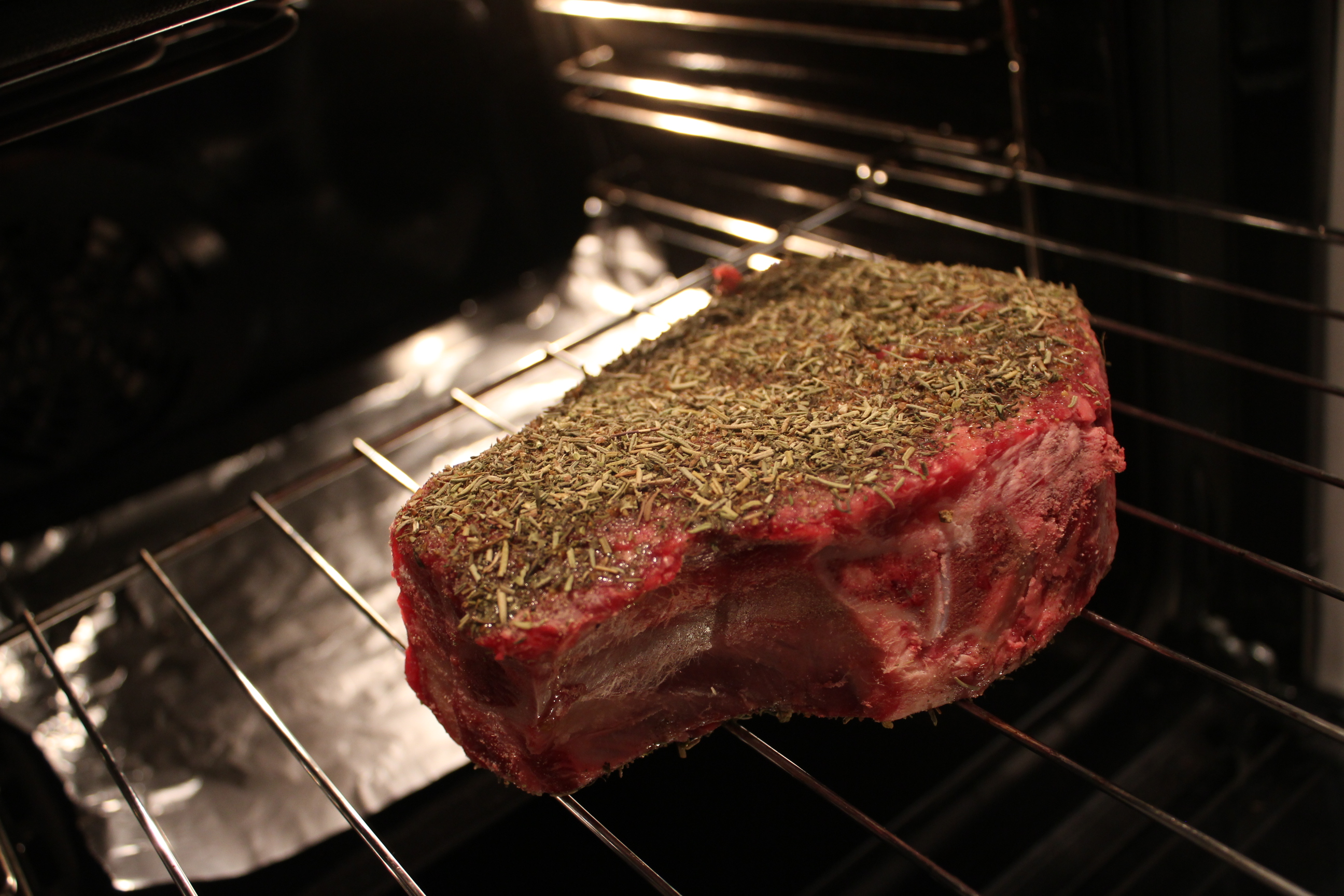
Place the oven rack on the upper middle part of the oven, and put the côte de bœuf directly on the rack (the aluminium foil that you see in the photo is only to cover the bottom part of the oven from the fat!). Cook it for 10-15 minutes on each side. Depending on the greasiness of the meat and the general quality, you may have a lot of smoke coming out when you open the oven, so keep the kitchen windows and ventilation on!
6. Get the côte de bœuf our of the oven. For juiciness, it is recommended to wrap the meat in aluminum foil for 15 minutes before serving it, but I rarely do it.. Maybe I do 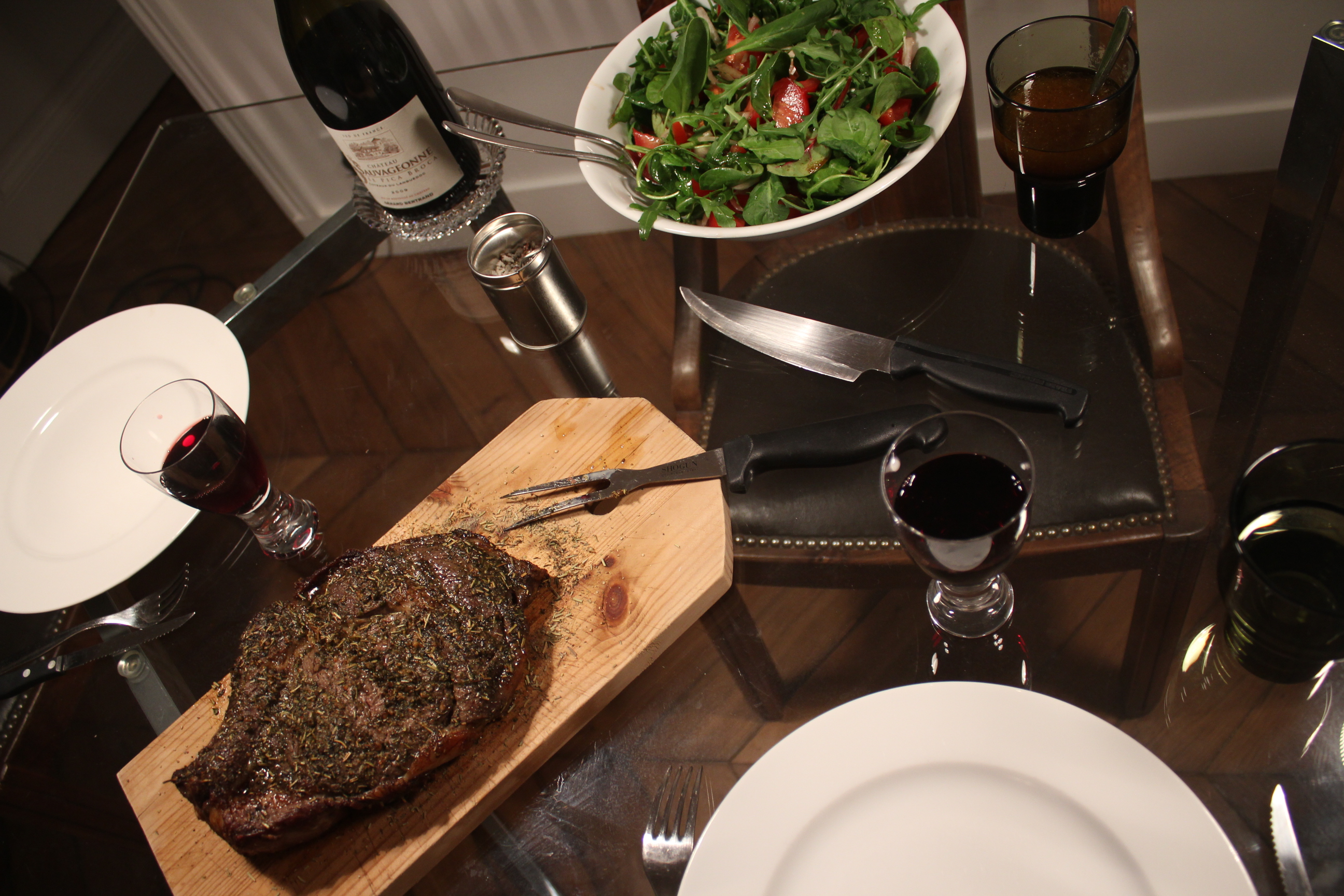 something wrong, but to be honest, I don’t see the difference it is supposed to make, so I don’t do it. So if you like, you can do as we do, and bring your côte de bœuf to the table and cut it into thin slices in front of everyone.
It is only at this point that the salt is added: the type of salt that is sprinkled on the côte de bœuf is coarse sea salt. If you want to make your dinner even more perfect, buy the salt that comes from Guérande, located in the Southern part of Brittany where salt making goes back to the Iron Age (http://www.leguerandais.fr).
7. Serve the salad (and potatoes if you made them), not forgetting the wine. We had purchased a bottle of red from 2009, Château la Sauvageonne, Cuvée Pica Broca, Langu edoc Roussillon, Coteaux-du-Languedoc AOC (http://www.1907.fr/nos-domaines/domaine-la-sauvageonne/domaine-la-sauvageonne-pica-broca-terrasses-du-larzac-rouge.html). This time it was not a bottle of independent winemakers, but one of Gérard Bertrand, a big name in the French and European wine merchant business (http://www.gerard-bertrand.com).
I hope you enjoy this very-easy-to-make meat dish as much as I do, and Bon Appétit!


 pearlspotting