Tag Archives: hotel

Where to eat in Chania? Tamam!

I am a very curious person, but I also know that when I find something “perfect”, it is wise to stick to it. So, after my first meal at Tamam, I understood there was no other place to eat at in Chania, Crete.

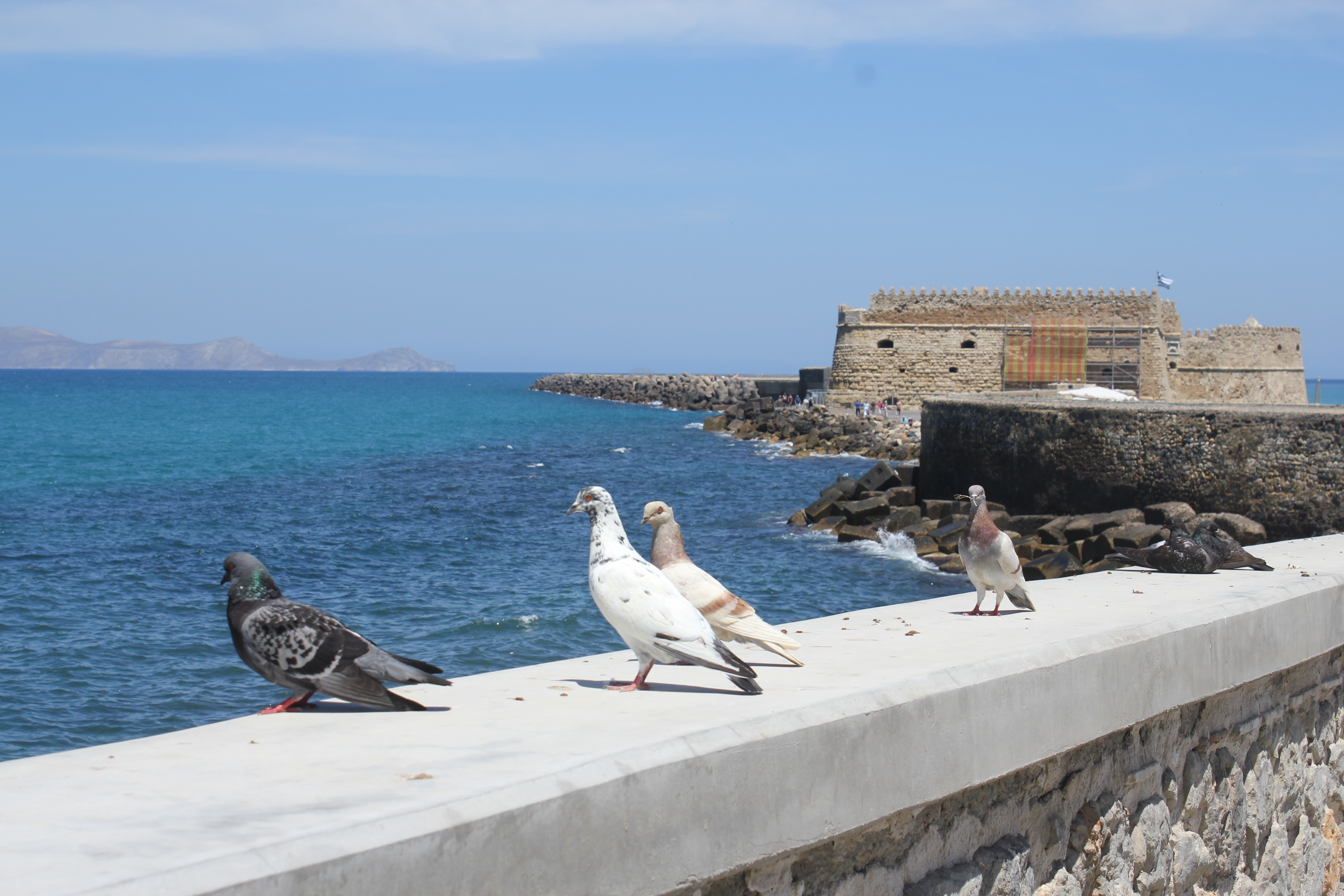
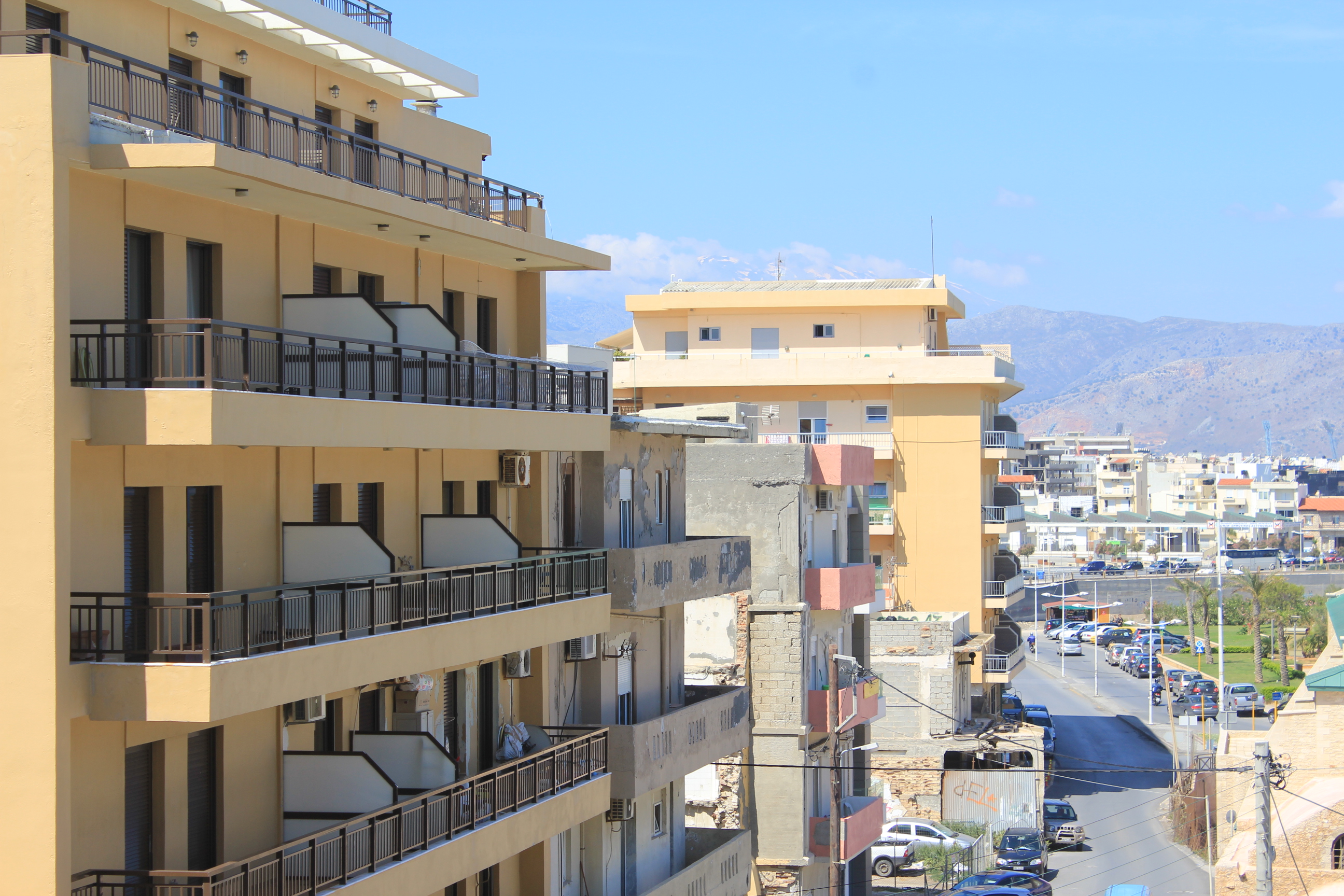
Chania Venetian Harbour

Tamam restaurant is located behind Lucia Hotel (the blue building by the Venetian harbour).

Tamam is located one street up from the Venetian Harbour. I am posting a photo to make it easier for you to find Tamam. When facing Hotel Lucia (the blue building), take the street on your right. Walk fifteen meters and you can already see Tamam tables outside on the street on your left hand side. Should you like to eat inside (Tamam is located at a beautiful, old Turkish public bath, “hammam”), take the first street on the left, and wait for a waiter. Very easy!

Tamam restaurant

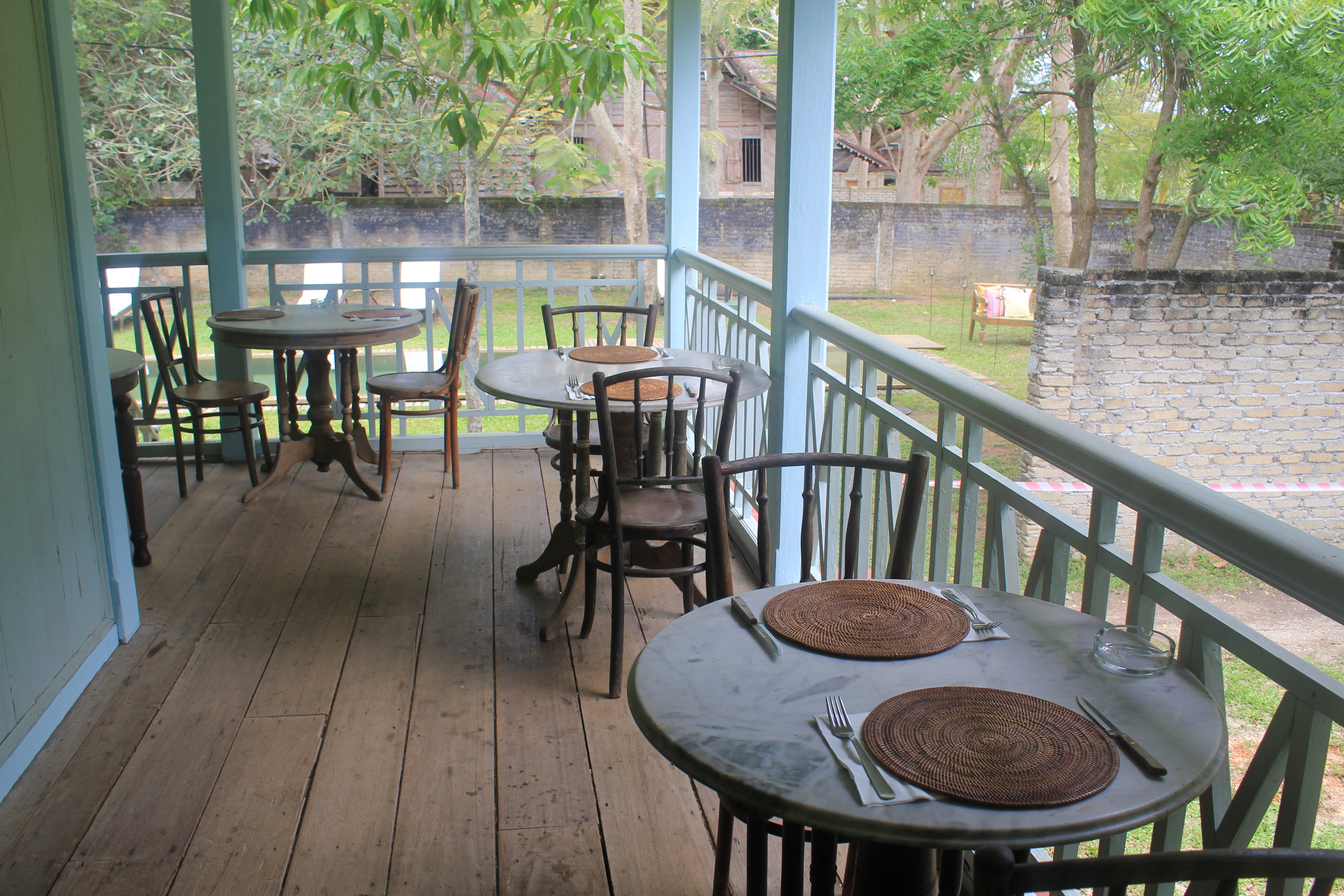
Tamam has a lovely terrace. If you choose the table in the far end, you can have sea view!

Now, you have your table and you are reading the menu, which is quite long. You may recognize some dishes but you are also wondering which dishes are more Turkish influenced and which ones are typically Cretan… You look at what your neighbor is eating and you suddenly want to taste everything. No problem!

We like sampling many different things and ordering four or five mezzes worked well for us (portions are big). There are also daily dishes but they don’t seem to change every day.

Tamam restaurant

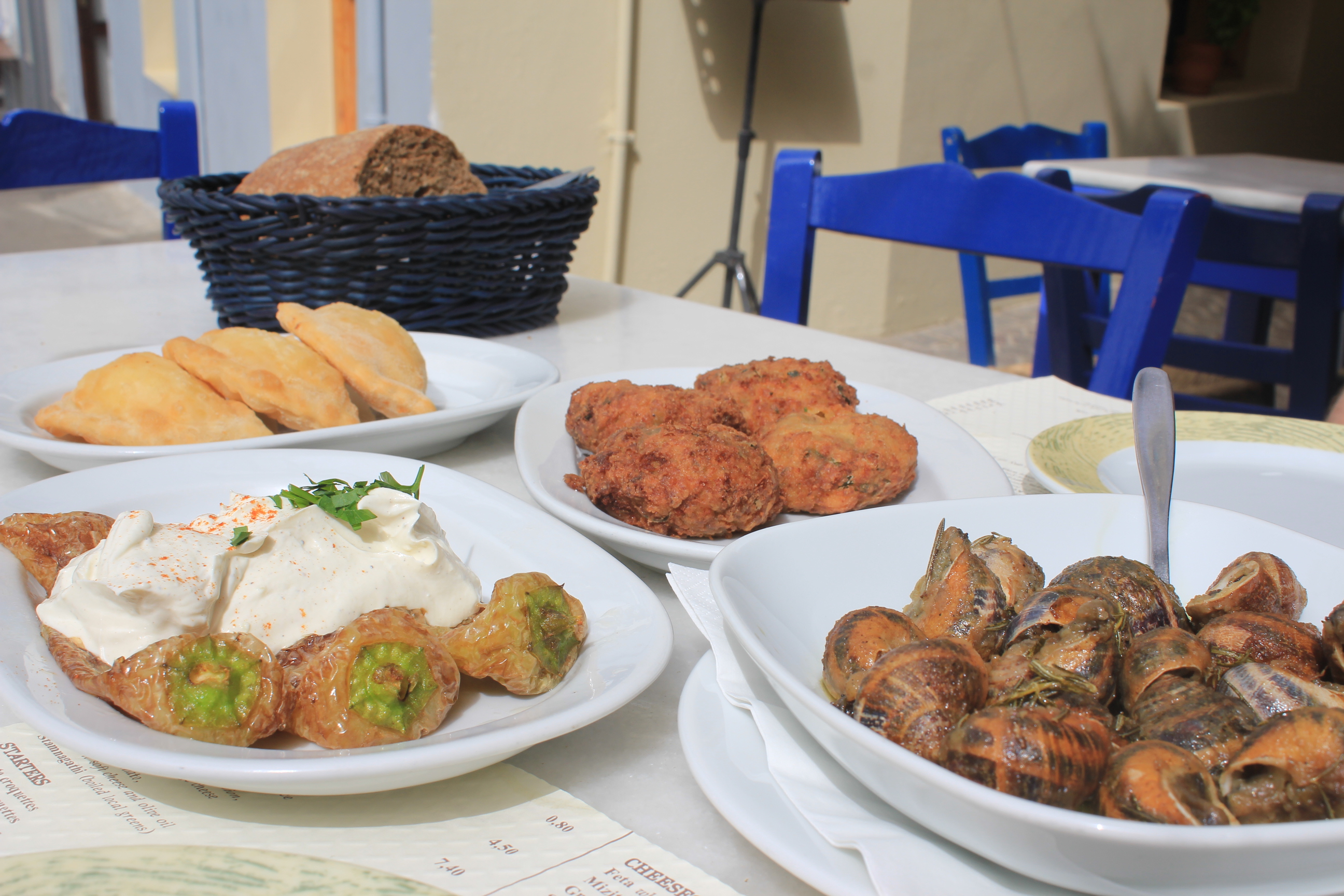
The best way to sample the menu is to order different mezzes. We loved rosemary mountain snails, aubergine croquettes, fried peppers with yogurt-garlic sauce and Cretan pies with local white cheese.

Snails have special health benefit so our first lunch consisted of rosemary snails, aubergine croquettes, fried peppers with yogurt-garlic sauce and Cretan pies with local white cheese.

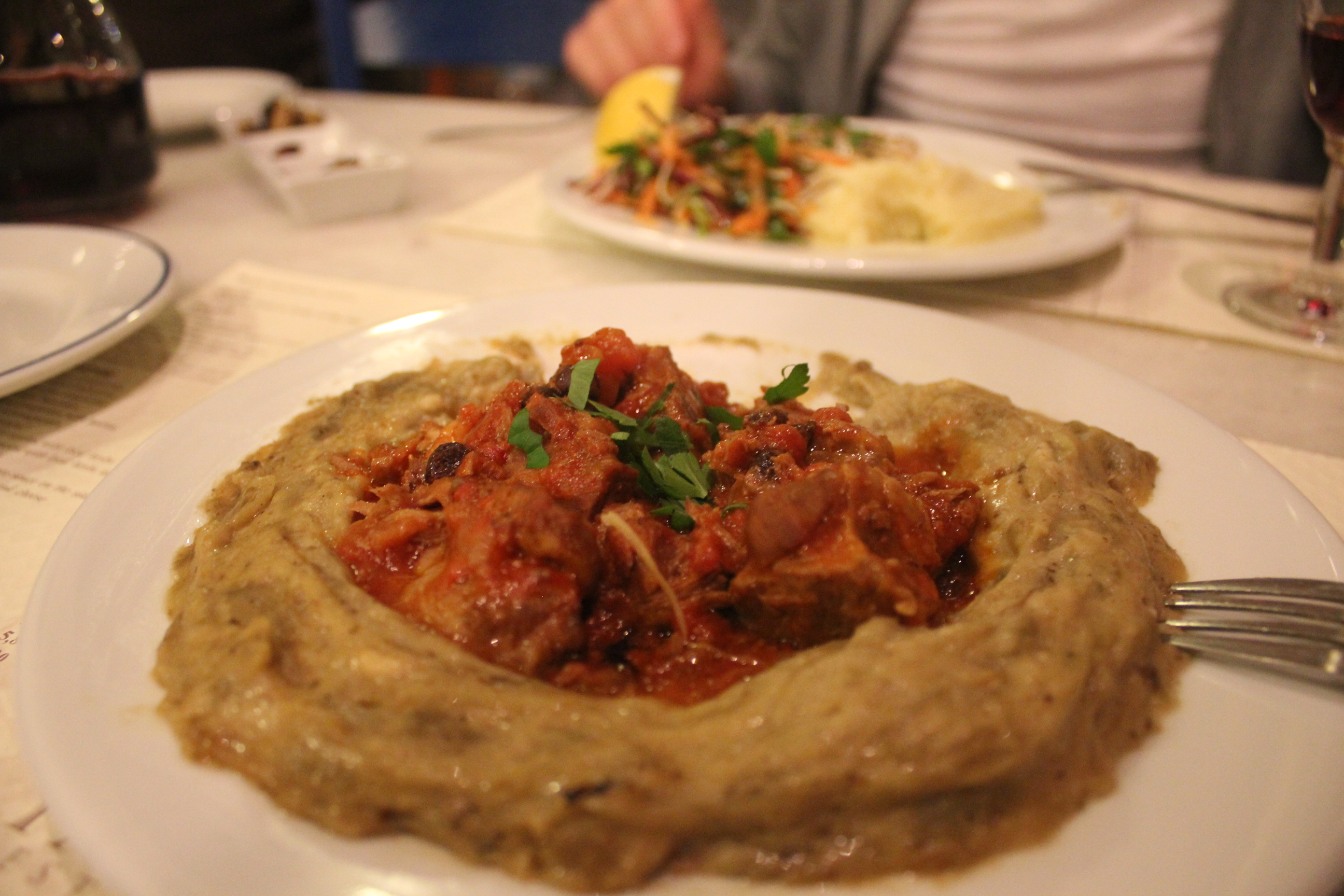
The same day, in the evening, we returned for dinner. My husband had a daily fish with vegetables and I had Turkish-influenced Hunkiar Begiendi Lamb (lamb in tomato and aubergine puree) which must be about the best dish ever cooked in this world!!  No exaggeration here. An absolute must-taste dish!!

Hunkiar Begiendi Lamb

Hunkiar Begiendi Lamb, lamb in tomato and aubergine puree. One my favorite dishes in the world!

The next evening we hesitated and asked ourselves “can we really go back again, what will they think of us?” but objections remained silent. So, a new mezze tour!

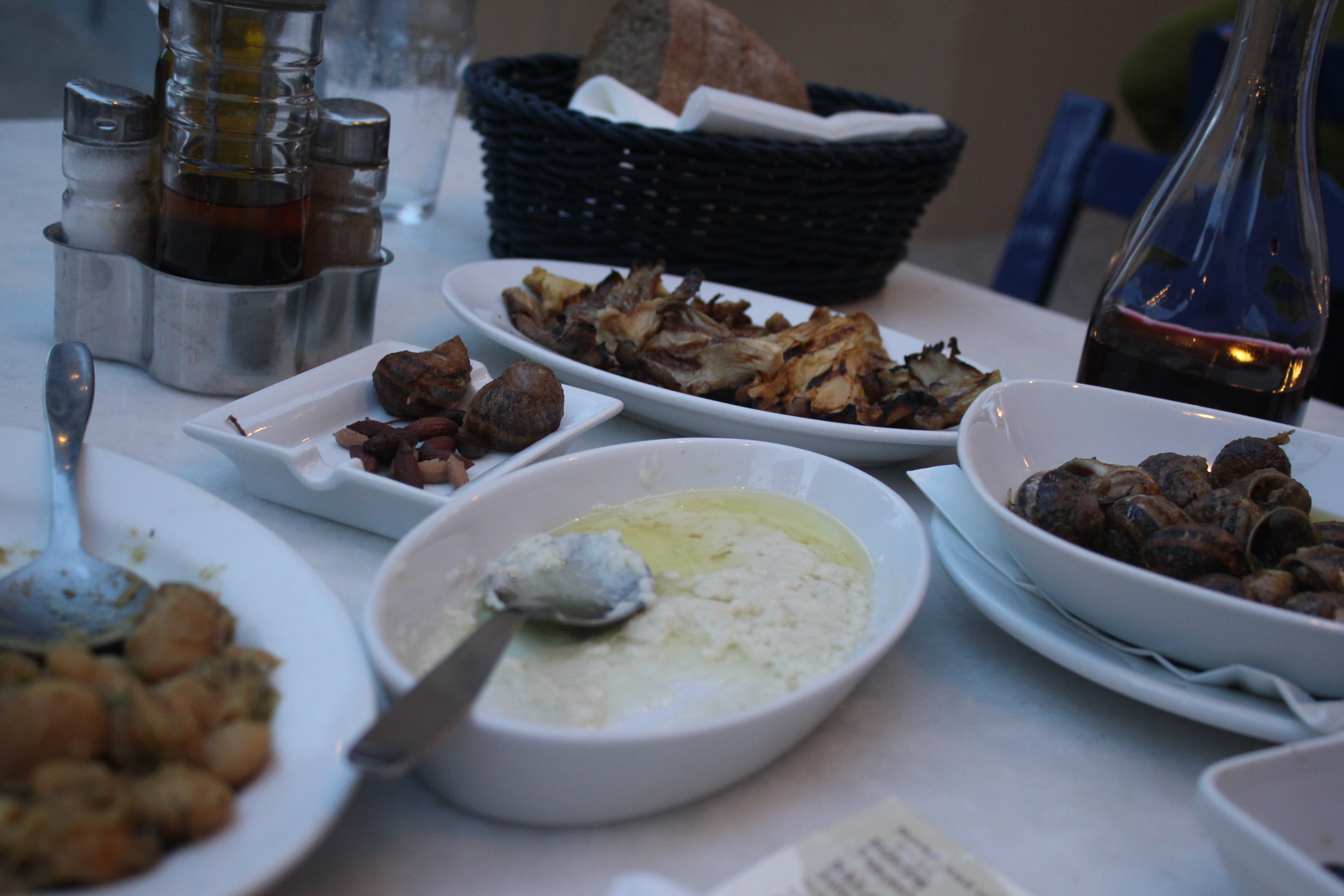
Staka (warm creamy fondue-like local cheese), more snails (remember the health benefits?), Plevrotous mushrooms on the grill, baked giant beans, zucchini croquettes and Cretan pies with spinach and cheese. Ok, in case you are wondering, I have to specify that we had not eaten during the day and we were very hungry. And yes, we finished everything…

Tamam restaurant

Some more amazing mezzes! I am particularly fond of Staka, melted cheese, snails and grilled mushrooms.

I tasted Nostos Pink rose wine sold by a glass and it was excellent.

During our other visits we ordered house wine (sold in carafes), both red and white, and really appreciated the fruity but natural and light taste. I noticed that often Cretan house wines were not very strong and it was pleasant to drink something that did not make your head turn after the first or the second glass (I think the wine has become  too strong, often above 14%, and it did not use to be like this!). Bottles were a lot more expensive, about the same price than in Parisian bistros.

Our lunch and dinner bills varied from 30€ to 50€, wine included. Each time we were offered a free dessert and a small carafe of local raki. The service was friendly and attentive.

What an extraordinary restaurant, what happy memories! My mouth is watering as I am writing! Make Tamam your place to eat when in Chania.

TAMAM: Zambeliou 49, Chania.

Wine (Nostos Pink): http://www.winesofcrete.gr/cretewines/en/Wines/TheWines/CretanWines/NOSTOSPINK_965.html

Heraklion and the Surrounding Areas

This is my last piece on Heraklion, the administrative capital of Crete. You have probably already read The Palace of Knossos and the Archaeological Museum of Heraklion and Where to eat in Heraklion? All you need to know more is what else there is to do and where to be based to do all this stuff. Enjoy!

For most tourists Heraklion is a mere transit point. Others may drive through it on the way to the famous ruins of Knossos. We stayed two nights in this city and loved it! Let me show you why I liked it so much.Heraklion

First impressions of Heraklion: Heraklion was not as polluted, full of traffic and noisy as I had expected. But I think we had a nice impression of the city also because we spent a lot of time by the harbour where it is more quiet. This is also where we ate in the evening (Where to eat in Heraklion?). Moreover, I have never been to Beirut (shame on me) but Heraklion looked like what I imagine Beirut to look like (except that Beirut has taller buildings and it is much bigger). There was also something in the architecture of the balconies that reminded me of Algiers… I was definitely in a Mediterranean city but Heraklion was not like any other city I had been to before and it was exciting.Kronos Hotel

Fancy a hotel by the sea? We stayed at the Kronos Hotel (http://www.kronoshotel.gr/), located right in front of the sea and a few steps away from the Old Harbour, which is also where the main street called 25 Avgoustou begins. In front of the hotel there are free parking places. The rooms are simple yet very clean, and come with a balcony either facing the sea or the city (we could see the snow-covered mountains in the horizon!). Everything wasview from Kronos Hotel renovated in 2011. The reception area is lovely; big glass windows all over proudly present the Mediterranean to hotel’s guests. The staff are very friendly and helpful (it is a family-owned hotel). We payed 55€ per night (excluding breakfast which costs 5€) and felt the price was correct.

What else to do besides Knossos and the Archeological Museum? We stayed two nights in Heraklion. The first day we visited Knossos in the morning (it took us about two hours) and Heraklion Wine Countryafterwards the Iraklio Wine Country, recommended by Lonely Planet Crete (2012). It was a pleasant drive even if we did not stop at any of the wineries. From what I have heard, there are some excellent wineries in this region and what I tasted at restaurants only confirmed this. In addition to wineries one can visit many historical sites. Unfortunately there were some works so the road was partially blocked and we did not find Fourni and Anemospilia Temple. However, even if it was not our case, I can easily imagine one spending an entire day driving around the region. Heraklion Wine Country

It started raining quite heavily in the end of our wine region tour.  We did not want yet to return to the hotel, so we thought to drive to Malia (see, all this you can do in one day if you wake up early!). Malia is an other important archaeological site and very close to Heraklion but we did not reach it by the closing time (3am also during the off-season). We drove back to Heraklion via some resort areas (Hersonisos etc.) and all I can say is: do not stay here. It was all about mass tourism and the least interesting part of Crete I saw during nine days.

On our second day we visited the Museum and walked around the old town of Heraklion. During the Second World War the city got badly bombed but several beautiful Venetian houses remain. And there are many cafes. Many! In the early afternoon we left Heraklion for Rethymnon, very pleased with this brief but rewarding stay in Heraklion.

Good morning Rethymno

Warm wind from Africa was blowing rather hard while we had our breakfast this morning. The temperature will rise above 35C today and tomorrow so the wind is not the only thing Africa is sending to Crete at the moment. For breakfast I had yoghourt with dried nuts, fruits and honey. People in Crete live a very long life so I am trying to get a glimpse of the island’s famous health benefits.

We now say good bye to Rethymno and start driving toward Chania. The photo is from our boutique hotel Palazzo Rimondi (http://www.palazzorimondi.com/).breakfast at Palazzo Rimondi

Koh Lipe: mixed feelings

Thailand was the last stretch of our Southeast Asia trip and which beach to choose was a big dilemma! Our criteria were: somewhere quiet, away from mass tourism and reputable snorkeling. If time was not a constraint, we would have chosen the Surin or Similan Islands, but with only five days left it made no sense. We heard from diver friends that the sea is generally more clear on the Andaman side, and since our return flight back to Paris was from Kuala Lumpur, I begun looking into the islands near Malaysia. Soon enough I came across with the Tarutao National Marine Park (http://www.kohlipethailand.com/about_koh_lipe_tarutao_national_marine_park.php) and beautiful photos of Koh Lipe Island. I (wrongly) assumed that this rather remote location would guarantee some privacy…. Tarutao National Marine Park

We booked Lipe Resort (http://www.liperesort.com/) via hotels.com for 64€ per night. Soon after the arrival we felt that we should have gotten something much nicer for that amount of money…. The hotel is located on the Pattaya Beach, one of the two main beaches of Koh Lipe (http://www.kohlipethailand.com/images2/maps/map-koh-lipe.jpg). The beach is not particularly welcoming for swimming because there are too many boats parked in front of the beach and this has indeed become a common complaint about the Pattaya Beach. map of Tarutao National Marine Park

The first day we did snorkeling in front of the hotel. The snorkeling was actually quite pleasant and we saw many schools of fish and colorful corals but returning to the beach was a challenge as the low tide brought us closer and closer to sea urchins (there are many!).

The next day we booked a full-day snorkeling trip to visit the smaller islands and snorkeling spots of the Tarutao snorkeling in Tarutao National Marine Parkarchipelago. Most companies offer two types of full-day snorkeling trips and we did both of them through a company called Koh Lipe Thailand Travel Shop (Boi’s Travel Shop) on the main road (http://www.kohlipethailand.com/). The shop sells all types of tickets, has computers for internet, and provides other travel services. The owner (?) called Boi is friendly and speaks French, too. In fact we felt that she was one of the few professional persons we met on the island…. Her shop became a one-stop-shop for everything we needed.

Regarding snorkeling, Program 2 is supposed to be more complete and interesting, but we preferred Program 1.  As we did not particularly like the Pattaya Beach we were happy to escape the island during the day.

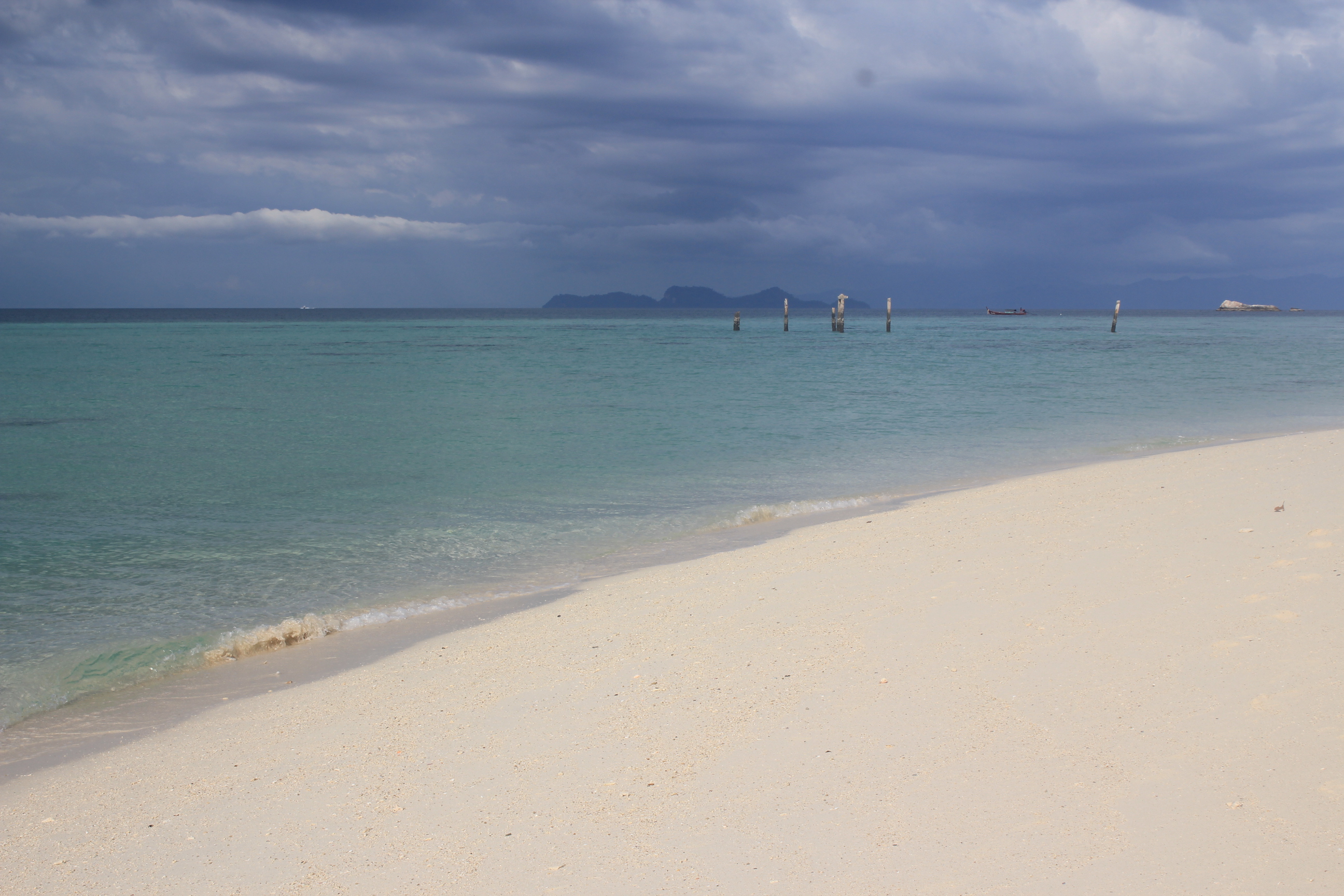
When you google Koh Lipe, the internet gives you amazing photos of the most beautiful beaches, snorkeling in Tarutao National Marine Parkbut for your information, in most cases these photos are not of Koh Lipe but of islands nearby. So even if you are not a snorkeler I recommend you to do these daily trips to get away from the crowds. The only downside of the snorkeling was a storm that had touched the island just before our arrival, infesting the sea with millions (am not kidding…) small jelly fish. They were everywhere to the extent that our boat decided to skip a few snorkeling spots. A pity! This said, we liked the snorkeling and it was the highlight of our Koh Lipe stay. As you can see in the photo, some beaches are very picturesque (yet unfortunately dirty, which I found shocking considering this is supposed to be a National Marine Park!).

storm in Koh Lipe

But back to the accommodation.

Lipe Resort had not impressed us in any way. The food was very inconsistent and left us craving for that famous Thai culinary experience. The service was bad, or should I say nonexistent, and our clothes came back from the laundry with holes and stains. Great. The room was ok, but at night the neighbors were making a lot of noise. I think the worst part of Koh Lipe was in fact the badly-behaving tourists: who likes to watch people throwing up and passing out…. Unfortunately Koh Lipe was soon becoming the destination we had explicitly waview from Mountain Resortnted to avoid…!

We had no time to change the island, but after two nights we changed the hotel. We moved to Mountain Resort (http://www.mountainresortlipe.com/), located on the other side of the island, on Sunrise Beach where people gather to watch the sunset. One of the most commonly-used pictures to illustrate Koh Lipe has been taken from this hotel and on the right side you see my version of this view.

We paid 50€ per night for a “deluxe garden view” bungalow and the price felt more or less correct until on our last day I woke up with bed bMountain resortug bites (again!)…. If you decide to stay at this hotel, do yourself a favor and minimize the risk by staying at one of the concrete bungalows (bed bugs prefer wood). We liked the location of the hotel and the beach in front of the hotel you see in the photo above is really gorgeous. Unfortunately the beach is not well maintained and there is a lot of rubbish (see the photo below). Such a pity!!

Mountain ResortThe other downside was once again the food: the hotel food was at best mediocre and you are sort of stuck because there are not many options as to where to eat near the hotel. You need about 10 minutes to walk to the Pattaya Beach and the “main road” where most of the services are located.

A tourism professional we later on met has been going to Koh Lipe for over ten years now and he said that there are only two hotels that meet professional, international standards, and they are Castaway Beach Resort (http://www.castaway-resorts.com/)  and Serendipity Resort (http://www.serendipityresort-kohlipe.com/). We stopped by at both resorts and Castaway seemed to attract chic clientele with stylish decoration. The reception person at Serendipity was not welcoming regarding our request about prices and rooms, and the prices seemed excessive.

This same person shKoh Lipeared our impression that the tourism has gone wrong in Koh Lipe. When you look around, on the island or in the sea, you see lots of rubbish. I found this particularly shocking because it felt that the National Marine Park status means nothing! Moreover, as mentioned earlier, the clientele was not at all what I had expected, and once again I asked myself how the locals feel about watching those drunks… The original inhabitants of this archipelago are Malay aboriginal sea gypsies, also called Urak Lawoi people. Since 1974, when the Tarutao became a National Marine Park, their lives have gone upside down and if I were one of them, I would ask what happened to that once beautiful and innocent island called Koh Lipe.

PS I by no means want to upset any of my dear readers by this article, but I think it is important to share sincere opinions. If you are in love with Thailand and think my experience does not give justice to Thailand, then please write to me and provide me with the coordinates of your favorite secret, unspoilt beach destination and I will try it the next time I am in Thailand!

24 hours in Kuala Lumpur

Our recent Southeast Asia trip begun in Kuala Lumpur and I wrote 48 hours in Kuala Lumpur about the time we spent in this exciting city. As often in life, it is important that the circle comes to an end, so here you go with “24 hours in Kuala Lumpur”, describing the last day of our trip before returning to Paris.

First of all, I have to say that I was so impressed with Malaysia in general. We had very few expectations and KL to us was supposed to be “just a hub”, but it totally charmed us. Now we are joking about retirement in Penang (if we don’t retire in our beloved India!). Malaysians, in my humble opinion, are very kind, educated and excellent in communication. There is something sort of “American” in them in a way that they have a very developed sense of service, they master the small talk and they like interacting with other people. (FYI: Malaysia’s tourism organization is not paying me for saying this, but should you read this and would like me to become your Ambassador, I am ready to become one!)

To prove my impressions right, I am proud to say that I have a new friend in KL and his name is Jamil Kucing. He has an animal shelter and he is well-known among locals. You can read the entire story in 48 hours in Kuala Lumpur and to find more about Jamil the Catman see his blog: http://jamilthecatman.blogspot.com.  We have exchanged emails since my return to Paris, agreeing to meet up the next time I am in KL. Jamil offered to lend me his spare scooter so that we can cruise around KL with monkeys in our back seats! How cool is that….

During this trip, we only visited KL and Langkawi, but I got an impression it was very clean everywhere. The food was diversified, representing the rich history of Malaysia, and delicious. What comes to architecture, I felt that the construction projects were realized in harmony with the nature. In fact what I saw in Malaysia reminded me of Costa Rica where I worked during five months: in Langkawi almost all tourism activities were related to either nature or animals and in Kuala Lumpur the city looked green and I could see and smell the nature. The photo below was taken from our hotel room. Notice how lush it is!

Kuala Lumpur city view

HOTEL: During our first stay in Kuala Lumpur we stayed at Capitol Hotel (http://www.hotelcapitol-kualalumpur.com/‎). This time, as our Air Asia flight from Langkawi landed in quite late, we decided to stay closer to Sentral and reserved IMG_2170at Le Meridien (http://www.lemeridienkualalumpur.com/). Le Meridien is very conveniently located right next to Sentral which is KL’s transportation hub (that in the end we did not use). We were given an upgrade upon arrival, went straight to sleep and started the next day with a coffee by the lovely pool. We paid MYR 220 (72USD) at Hotel Capitol and MYR 348 (114USD) at Le Meridien. I agree that Le Meridien is very conveniently located for short visits and business trips, but for tourism reasons I think I prefer the location of Hotel Capitol. Both have a swimming pool and certainly Le Meridien pool is better, Brickfieldsbut the pool Hotel Capitol offers is not bad either (it is located at a nearby hotel and access is free). Worth mentioning is that you probably find food at any hour near Capitol Hotel but near Le Meridien, at best, you may just have McDonalds at Sentral. Well, I am happy I tried both hotels as it allowed me to see different parts of KL.

SIGHTS NEAR LE MERIDIEN HOTEL: After the pool session weThean Hou Temple wedding started sightseeing. It was not yet too hot so we walked toward Jalan Tun Sambanthan (a major road near the hotel, see the photo above). The area is called Brickfields and it is a home to many Tamils from India and Sri Lankans. Indian music was loud, spices in the air, Thean Hou Templeand this quick change in atmosphere was fascinating!

We got slightly lost but finally reached Thean Hou Temple, named after the Heavenly Mother. It is a modern-times temple, built in the 1980’s and open since 1989. It is dedicated to Buddhism and worth the climb. Architecturally it is a mixture of different styles: Buddhism, Taoism and Confucianism. At the time of our visit there was a wedding of a lovely couple and we wished them well in their new life. I thought the bride was very stylish! Thean Hou Temple ceiling

Thean Hou Temple

ISLAMIC ARTS MUSEUM MALAYSIA: Another reason why we chose Le Meridien was that it has a relatively easy access to Islamic Arts Museum (http://www.iamm.org.my/). From the temple we took a taxi to this museum (it was getting too hot to walk!). The building is very new (1998), spacious and spotlesminiature Koransly clean. We had a quick snack at the Museum Restaurant before starting the exploration. I could go on and on about how fantastic this museum is, but let me begin by saying that it should be on everyone’s What To Do in Kuala Lumpur -list. Objects are beautiful (I adored the miniature Korans!!) and the display is very clear and welcoming. It is a very Islamic architecture mapeducative museum and there are many excellent well-done and clear maps, like the one about the Islamic architecture in the world, with a special focus in the Malay Archipelago (see the photo).

I will definitely go back the next time when I am in KL because there is so much to learn about the Islamic influence, architecture, art, calligraphy, Koran, etc. Geographically the museum focuses equally in each region of the world, and for example after having done some extensive traveling in India, I found it useful to see maps and chronological explanations about the great Mughal Empire in India (1526-1858).  Please go and see this museum: it is fascinating!!

DINNER: After some Jalan Alor restaurantretail therapy it was time to eat dinner. We were really eager to re-taste seafood that we had had during our previous stay, so we returned to our usual Sai Woo Restaurant, located at 55 Jalan Alor in Bukit Bintang. The street is full of restaurants that offer different local specialties and most restaurants have menus that come with pictures to help those unfamiliar with the variety of food Malaysia offers. Sai Woo Restaurant

We ordered far too much food, but as it was our last dinner in Asia, we were anticipating the return to Europe…. Double Variety Kai Lan, Lotus Roots with Macadamia Nuts, Spicy “Kam Heong” Bamboo Shell, and many more dishes with names I cannot remember including duck, chicken satay and razor shells…. (I am getting hungry as writing this!). We did not ask, but I wonder if we could have taken a doggy bag to the airport…?

After the dinner we returned for a foot massage in a place around the corner from the restaurant (see 48 hours in Kuala Lumpur), had a quick shower at the hotel and caught a taxi to the airport to catch an Emirates A380 back to Paris.

Malaysia Truly Asia (http://www.tourism.gov.my/‎), you chose an appropriate slogan and I will be back very soon inch’allah!

Paradise in colors: Temple Tree at Bon Ton

We were in Koh Lipe, Thailand, and our return flight back to Paris from Kuala Lumpur, Malaysia, was only few days away. When you look at the map, you see that Koh Lipe is one of the closest Thai islands to Malaysia. If you are on your way to Kuala Lumpur, it makes a lot of sense to stop in Langkawi, one of Malaysia’s prime beach destinations. We took a speedboat from Koh Lipe to Langkawi and in just over one hour we crossed the border and were welcomed by a customs officer who drove us to a customs building and then to our hotel (these services came with the speed boat ticket). And I had thought it is easy to cross borders in Europe!

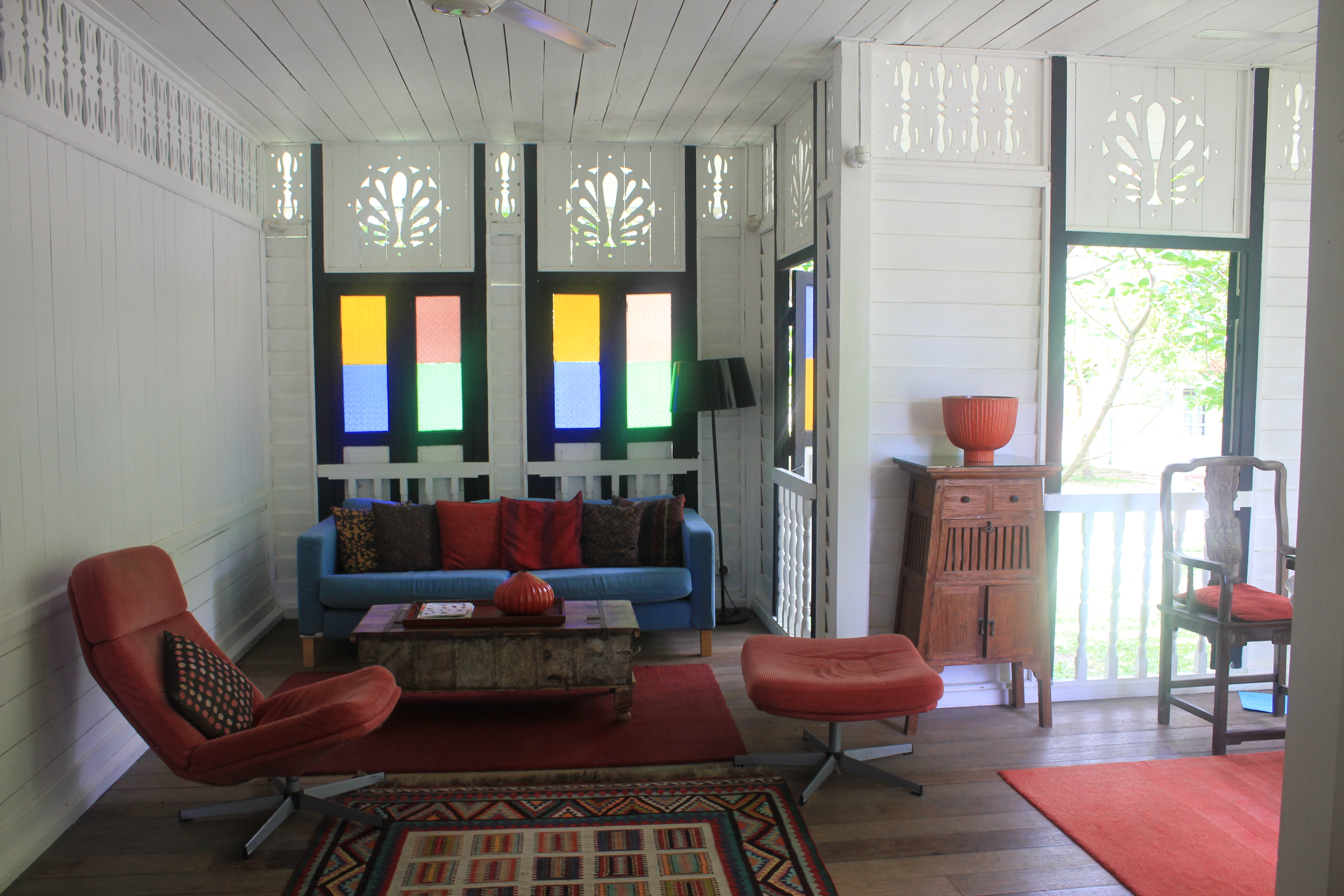
Our brief stay at Temple Tree at Bon Ton (http://www.templetree.com.my) was truly delightful. If you have been to India, you may know the Neemrana group of hotels (http://neemranahotels.com)? Every Neemrana hotel is a heritage building and rooms are decorated with local textiles, objects of art and antique furniture. Well, this is what Temple Tree is about, too. Temple Tree consists of eight villas; colorful, wooden heritage buildings that originate from different parts of Malaysia, representing different eras and aspects of Malaysian history. “Bon Ton” in the name refers to Temple Tree’s sister hotel, which is a short walk away (http://www.bontonresort.com.my).

Chinese Houserestaurantreceptionpool viewIMG_2110IMG_2124

Upon arrival, we were welcomed like royalties with excellent Australian Chardonnay and an upgrade to Colonial House, usually reserved for honeymooners. After a dip in the pool and a walk around the estate, we enjoyed a sample platter of Malay cuisine and char-grilled lamb racks. Just one word: excellent. The next evening we flew with Air Asia back to Kuala Lumpur (there is a flight almost at every hour!), very pleased with the idea to stop in Langkawi. I would recommend Temple Tree to anyone looking for an original hotel with a soul.

Black and White Houseone of many catspoolChinese House

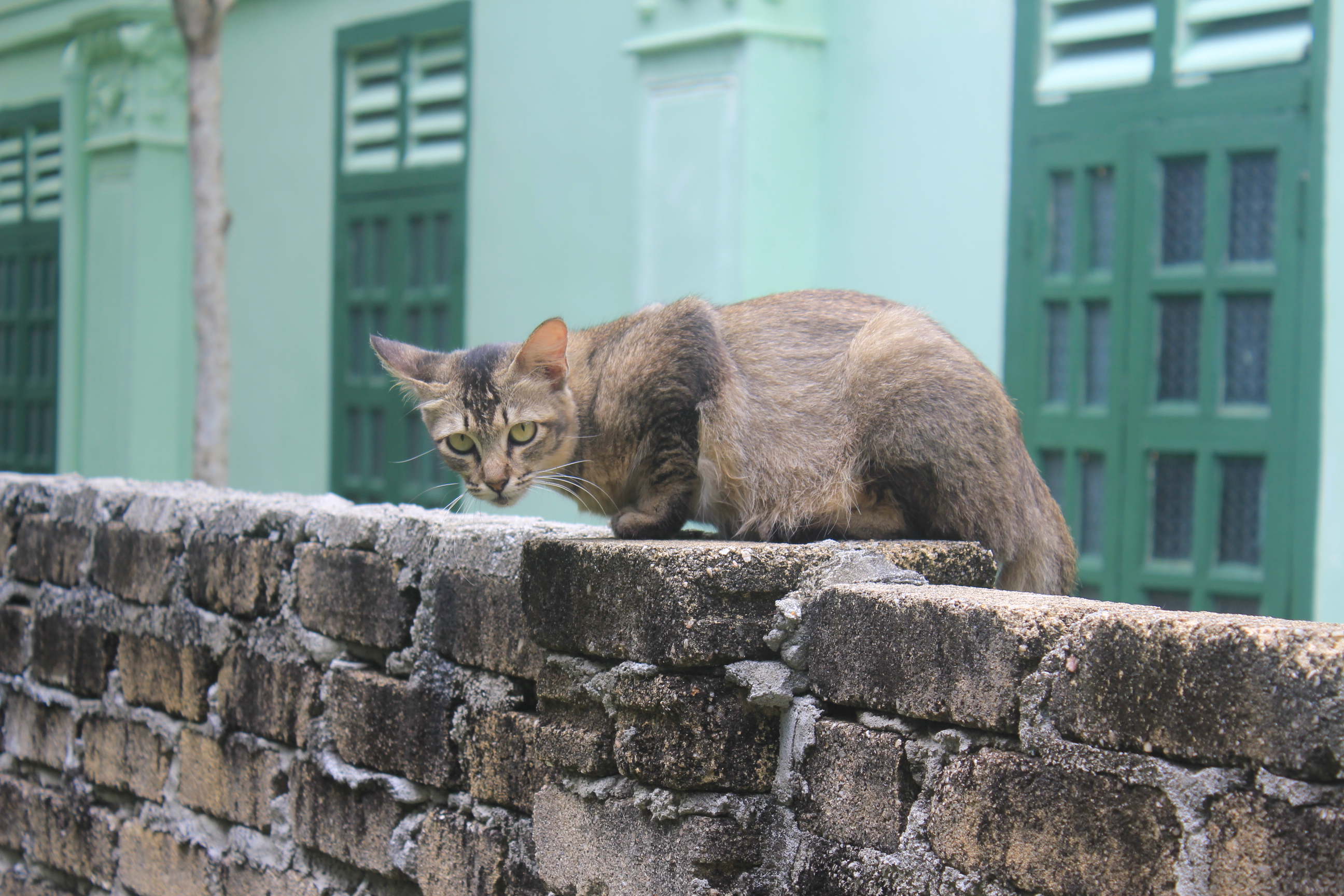
We had nothing to complain about our stay, but some words of advice may become handy. First of all, there is no beach. Both Temple Tree and Bon Ton face a lagoon (see the photo above). It is very idyllic with birds and butterflies, and very green, but should you want the beach, you can take a short cab ride (costs about 2USD one way) to Cenang Beach. Secondly, the owner loves animals and she is a proud owner of an animal shelter. There is a dog at the reception (a very quiet one, it seemed) and many, many cats at both hotels. If these two points do not bother you, then this your pearl in the middle of otherwise rather tourist island of Langkawi.

Eat Drink Sleep Siem Reap (survival guide to Siem Reap)

Our stay in Siem Reap was far from perfect, but I think I have some tips to share with you should you plan to visit this city in the northwestern part of Cambstreet view Siem Reapodia.

WHEN TO GO: We arrived in Siem Reap on February 11, 2013, which was the second day of the Chinese New Year and therefore probably the busiest week of the entire year. According to Chheuy Chhorn, deputy director of the tourism department in Siem Reap, 41 flights from China and Vietnam landed everyday during February 11-13 (source: http://www.phnompenhpost.com/2013021461364/Business/angkor-wat-sees-tourism-spike-over-lunar-new-year.html). Imagine the abundance otemple in SRf tourists and then imagine the missing photo opportunities! If you have a choice, do not go to Siem Reap just before, during or right after the Chinese New Year. Siem Reap, thanks to its proximity to Angkor Wat and other famous temples, constantly receives a large number of tourists, but try visiting off season, even during the rainy season.

HOW LONG TO STAY: Prior to visiting Siem Reap many people were astonished at our plan to stay for approximately fiIMG_0539ve days. Many thought two, or at very maximum three days should more than plenty. I still think five days was a good length, and that in general one needs three full days to visit the temples and the surroundings of Siem Reap. Temple tickets are available for one, three or seven days and we purchased a three-day ticket and have no regrets. Since there is so much history, knowledge and beauty to be absorbed, I would recommend splitting those three days over four or even five days (ticket allows you to do so).  It took the rulers centuries to build all those temples, so to get a real feeling one or two days is just not enough!

WHERE TO SLEEP: Our main criteria regarding accommodation was to stay at a local, traditional place and support the local economy. So I did some Tripadvisor research before leaving Paris and found a guesthouse called Tranquility Angkor Villa (the photo below with the bed) and booked it over internet. It started badly: upon our arrival at 10pmfrom the airport there was a problem with overbooking (they constantly double book). We searched everywhere on internet to find another hotel to sleep in but everything was full. Everything. The  manager suggested we sleep on the mattress on their balcony but after seeing a huge rat run by we said no. To cut the story short, we ended up sleeping two nights at Tranquility Angkor Villa but on the second morning I woke up with hundreds of bites all over my body…… I had been bitten by bed bugs! We had planned to move to another more central guesthouse anyway so off we went. We paid 30usd per night (and got reimbursed half becauseTranquility Angkor Villa of the bed bugs) but in my opinion there are so many nicer (and cheaper!) places to stay at for much better quality and location! Do not let Tripadvisor reviews about the owners’  friendliness to fool you. Lastly, two brothers are not even owners…

(As soon as I realized what had happened I wrote a review on Tripadvisor, and I rewrote it upon our return to Paris, and still today, nothing has been published! I see other negative reviews have been written about Tranquility Angkor Villa since our stay but I am still curiously waiting to see when mine comes out, or if it ever will, and why not……)

It has rarely happened to me anywhere in the world that everything is full, but during that week it seemed to be the case in Siem Reap. Almost. For the rest of our stay we slept at Popular Guest House (the photo on the right) which was more centrally located and clean. If you are stuck in Siem Reap and “everything is full”, you may find a room at Popular Guest House because they have over 50 rooms (they are more like a one-Popular Guest Housestar hotel). We found that staff was pretty unfriendly and only interested in money but what can you expect from a place where you pay 10USD per night? There is also a rooftop restaurant but it serves nothing to write home about… (http://www.popularguesthouse.com/)

This said, I would suggest a few places that I heard good things about. Babel Guesthouse (http://www.babelsiemreap.hostel.com/) is a guesthouse located in Wat Bo Road, about 2km from Pub Street (where Tranquility Angkor Villa is also), and it is also recommended by Cambodia and Laos by Eyewitness guidebook. A Finnish couple we met on the Siem Reap – Viantine flight spoke very highly about Babel Guesthouse, saying it was excellent, very clean and food so delicious they didn’t need to leave the guesthouse in the evening. My Home Tropical Garden Villa (http://www.myhomecambodia.com/) is a small, stylish guesthouse with a swimming pool in the same street than Popular Guest House (about 10 minutes walk from Pub Street). This is where we wanted to stay, but could not get a room. Double AC room costs 20USD. A very affordable hotel we heard good things about is Central Boutique Angkor Hotel (http://www.centralboutiqueangkorhotel.com/) where room prices start at 47USD.

In higher category, Hôtel de La Paix is going through renovation and rebranding, and will open as Park Hyatt Siem Reap (http://siemreap.park.hyatt.com/hyatt/hotels-siemreap-park/index.jsp?null) very soon (Q1 2013?). A dear friend stayed at Hôtel de La Paix last year and loved it beyond words. “It was BLISS”, he told me.

Otherwise, most of the four- and five-star resorts are located on the Airport Road: far away from Pub Street but more easily accessible should you want to return to your hotel for lunch in between the temple visits. Just last week a friend stayed at Borei Angkor Resort & Spa http://www.boreiangkor.com/) and he got a very interesting off-season deal “definitely worth the money”.

PS Like us, you may want to have a pool to jump into after walking up and down all those temple stairs under the burning sun. However, unless you spend the money to stay at a fancy resort, you do not need to look for a guesthouse with a pool. First of all, temple visits are time-consuming so you may not even have time for swimming. Secondly, you can use a pool at almost any hotel in exchange of few USD.

WHERE TO EAT: Khmer Kitchen

During our five-day stay in we mainly ate at Khmer Kitchen (http://www.khmerkitchens.com/) located in the Alley (be aware of other restaurants that carry an almost identical name). We particularly liked fish amok, chicken khmer curry (with pumpkins, potatoes Khmer Kitchenand carrots) and mango salad. I cannot say the food was very refined but it was consistently good enough, and the setting cosy. Unfortunately the service was quite inattentive and slow most of the time.

One day we tried Angkor Palm (http://www.angkorpalm.com/) because it has a reputation as a good and safe place to get a good introduction to KhmeAngkor Palmr cuisine . The sampling platter for two (the photo on the right) had nothing amazing on it except maybe the spring rolls…

Our last night in Siem Reap came and it was time to change and try something different, so why not Cambodian BBQ (http://www.restaurant-siemreap.com/html/cambodianbbq.php)? We ordered “Real local BBQ”, 10USD for two, which includes beef, chicken or pork, bell peppers, lettuce, onion, basil, rice and yellow needles. As you see in the photo on the left, the mBBQeat is cooked on the domed part and the vegetables in the stock surrounding the domed part. There was a Khmer sauce for dipping but did it make the barbeque more tasty? Not really. It was a fun-enough experience to do once, but I am sure there are better places to taste authentic Cambodian barbeque.

For coffee, we tried Blue Pumpkin (http://www.tbpumpkin.com/) but were not impressed by their coffee or cookies. However, we really appreciated having a quiet moment early in the morning at Le Grand Cafe. EsprLe Grand Cafeesso was excellent, venue beautiful and service efficient. The woman we met there (manager/owner?) speaks very good French and is very friendly. Le Grand Cafe reminds me of some cafes we visited in Havanna and Santiago de Cuba, and I actually regret we didn’t go back in the evening for a drink.

TRANSPORT & VISITS: Every guesthouse and hotel can organize a guide and a car/tuk tuk, but it is cheaper if you have a direct contact. Toward the end of our stay we got to know a young man called Chhor Chamnan and regret of not meeting him earlier. Chhor has been in tourism business for 13 years, working regularly with the Australian Embassy in Singapore. He is pleasant, reliable and his English is very good –highly recommended. He charges 20USD per day for a car in Angkor area and 40USD to visit the sites more far away. Should you need his guide services, he takes an extra 20USD per day.

His email is chhorchamnan@hotmail.com and mobile number +855 (0) 12786723. (We made a mistake of booking our guide via Popular Guest House and the guide’s knowledge was appalling. Apparently finding a good guide is difficult because the best ones are reserved for tour groups and luxury hotels well in advance)

IN CASE OF URGENCY: In the Northeastern end of Pub Street there is a pharmacy called U-Care (http://ucarepharma.com/) which is really as good and reliable as any Western pharmacy. Staff speaks English and are friendly.

For more urgent needs there is Royal Angkor International Hospital on the Airport Road, affiliated with Bangkok Hospital Medical Center (http://www.royalangkorhospital.com). They may not accept your insurance, so you have to pay upfront (it can get very expensive, as a simple consultation costs around 120USD) and Khmer China Clinicget reimbursed by your insurance company once back in your home country –not the way it should work!). Right in the center of Siem Reap, near the upcoming Hyatt, there is also Friendship Khmer-China Clinic (no website but easy to find). It is much less fancy, but highly recommended for their availability, reactivity, kindness and attitude (and prices are substantially lower). I probably would not want to spend a night there but some of the most amazing human beings I have ever met work there.  As your third option, and should you want something Western, there is Naga Healthcare (http://www.nagahealthcare.com/). In our case Doctor Joost Hoekstra was not very helpful, but he speaks French, too.

BOTTOM LINE: The center of Siem Reap is not very nice. In the evening it becomes a Drinking Factory and the epicenter of all happening is its famous Pub Street (see the photo). We only enjoyed the center in the early morning when everyone else (who was not already visiting temples) was too hang over to get up. Pub StreetDuring our Southeast Asia tour we met many people who shared this vision and I think it is a pity. Locals surely are pleased about the foreign currency inflow, but I cannot help myself but to wonder could the tourism have taken a different direction in Siem Reap? This said, I think it is important to separate Siem Reap and the temples. If you are going to Siem Reap, it is most likely because of the temples. So, forget the center and Pub Street, and try to focus on enjoying the beauty of the architecture and understanding the vision of the Hindu kings who built those temples because this is what Angkor really is about and what really matters.
The Sleeping Beauty: Vientiane (part 1)

(A more detailed story about Siem Reap and visiting the temples will follow at the latest from from Paris, if not before. The connection was so bad in Siem Reap that I could not do any writing and uploading).

After five full days it felt like it was time to move forward from Siem Reap. We had seen the main temples and even hired a car for a day to visit the sites further away. We appreciated the temples and the transformation they had made from Hinduism to Buddhism. We also loved havingLao Airlines meal a morning coffee in the center of Siem Reap at Le Grand Cafe, but in the evening the center became a Western Drinking Factory and this is not why we came to Asia… We had looked into Siem Reap – Vientiane airplane tickets from Paris and the price seemed stable: around 200USD per person one way. On Saturday afternoon we visited one of the Siem Reap travel agencies (www.europe-asiatours.com) and found out that we could buy a one-way ticket for 157USD including taxes and all fees (payment only in cash). Unfortunately the flight was full for the next day, Sunday, so we returned to the hotel to do some googling hoping to find something for Sunday. On http://www.lastminute.com we found a bit more expensive tickets for the next day, and the decision was quickly made: it is time to leave Cambodia for Laos.

During the flight from Siem Reap to Pakse we met a lovely couple from Finland (if PDD hotelirjo & Teuvo from Jyväskylä are reading this, all our best greetings to you and thanks for those nice discussions!). In Pakse, where everyone had to go through the visa and passport control, we were supposDD Hoteled to wait for two hours for the connecting flight, but as soon as we arrived we asked if there is a possibility to get onto the next flight, leaving in just 30 minutes. After some waiting around they said yes, and without any extra payment we checked onto Pakse – Vientiane flight. Our first contact to Lao people was very sweet. They seemed shy and reserved, but a smile was never very far away. We also found out that they like sweets: during the flight we were served two different types of cakes, one of them in the picture with some green filling… (not bad!).
Upon arrival in Vientiane we shared a taxi with Pirjo and Teuvo (7USD a car to the center). Our stop, Vayakorn House, was full but eventually we found something near by and closer to the Mekong River, Douang Deuane Hotel (25USD). Later on the day we read some reviews on http://www.tripadvisor.com and agreed with them: our fifth-floor view from the hotel roomroom was very clean, the bed was comfortable, and we even had a small balcony looking over temple roofs on the right and the Mekong River on the left. The quality of the bathroom was slightly inferior to the room, but it was still clean.

After checking in at the hotel it was time for a late lunch. Our dear friend who had been to Vientiane last year had recommended Tintin-inspired Chokdee Cafe (http://www.chokdeecafe.com), which turned out to be around the corner from our hotel. Chokdee CafeChokdee CafeI do have to admit that I can be quite reluctant about the touristy bars and restaurants, but I immediately fell in love with this restaurant that has a huge selection of Belgium beers (and even mussels on the weekend!!) and Western as well as Lao dishes. Chokdee Cafe is not your usual touristy bar, it is an expat hang out place where you are sure to meet very interesting people. During our first visit we talked to a European man learning Lao language and explaining the pronunciation difficulties to us, while we overheard a discussion on how to invest in Laos. All thispapaya salad and minced duck salad happened while a nice Dutchman (in the picture) was singing old French and English songs, and some songs composed by himself about living an expat life and going to Embassy parties… During our second visit we met an Englishman who had just bought an apartment in Thailand and his new Scottish friend, met on a Luang Prabang-Vientiane bus.

The food at Chokdee Cafe was delicious, too. Papaya salad was a bit too spicy and it is rare we cannot finish a dish… However, my favorite was the Laap Phet: the minced duck breast mixed with mint leaves and chili. DELICIOUS!!! (As I am writing this, it is the best Laap I have had in Laos so far!).

by the Mekong

We could have stayed an entire evening at Chokdee Cafe but once our mouths were burning from the chillies and stomachs full from excellent BeerLao we headed back to the streets. Walking by the Mekong is walking on a border: Thailand is just on the other side of the river and this is why you get messages “welcome to Thailangymd” on your cellular phone. (However, if you curious about crossing the border by the river on your own, do not try. A local guide told us that the Thai soldiers/customs officers are quite corrupted and will fine you very heftily should they catch you…). We also realized that the Lao people are very sportive: there were many skate boarding and jogging along the river, and we even saw an outdoor gym by the river.

Eventually the sun set, but we continued walking. The temples looked very different ftemplerom the ones we had seen in the center of Siem Reap and against the templedark sky they for sure held special magical power.

The Lao people dine early and many places close at 9pm. In addition there is this sort of unofficial curfew at 11pm, so the dining hours have nothing to do with the Mediterranean way of life… The restaurant (Makphet) where we had wanted to go was closed  but we found a food court on Th Chao Anou Street. street food

My husband had some pork sausage (I don’t eat pork) and he said it was a bit sweet but good and interesting. Together we shared grilled squid and a grilled fish (see the photo) that they call “panin” (at least this is what it sounded like to me). They stick a lemongrass inside the fish but if you do not know what it is, you may mistake it for a bipanin fishg spider or something! Panin was clearly a river fish, but the meat was consistent and tasted good.

I think the next time I visit our summer house in Finland I will catch local lake fish and serve it stuffed with lemongrass!! A great barbeque idea.