Tag Archives: Buddhism

Eat Drink Sleep Siem Reap (survival guide to Siem Reap)

Our stay in Siem Reap was far from perfect, but I think I have some tips to share with you should you plan to visit this city in the northwestern part of Cambstreet view Siem Reapodia.

WHEN TO GO: We arrived in Siem Reap on February 11, 2013, which was the second day of the Chinese New Year and therefore probably the busiest week of the entire year. According to Chheuy Chhorn, deputy director of the tourism department in Siem Reap, 41 flights from China and Vietnam landed everyday during February 11-13 (source: http://www.phnompenhpost.com/2013021461364/Business/angkor-wat-sees-tourism-spike-over-lunar-new-year.html). Imagine the abundance otemple in SRf tourists and then imagine the missing photo opportunities! If you have a choice, do not go to Siem Reap just before, during or right after the Chinese New Year. Siem Reap, thanks to its proximity to Angkor Wat and other famous temples, constantly receives a large number of tourists, but try visiting off season, even during the rainy season.

HOW LONG TO STAY: Prior to visiting Siem Reap many people were astonished at our plan to stay for approximately fiIMG_0539ve days. Many thought two, or at very maximum three days should more than plenty. I still think five days was a good length, and that in general one needs three full days to visit the temples and the surroundings of Siem Reap. Temple tickets are available for one, three or seven days and we purchased a three-day ticket and have no regrets. Since there is so much history, knowledge and beauty to be absorbed, I would recommend splitting those three days over four or even five days (ticket allows you to do so).  It took the rulers centuries to build all those temples, so to get a real feeling one or two days is just not enough!

WHERE TO SLEEP: Our main criteria regarding accommodation was to stay at a local, traditional place and support the local economy. So I did some Tripadvisor research before leaving Paris and found a guesthouse called Tranquility Angkor Villa (the photo below with the bed) and booked it over internet. It started badly: upon our arrival at 10pmfrom the airport there was a problem with overbooking (they constantly double book). We searched everywhere on internet to find another hotel to sleep in but everything was full. Everything. The  manager suggested we sleep on the mattress on their balcony but after seeing a huge rat run by we said no. To cut the story short, we ended up sleeping two nights at Tranquility Angkor Villa but on the second morning I woke up with hundreds of bites all over my body…… I had been bitten by bed bugs! We had planned to move to another more central guesthouse anyway so off we went. We paid 30usd per night (and got reimbursed half becauseTranquility Angkor Villa of the bed bugs) but in my opinion there are so many nicer (and cheaper!) places to stay at for much better quality and location! Do not let Tripadvisor reviews about the owners’  friendliness to fool you. Lastly, two brothers are not even owners…

(As soon as I realized what had happened I wrote a review on Tripadvisor, and I rewrote it upon our return to Paris, and still today, nothing has been published! I see other negative reviews have been written about Tranquility Angkor Villa since our stay but I am still curiously waiting to see when mine comes out, or if it ever will, and why not……)

It has rarely happened to me anywhere in the world that everything is full, but during that week it seemed to be the case in Siem Reap. Almost. For the rest of our stay we slept at Popular Guest House (the photo on the right) which was more centrally located and clean. If you are stuck in Siem Reap and “everything is full”, you may find a room at Popular Guest House because they have over 50 rooms (they are more like a one-Popular Guest Housestar hotel). We found that staff was pretty unfriendly and only interested in money but what can you expect from a place where you pay 10USD per night? There is also a rooftop restaurant but it serves nothing to write home about… (http://www.popularguesthouse.com/)

This said, I would suggest a few places that I heard good things about. Babel Guesthouse (http://www.babelsiemreap.hostel.com/) is a guesthouse located in Wat Bo Road, about 2km from Pub Street (where Tranquility Angkor Villa is also), and it is also recommended by Cambodia and Laos by Eyewitness guidebook. A Finnish couple we met on the Siem Reap – Viantine flight spoke very highly about Babel Guesthouse, saying it was excellent, very clean and food so delicious they didn’t need to leave the guesthouse in the evening. My Home Tropical Garden Villa (http://www.myhomecambodia.com/) is a small, stylish guesthouse with a swimming pool in the same street than Popular Guest House (about 10 minutes walk from Pub Street). This is where we wanted to stay, but could not get a room. Double AC room costs 20USD. A very affordable hotel we heard good things about is Central Boutique Angkor Hotel (http://www.centralboutiqueangkorhotel.com/) where room prices start at 47USD.

In higher category, Hôtel de La Paix is going through renovation and rebranding, and will open as Park Hyatt Siem Reap (http://siemreap.park.hyatt.com/hyatt/hotels-siemreap-park/index.jsp?null) very soon (Q1 2013?). A dear friend stayed at Hôtel de La Paix last year and loved it beyond words. “It was BLISS”, he told me.

Otherwise, most of the four- and five-star resorts are located on the Airport Road: far away from Pub Street but more easily accessible should you want to return to your hotel for lunch in between the temple visits. Just last week a friend stayed at Borei Angkor Resort & Spa http://www.boreiangkor.com/) and he got a very interesting off-season deal “definitely worth the money”.

PS Like us, you may want to have a pool to jump into after walking up and down all those temple stairs under the burning sun. However, unless you spend the money to stay at a fancy resort, you do not need to look for a guesthouse with a pool. First of all, temple visits are time-consuming so you may not even have time for swimming. Secondly, you can use a pool at almost any hotel in exchange of few USD.

WHERE TO EAT: Khmer Kitchen

During our five-day stay in we mainly ate at Khmer Kitchen (http://www.khmerkitchens.com/) located in the Alley (be aware of other restaurants that carry an almost identical name). We particularly liked fish amok, chicken khmer curry (with pumpkins, potatoes Khmer Kitchenand carrots) and mango salad. I cannot say the food was very refined but it was consistently good enough, and the setting cosy. Unfortunately the service was quite inattentive and slow most of the time.

One day we tried Angkor Palm (http://www.angkorpalm.com/) because it has a reputation as a good and safe place to get a good introduction to KhmeAngkor Palmr cuisine . The sampling platter for two (the photo on the right) had nothing amazing on it except maybe the spring rolls…

Our last night in Siem Reap came and it was time to change and try something different, so why not Cambodian BBQ (http://www.restaurant-siemreap.com/html/cambodianbbq.php)? We ordered “Real local BBQ”, 10USD for two, which includes beef, chicken or pork, bell peppers, lettuce, onion, basil, rice and yellow needles. As you see in the photo on the left, the mBBQeat is cooked on the domed part and the vegetables in the stock surrounding the domed part. There was a Khmer sauce for dipping but did it make the barbeque more tasty? Not really. It was a fun-enough experience to do once, but I am sure there are better places to taste authentic Cambodian barbeque.

For coffee, we tried Blue Pumpkin (http://www.tbpumpkin.com/) but were not impressed by their coffee or cookies. However, we really appreciated having a quiet moment early in the morning at Le Grand Cafe. EsprLe Grand Cafeesso was excellent, venue beautiful and service efficient. The woman we met there (manager/owner?) speaks very good French and is very friendly. Le Grand Cafe reminds me of some cafes we visited in Havanna and Santiago de Cuba, and I actually regret we didn’t go back in the evening for a drink.

TRANSPORT & VISITS: Every guesthouse and hotel can organize a guide and a car/tuk tuk, but it is cheaper if you have a direct contact. Toward the end of our stay we got to know a young man called Chhor Chamnan and regret of not meeting him earlier. Chhor has been in tourism business for 13 years, working regularly with the Australian Embassy in Singapore. He is pleasant, reliable and his English is very good –highly recommended. He charges 20USD per day for a car in Angkor area and 40USD to visit the sites more far away. Should you need his guide services, he takes an extra 20USD per day.

His email is chhorchamnan@hotmail.com and mobile number +855 (0) 12786723. (We made a mistake of booking our guide via Popular Guest House and the guide’s knowledge was appalling. Apparently finding a good guide is difficult because the best ones are reserved for tour groups and luxury hotels well in advance)

IN CASE OF URGENCY: In the Northeastern end of Pub Street there is a pharmacy called U-Care (http://ucarepharma.com/) which is really as good and reliable as any Western pharmacy. Staff speaks English and are friendly.

For more urgent needs there is Royal Angkor International Hospital on the Airport Road, affiliated with Bangkok Hospital Medical Center (http://www.royalangkorhospital.com). They may not accept your insurance, so you have to pay upfront (it can get very expensive, as a simple consultation costs around 120USD) and Khmer China Clinicget reimbursed by your insurance company once back in your home country –not the way it should work!). Right in the center of Siem Reap, near the upcoming Hyatt, there is also Friendship Khmer-China Clinic (no website but easy to find). It is much less fancy, but highly recommended for their availability, reactivity, kindness and attitude (and prices are substantially lower). I probably would not want to spend a night there but some of the most amazing human beings I have ever met work there.  As your third option, and should you want something Western, there is Naga Healthcare (http://www.nagahealthcare.com/). In our case Doctor Joost Hoekstra was not very helpful, but he speaks French, too.

BOTTOM LINE: The center of Siem Reap is not very nice. In the evening it becomes a Drinking Factory and the epicenter of all happening is its famous Pub Street (see the photo). We only enjoyed the center in the early morning when everyone else (who was not already visiting temples) was too hang over to get up. Pub StreetDuring our Southeast Asia tour we met many people who shared this vision and I think it is a pity. Locals surely are pleased about the foreign currency inflow, but I cannot help myself but to wonder could the tourism have taken a different direction in Siem Reap? This said, I think it is important to separate Siem Reap and the temples. If you are going to Siem Reap, it is most likely because of the temples. So, forget the center and Pub Street, and try to focus on enjoying the beauty of the architecture and understanding the vision of the Hindu kings who built those temples because this is what Angkor really is about and what really matters.

Tak Bat and Buddhist Monks in Luang Prabang

I wanted to title this post Save the Monks but that would maybe be too provocative. EveIMG_1087n if it would better describe my feeling about something that is happening in Luang Prabang, Laos.

Prior to going into my personal sentiments and reasoning, let’s begin with some facts about Luang Prabang.

Luang Prabang, a Unesco Heritage Site since 1995, is an Exquisite small town, with a capital E. Unesco website introduces this former capital of Laos like this: “Luang Prabang is an outstanding example of the fusion of traditional architecture and Lao urban structures with those built by the European colonial authorities in the 19th and 20th centuries. Its unique, remarkably well-preserved townscape illustrates a key stage in the blending of these two distinct cultural traditions.” (http://whc.unesco.org/en/list/479).

It is going to be difficult for me to properly express my admiration for Luang Prabang, especially since I already nominated Vientiane the cutest capital in the world and used so many supIMG_1137erlatives to describe it. So, let me just say this: I believe Luang Prabang will be the Next Big Travel Destination. I truly believe honeymooners will soon be putting together a trip which combines some precious time between Luang Prabang and Thai (or other regional) beaches. Luang Prabang is very romantic, surrounded by lush mountains and located by the Mekong River, and one can even arrive in Luang Prabang by boat.

Contrary to Vientiane where the future and the past meet and compete, Luang Prabang is aIMG_1135 town where time has stopped. It would not be fair to stay Luang Prabang lives in the past, as it has all modern facilities any traveler would want from upscale hotels to hip bars, but there is something so old school (in a good way) there. In fact, what makes Luang Prabang so special is the wats (temples). And the monks that live in them.

32 temples remain today in Luang Prabang and according to estimates, some 2000 monks inhabit them. At least until recently, it was very common for parents to send their son to a monastery where he would receive free education and free food during few years. As everywhere in the world, the world is changing, and not every son goes to the monastery, but in Luang Prabang the time seems to move slower. Wherever you go, IMG_1131you can see monks and some of them are very young (not even 10 I reckon). They seem content, composed, calm and those who looked at us, smiled. It is very uplifting to watch them: one rarely sees such inner calm in the big cities in the West.

The problem, if I may call it so, is that these monks are very charming and photogenic. I would even say cute and I don’t mean this in a patronizing or sexual way (and I certainly hope no one does!). But it is very pleasant to observe them. They transpire beauty and you become tempted to kidnap one to take home with you (half-kidding now).

In order to get a glimpse of their life without too much interference, we decided upon soIMG_1525me basic rules: we would try not to look at them too much, and if we did, we would try to do it from the distance. We would not approach them unless they made the first contact. If they did, it is only then when I would ask for a permission to take a photo. As you can see, I have only very few photos of their faces, and now you know why. After all, they are living an ordinary life, and I just don’t believe someone should be there all the time harassing them. I would not want that for myself…

Temples and monks are surely one of the top reasons why a tourist comes to Luang Prabang, and it was one of ours, too. And to add even more charm to all this, there is something called tak bat that Luang Prabang is also famous for. Tak bat is an ancient Buddhist ritual, where hundreds of monks walk in a line, silently of course, and IMG_1030receive alms (food) from local people (usually elderly women). Normally the monks start walking around the town at 4 in the morning and finish around the sun rise.

Before we traveled to Laos, I consulted a dear friend of ours, a very cultivated, intelligent and respectful Hindu woman. Together with her husband, she is also one of the most-traveled person in the world I know. She had been to Luang Prabang one year earlier and this is what she had written to me about tak bat: “Just before sunrise, the monks from all the monasteries walk the main street asking for alms. You can buy cooked rice and dry biscuits (sold on the streets itself a bit earlier) and offer it to them. I had bought a big basket of cooked sticky rice and you put a large spoonful in each monk’s bowl as they walk past you.”
Needless to say, we were excited to wake up one morning to witness this ritual. BIMG_1189ut as soon as we walked into the event, we were shocked. It was still dark (after all it was 5 in the morning) but hundreds of camera flashes used by tourists made it look like a day. Tourists were literally chasing the monks, like one chases animals in a safari in Africa. The only thing missing was a guide yelling “look at this monk, run this way to take a photo”.

I felt sorry for everyone. For the monks as surely this conflicts with the monastery ideology (they are supposed to be meditating!). For the tourists as some of them obviously had no consideration. Some of the tourists placed themselves right in front of the monks (blocking their path), right at their face, to take a closed-up photo to bring home. Ok, I am going to stop here because otherwise I don’t know what I will say next, but what were those tourists thinking?  Imagine yourself getting married in a church and the priest giving you his blessing, and then suddenly a tourist walks in and comes right to your face to take a photo of you without asking your perIMG_1203mission (and even if he did, you would certainly say no). Imagine that.

In fact every single Laos guide book talks about tak bat and they also tell you very clearly how to behave should you want to observe it or even participate in it. There are very strict rules: for example, no flash should be used, and a woman should not touch a monk and should kneel. When you walk along Luang Prabang streets you will surely see some notice boards put up by travel agencies who educate tourists about responsible traveling. What puzzles me is that most of the tourists cIMG_1293ome to Luang Prabang from very literate countries, but obviously their reading skills are not put into use.

(I found a blog writing that talks about this bad behavior, and I found it quite interesting to read: http://www.travelblog.org/Asia/Laos/West/Luang-Prabang/blog-479534.html).

I didn’t begin this post with Save the Monks title, but I will end it with a plea: please, do respect the local culture and don’t let your egoism to destroy this centuries-old tradition. Buy a post card (in many cases the photo will be much better than any of your amateur photos taken in dark) or take photos from distance.

The Sleeping Beauty: Vientiane (part 2)

VientianeI decided to label Vientiane The Sleeping Beauty, but I may have as well called it The World’s Cutest Capital. This tiny capital is very quiet and traffic jams are unheard of. Instead you hear birds and see butterflies. You see monks wondering around the temples and some tourists, mainly independent it seemed, and you are pretty much without hassle while visiting the town. My first impression on Vientiane wasIMG_0810 “what a cute capital”!

My second impression was that the future and the past of Laos use Vientiane as a playground. It felt and looked very Chinese and Communist. At the same time the devoted monks were seen with iPhones and other devices for listening music. It also became obvious very soon that there is plenty of money in the capital (or was it remittances sent into Vientiane by Laotians living abroad?). We saw an abundance of expIMG_0863ensive four wheels and white seemed to be the color à la mode. There was at least one white-colored four-wheeled Porsche and an Englishman we met said he had seen a yellow Lamborghini! Furthermore, Russian influence was present in the streets and a cellular phone operator Beeline seemed to be advertising everywhere. But Russia was not the only country present. France had left its legacy, too, and there are many lovely and good-valued cafes in Vientiane serving all types of coffees and croissants. An interesting battle field of influences I reckon!

After a cup of Lao coffee (filtered coffee mixed with conIMG_0868densed milk) we started our walking tour. The itinerary we did followed the Lonely Planet “Monument to Mekong Cycling Tour” except that we did it by walking and chose a different restaurant to eat lunch at. Note: If you are interested in visiting the temples, do remember that most of them close between midday and 1pm, and close again 4pm. IMG_0864Of all wats (temples) on this route, we liked particularly Wat Ong Teu Mahawihan and Wat Si Saket. Our lunch stop was Makphet, the famous non profit restaurant run by an NGO called Friends International (http://www.friends-international.org/) and where former street youth are trained to wait and cook.  IMG_0828

We chose two main dishes: Lemongrass Spiced Chicken, Young Bamboo & Mushroom Stir Fry and Grilled Beef Salad with Apple Eggplant & Young Lemongrass. Both were excellent, but the beef salad was divine. I find it IMG_0832very interesting that they had added dill in it -dill is very much used in my home country Finland and also in the Eastern Europe and Russia, but I have not associated it with Asian dishes. Will need to do some research on the origin of dill once I get back home.

After the lunch we had two more important places to go to: we hired a tuc tuc to take us to Pha That Luang before its closing, also at 4pm. This is considered to be the most important monument in Laos and legends of the site’s origin vary (http://www.laos-guide-999.com/pha-that-luang.html). The second place we wanted to go to is Wat Si Muang (open until 7pm), where the spirit of Vientiane is supposed to reside. This temple felt very much alive and we could seeIMG_0874 people praying and asking for help. In fact there is a Buddha made of stone and locals believe that by lifting it three times from its pillow, while at the same time asking for something, your wish will come true. We saw an elderly woman  doing this and the statue seemed very heavy. Outside the temple there were many stands where on could buy offerings –something you are supposed to do if your wish comes true.

For the dinner we could not resist the temptation and returned to Chokdee Cafe (read yesterday’s The Sleeping Beauty: Vientiane (part 1) to hear more about this restaurant). I still believe their duck breast laap is one of the best in the entire world! I keep looking for a better one, but in vain…

We spent two full days in Vientiane and could have stayed a bit longer. It really is a pleasant town and in my humble opinion much of its charm lies (in addition to dozens of sacred temples) in Chokdee Cafe and interesting stories you hear there (not forgetting their laap!)…

The Sleeping Beauty: Vientiane (part 1)

(A more detailed story about Siem Reap and visiting the temples will follow at the latest from from Paris, if not before. The connection was so bad in Siem Reap that I could not do any writing and uploading).

After five full days it felt like it was time to move forward from Siem Reap. We had seen the main temples and even hired a car for a day to visit the sites further away. We appreciated the temples and the transformation they had made from Hinduism to Buddhism. We also loved havingLao Airlines meal a morning coffee in the center of Siem Reap at Le Grand Cafe, but in the evening the center became a Western Drinking Factory and this is not why we came to Asia… We had looked into Siem Reap – Vientiane airplane tickets from Paris and the price seemed stable: around 200USD per person one way. On Saturday afternoon we visited one of the Siem Reap travel agencies (www.europe-asiatours.com) and found out that we could buy a one-way ticket for 157USD including taxes and all fees (payment only in cash). Unfortunately the flight was full for the next day, Sunday, so we returned to the hotel to do some googling hoping to find something for Sunday. On http://www.lastminute.com we found a bit more expensive tickets for the next day, and the decision was quickly made: it is time to leave Cambodia for Laos.

During the flight from Siem Reap to Pakse we met a lovely couple from Finland (if PDD hotelirjo & Teuvo from Jyväskylä are reading this, all our best greetings to you and thanks for those nice discussions!). In Pakse, where everyone had to go through the visa and passport control, we were supposDD Hoteled to wait for two hours for the connecting flight, but as soon as we arrived we asked if there is a possibility to get onto the next flight, leaving in just 30 minutes. After some waiting around they said yes, and without any extra payment we checked onto Pakse – Vientiane flight. Our first contact to Lao people was very sweet. They seemed shy and reserved, but a smile was never very far away. We also found out that they like sweets: during the flight we were served two different types of cakes, one of them in the picture with some green filling… (not bad!).

Upon arrival in Vientiane we shared a taxi with Pirjo and Teuvo (7USD a car to the center). Our stop, Vayakorn House, was full but eventually we found something near by and closer to the Mekong River, Douang Deuane Hotel (25USD). Later on the day we read some reviews on http://www.tripadvisor.com and agreed with them: our fifth-floor view from the hotel roomroom was very clean, the bed was comfortable, and we even had a small balcony looking over temple roofs on the right and the Mekong River on the left. The quality of the bathroom was slightly inferior to the room, but it was still clean.

After checking in at the hotel it was time for a late lunch. Our dear friend who had been to Vientiane last year had recommended Tintin-inspired Chokdee Cafe (http://www.chokdeecafe.com), which turned out to be around the corner from our hotel. Chokdee CafeChokdee CafeI do have to admit that I can be quite reluctant about the touristy bars and restaurants, but I immediately fell in love with this restaurant that has a huge selection of Belgium beers (and even mussels on the weekend!!) and Western as well as Lao dishes. Chokdee Cafe is not your usual touristy bar, it is an expat hang out place where you are sure to meet very interesting people. During our first visit we talked to a European man learning Lao language and explaining the pronunciation difficulties to us, while we overheard a discussion on how to invest in Laos. All thispapaya salad and minced duck salad happened while a nice Dutchman (in the picture) was singing old French and English songs, and some songs composed by himself about living an expat life and going to Embassy parties… During our second visit we met an Englishman who had just bought an apartment in Thailand and his new Scottish friend, met on a Luang Prabang-Vientiane bus.

The food at Chokdee Cafe was delicious, too. Papaya salad was a bit too spicy and it is rare we cannot finish a dish… However, my favorite was the Laap Phet: the minced duck breast mixed with mint leaves and chili. DELICIOUS!!! (As I am writing this, it is the best Laap I have had in Laos so far!).

by the Mekong

We could have stayed an entire evening at Chokdee Cafe but once our mouths were burning from the chillies and stomachs full from excellent BeerLao we headed back to the streets. Walking by the Mekong is walking on a border: Thailand is just on the other side of the river and this is why you get messages “welcome to Thailangymd” on your cellular phone. (However, if you curious about crossing the border by the river on your own, do not try. A local guide told us that the Thai soldiers/customs officers are quite corrupted and will fine you very heftily should they catch you…). We also realized that the Lao people are very sportive: there were many skate boarding and jogging along the river, and we even saw an outdoor gym by the river.

Eventually the sun set, but we continued walking. The temples looked very different ftemplerom the ones we had seen in the center of Siem Reap and against the templedark sky they for sure held special magical power.

The Lao people dine early and many places close at 9pm. In addition there is this sort of unofficial curfew at 11pm, so the dining hours have nothing to do with the Mediterranean way of life… The restaurant (Makphet) where we had wanted to go was closed  but we found a food court on Th Chao Anou Street. street food

My husband had some pork sausage (I don’t eat pork) and he said it was a bit sweet but good and interesting. Together we shared grilled squid and a grilled fish (see the photo) that they call “panin” (at least this is what it sounded like to me). They stick a lemongrass inside the fish but if you do not know what it is, you may mistake it for a bipanin fishg spider or something! Panin was clearly a river fish, but the meat was consistent and tasted good.

I think the next time I visit our summer house in Finland I will catch local lake fish and serve it stuffed with lemongrass!! A great barbeque idea.

48 hours in Kuala Lumpur

(I am writing this from lovely Vientiane, the capital of Laos, where we arrived this afternoon from Siem Reap. The connection was so bad in Siem Reap that I could not even open the blog page. I am writing this from the hotel reception, but I hope to be able to report soon from my own computer. Thanks for your patience!)

This post will be a series of photos I took in Kuala Lumpur, Malaysia. We had a good time there and remember interesting food experiences and lovely, talkative and friendly people.

MONKEY TAXIJamil Kucing

This driver we saw had a monkey pet at his motorbike’s back seat. While I was taking photos I was warned by locals that the driver is very protective of his pet and he does not like it being photographed. Anyhow, the monkey seemed content and calm. This was taken in Chinatown.

(PS more than one month later from taking this photo I received a message from this driver! How he found my blog, who knows. I learned that his name is Jamil Ismail but people call him Jamil Kucing, the Catsman (kucing means cats). He has an animal (mainly cats) rescue shelter in Kuala Lumpur. His blog can be found here: http://jamilthecatman.blogspot.com)

Chinatown in Kuala Lumpur

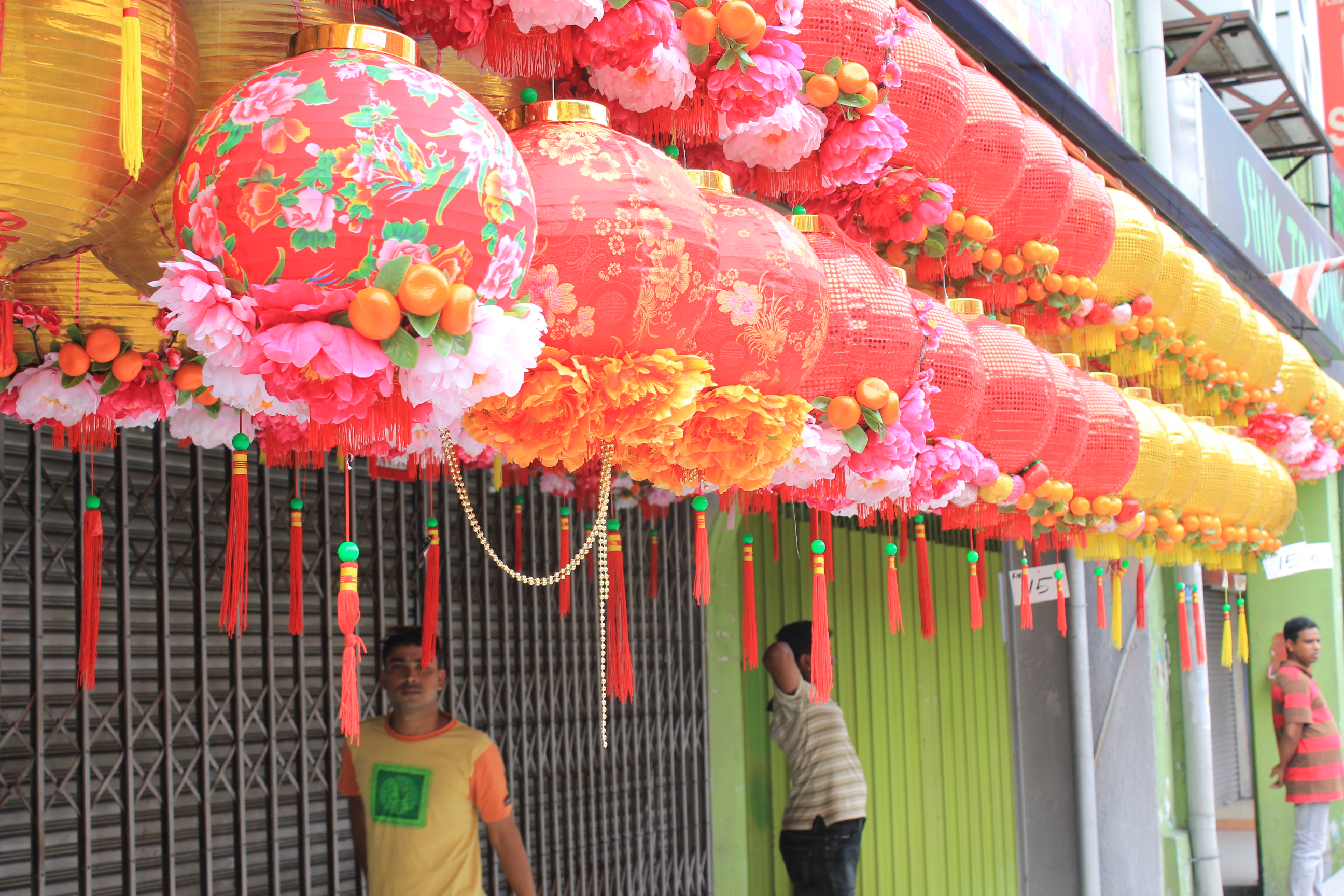
CHINESE NEW YEAR

Decorations were everywhere. We were explained that Kuala Lumpur is a city of immigrants and many of them use the opportunity (of extended New Year holidays) to return home to the family, so the streets were rather quiet. We enjoyed relaxed walks and the first day we walked in Chinatown and in Little India (more or less followed the itinerary suggested by the Lonely Planet with few exceptions).

temple

TEMPLES

There are many temples in Chinatown and we watched people burning paper and fake money, which is a part of the Chinese New Year traditions. It was idyllic and calm. There was a feeling of something communal: everyone had his mind set on the new year and welcoming it as properly as possible.

Not all temples are Buddhist. There is also a temple from Tamil Nadu, South East of India, with a typical, colorful gopura.

dinnerDINNER

Upon arrival at our hotel (Capitol, recommended!) at midnight we were very tired but at the same time very curious about what the city has to offer. Instead of going to bed at a reasonable hour we went out. We were not even hungry –we just wanted to get a taste of local flavors. I had an excellent egg noodle dish with chicken and dried anchovies. I have to say I am not too keen on mixing the chicken and fish (I find it a bit strange as a combination, but then again, in France they often mix lardon (sort of bacon) with fish!). My dish was very tasty and our stomachs soon very full. At 3 am we finally fell asleep…

Malaysian Flatiron

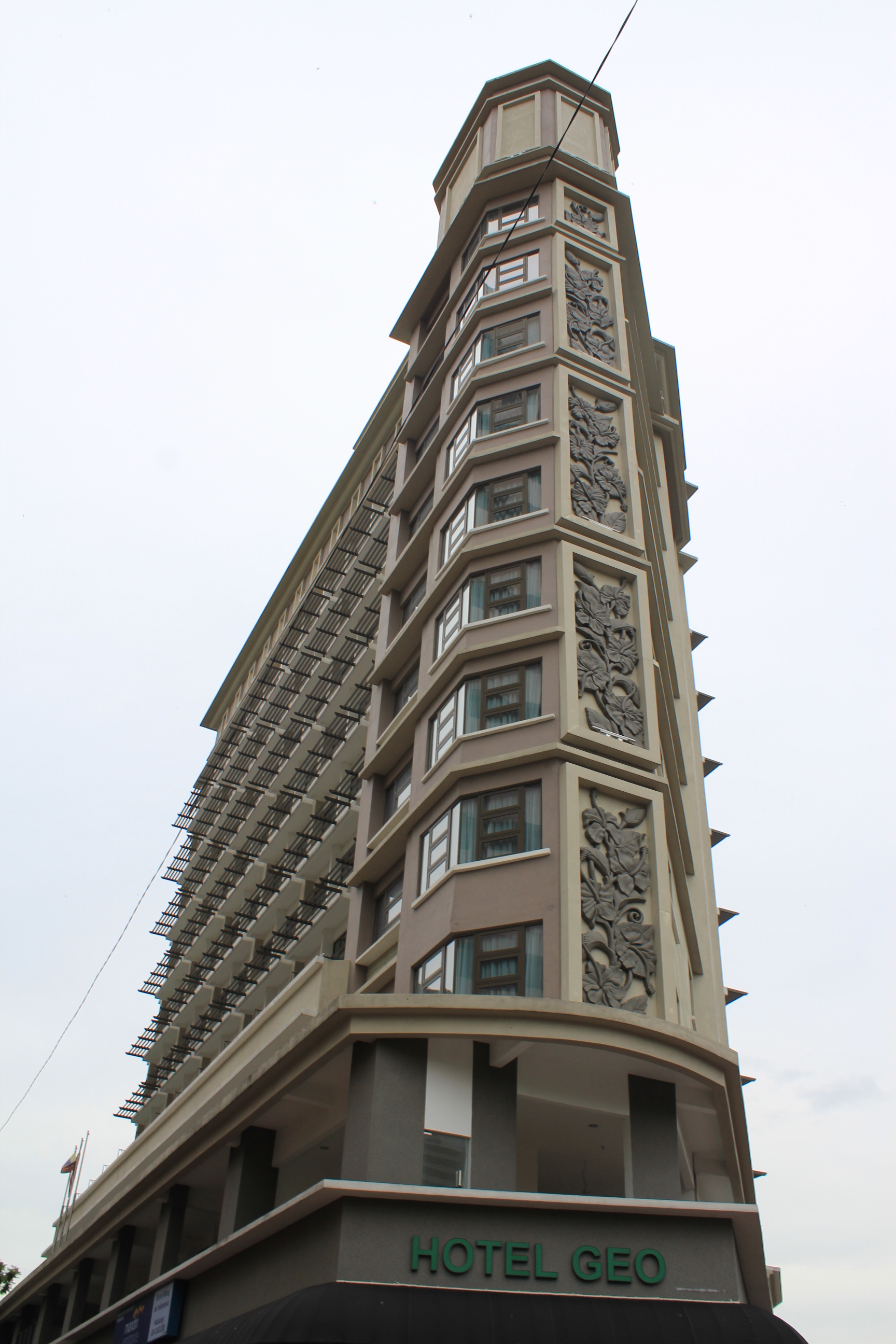
NEW YORK CITY MEETS KUALA LUMPUR

Been to New York city? Know the Flatiron building?

We named this building the Flatiron of Kuala Lumpur. There is a hotel in it, but the exterior is more interesting that the inside.

HERITAGE BUILDINGS

No one had told us to look for the old heritage buildings in Kuala Lumpur. We thought that these small pieces of history here and there added a lot of charm to theheritage buildings city which is so modern nowadays (I felt it was a little bit the same thing in Bombay: no one really talks about the old art deco buildings that are everywhere, but once you start seeing them, the city starts looking very different in front of your eyes). Once we started paying attention to these tiny jewels in Kuala Lumpur, we also understood the history better.

green architecture

GREEN ARCHITECTURE

In one of the nicer parts of the city we found this building with a green wall made of plants. It reminded us of the French architect designer Monsieur Blanc and also of Miami architecture. I think it is such a great idea to use plants in the architecture and I loved this wall we saw in Kuala Lumpur. I do not know what plants they were planting, but I know from my discussion with Monsieur Blanc at a cocktail party in Paris that it requires serious research to realize this kind of an architectural project.

MASSAGEmassage

After a long walk, we had a massage at one of the places near our hotel. A lovely owner offered us clementines and chatted with us while the Burmese women took care of our feet, neck and shoulder. One hour cost approximately 12Euros.

frog porridge

satay

FROG PORRIDGE

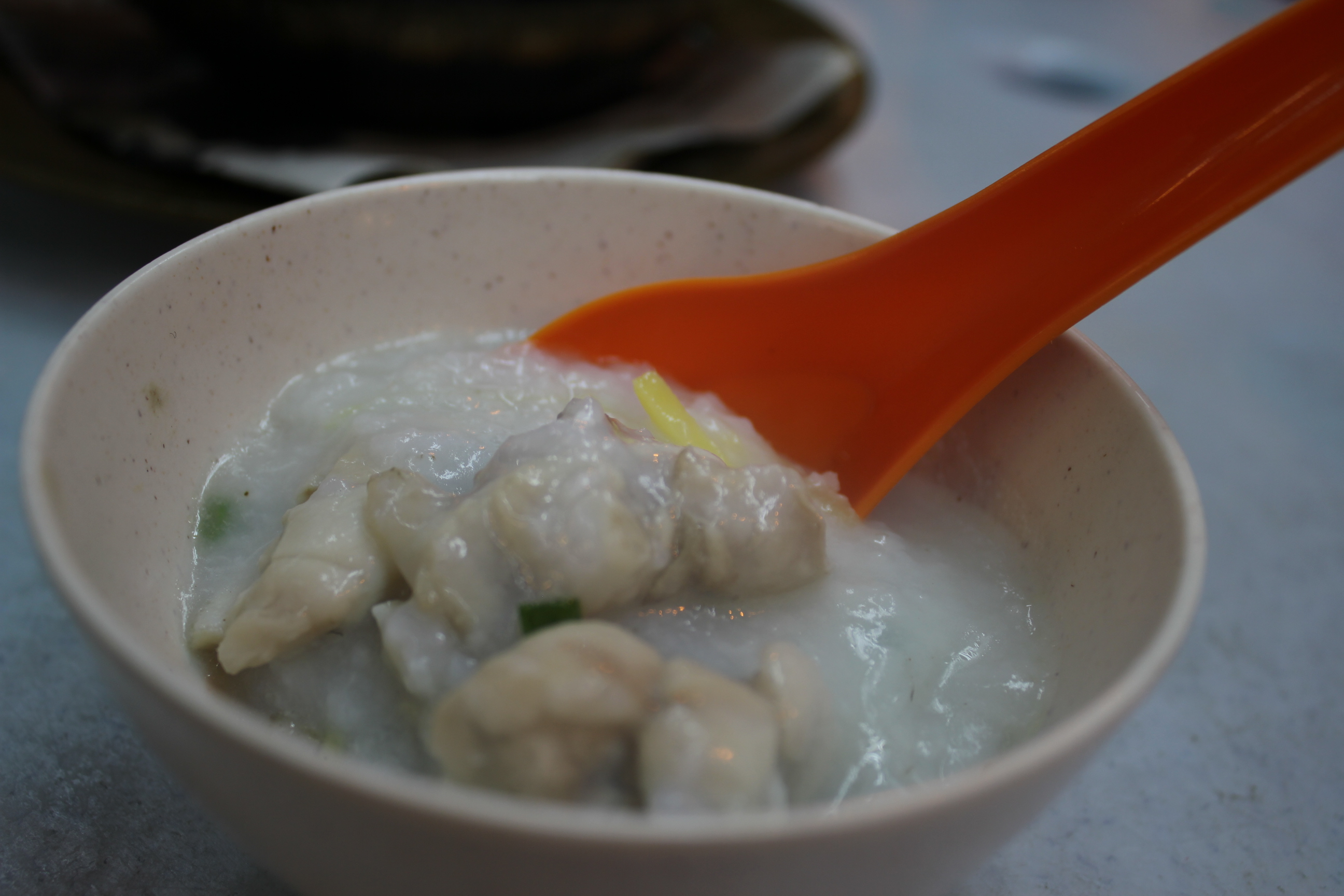
Many of you have already read about my obsession with frog porridge? Well, this is what it looks like. The taste is quite bland and frog meat tastes like chicken but I think I prefer fried frog legs to ones in the porridge. Slices of ginger saved the dish but otherwise it did not have a lot of taste. I thought afterwards that maybe it suits better the morning time, but I was told it is considered an evening dish. Oh well.

CHICKEN SATAY

Many of you may know the grilled chicken chunks marinated in a peanutty sauce? It is a classic Malaysian dish and I am pretty sure everyone loves it.

ps I love the color contrast of rusty orange color against the light-blue-colored plates!

seafood

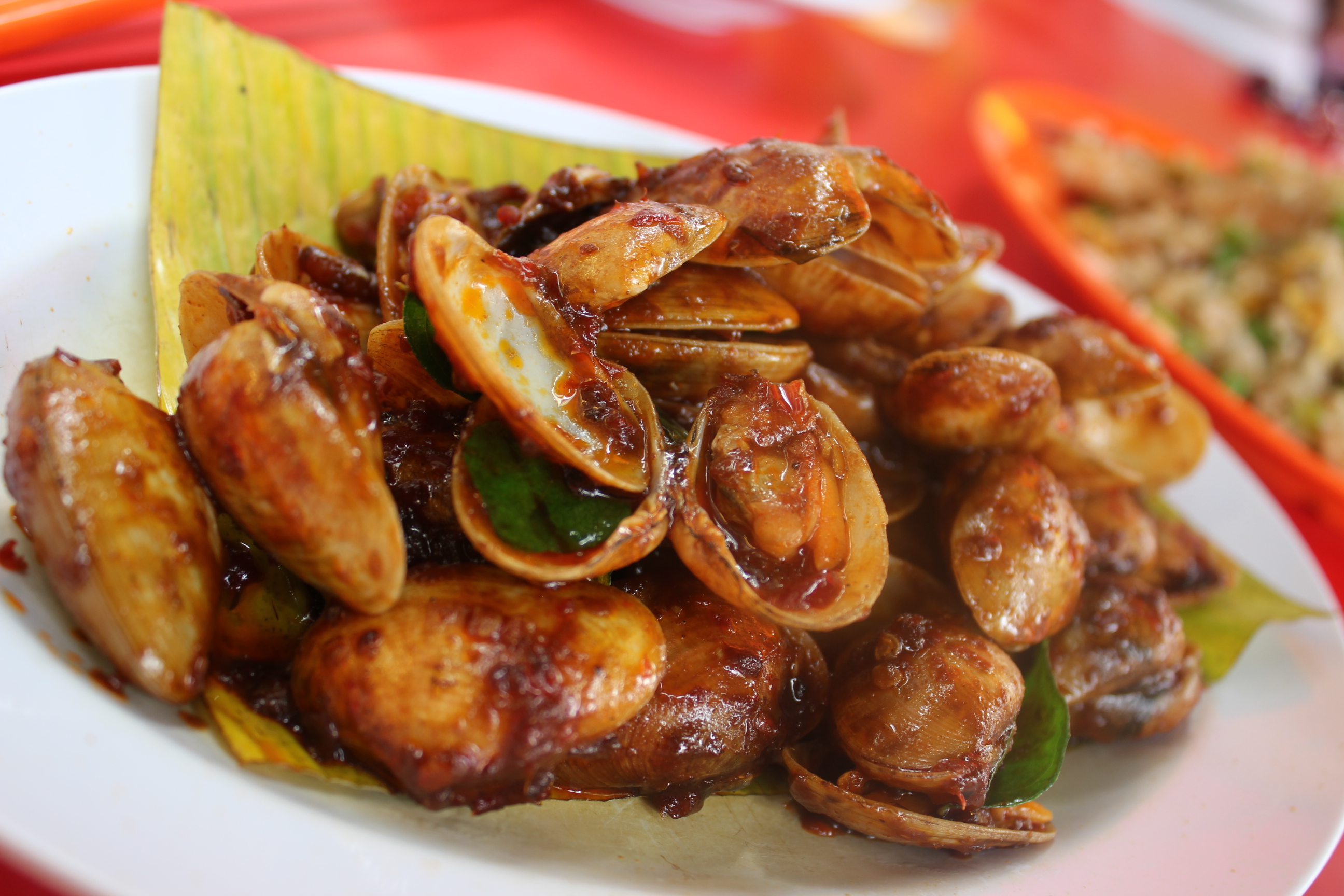
LOCAL SEAFOOD

Excellent, one of the best dishes if not the best that we had during our stay in Kuala Lumpur. The sauce seemed to have peanuts in it, too. I do not know the name of this particular seafood but it was similar to mussels yet smaller. When we return to Kuala Lumpur in March, this will be our first order!

brochette

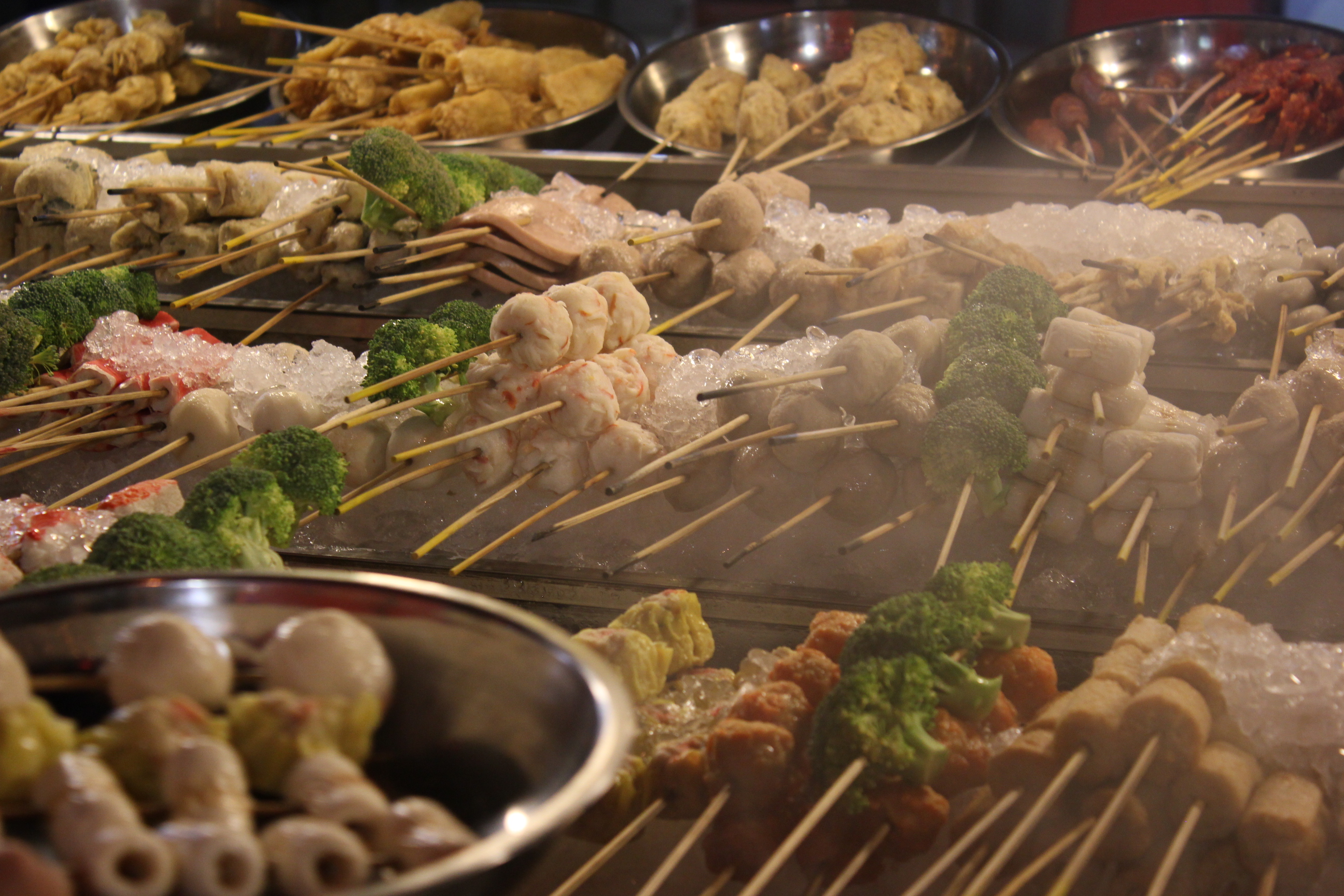
FANCY A SKEWER?

Many food stalls offer a wide selection of skewers and even if we did not try any, they looked delicious. Pick you choice, but it may be difficult as there are so many!

soup

…OR PREFER A SOUP?

Again, I just love these colors! (maybe even more than I loved the food itself…)

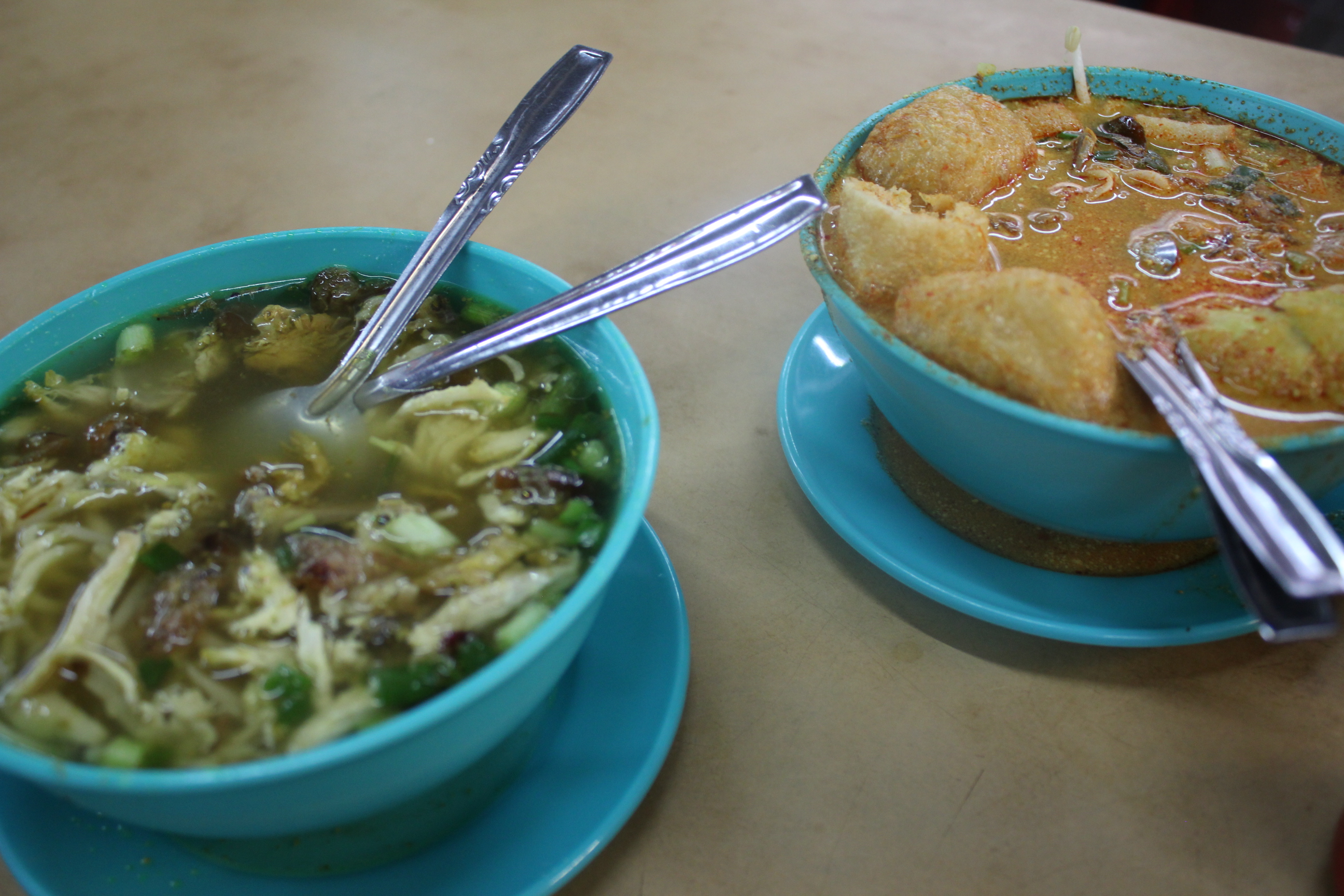
We purchased these soups for next to nothing in Little India. The stand provided the usual “pick your bowl and we fill it up with hot water” eating experience. Not bad but not very tasty either.

street party

STREET PARTY FOR THE CELEBRATION OF THE CHINESE NEW YEAR

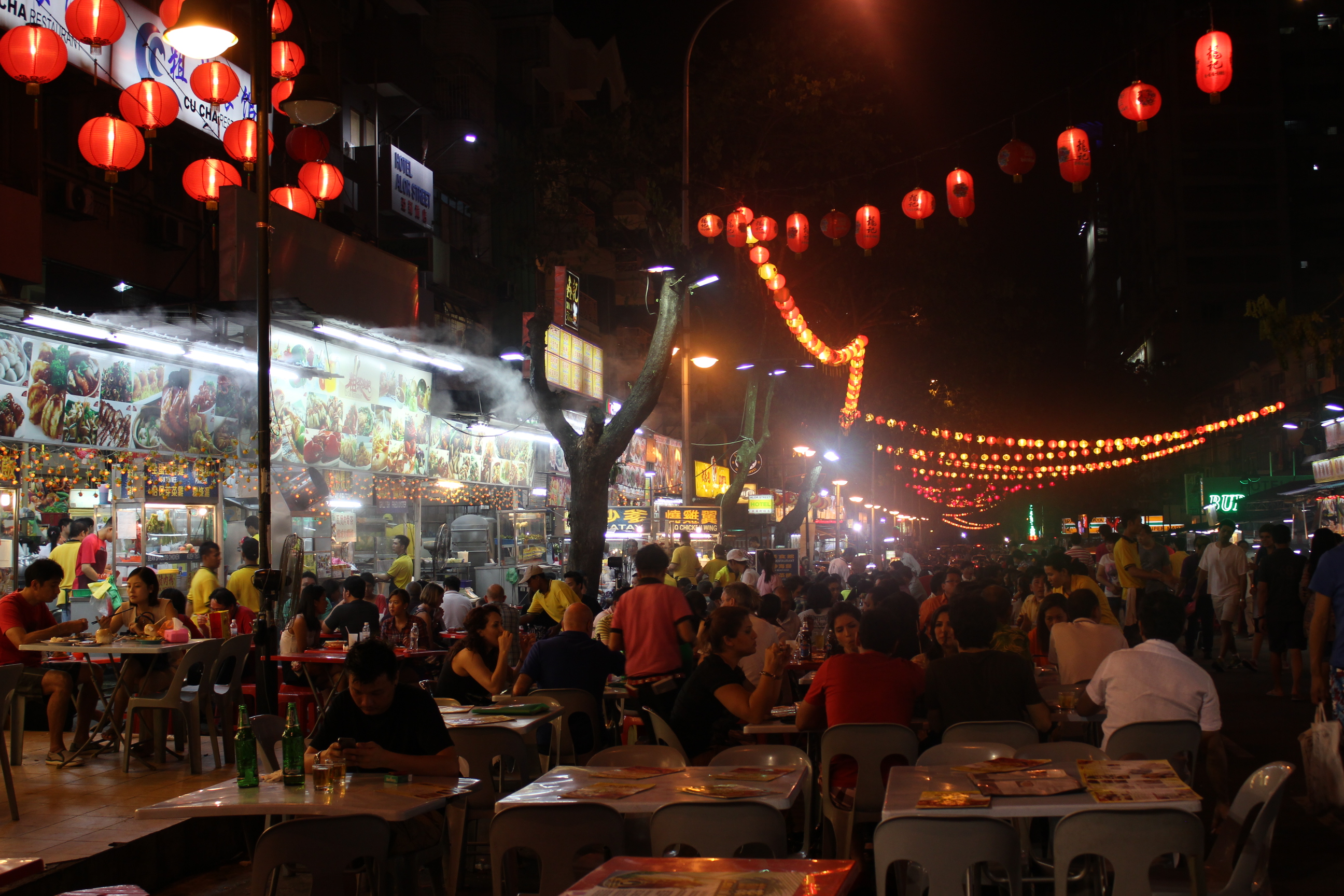
The street behind our hotel was very alive in the evening of February 10, the first day of the Chinese Snake Year. Everyone was out and happy. Fireworks were making noise. Let’s hope that the year continues as well as it started for all of us in every corner of the world. Happy Snake Year once again!!

Happy Snake Year

candlesAs millions of Chinese today, we also went to a temple to leave behind last year and welcome this new year into our life, hoping it will bring plenty of happiness, stable health, prosperity and good luck. We purchased a candle and lit it up at one of the oldest temples of Kuala Lumpur, Sin Sze Si Ya Temple near the central Market (a very charming small temple).

This morning we did not respect a basic rule of traveling through different time zones: set your alarm clock and GET UP when the locals do! We woke up at 2 in the afternoon.. The day was lovely and I ate my famous frog porridge but it is already 2.30 in the morning and if I don’t get some sleep now, it won’t be good news… So, the next time I write, it will be from Siem Ream. Until then, happy new year!

Chinese New Year in Kuala Lumpur

Most of us living according to the Western calendar made (or at least thought of making!) new year wishes just three weeks and one day ago. I have always liked the timing of the Chinese New Year –just some weeks after the Western new year– because it takes us back to those promises, wishes, hopes and dreams that occupied our mind not so long ago. It was in Auckland, New Zealand, when I was first introduced to the Chinese new year and the delicious dishes associated with it. Since then, I have celebrated this festival in London, New York, Havana and Paris.

This year the Chinese new year falls on February 10 and the Year of the Snake will begin. My husband and I arrive in Kuala Lumpur the night before and even if many Chinese plan to  return home and spend time with the loved ones, I am sure Kuala Lumpur will present its most frightening dragons to us!