Monthly Archives: November 2013

Collioure: the pearl of the coastal Roussillon

Collioure is one of those Mediterranean towns that every artist seems to have loved. Matisse, Picasso, Derain, Dufy, Chagall, Braque –you name it– have all immortalized this cute seaside town in the south of France. We spent one night in Collioure, and even if the weather has turned cooler and greyer, we could see and feel the charm of the old town and the historic harbor area.

CollioureI could only wonder how old these plane trees are! It looks like many artists have leaned on them… …imagine the storied they could tell us!

We also witnessed one brave man having a swim in the sea. But after all, who would not be tempted in such beautiful surroundings?Collioure

Collioure has a rich past. Throughout its history, the Spanish have had their fair share of Collioure occupation, and once upon a time Collioure was a summer residence of the King of Majorca! It has been part of France only since 1642.

There is an impressive fort built by Vauban, the military architect of Louis IV, which reminds us of the old battles and the strategic location of Collioure.Vauban fort

Collioure

If you are traveling in the Languedoc-Roussillon region, make sure to stop here for a day or two. Even during winter season (like last weekend) the life goes on and the tapas scene is quite active. In addition, there are delicious anchovy shops and a dozen of art galleries. And there is the wine route that passes by Collioure –after all, Collioure has its own appellation (appellation d’origine contrôlée, AOC). No wonder all of those artists loved it here!

Salvador Dali’s house in Portlligat

House in Portlligat was the only stable residence of Dali from the -30’s onwards. This is where he worked and lived with Gala, his wife, until her death in 1982. We made an overnight trip from France to this northeastern corner of Spain to see the house yesterday.Salvador Dali house Portlligat

Once inside, the first thing one notices is a huge polar bear holding a lamp. An owl is watching the bear and the visitors. The entrance makes an impression!Entrance to house-museum of Dali, Portlligat

From the entrance the tour continues to the dining room, the studio, the library, the bedroom (the biggest room in the house) and other rooms.

The dining room:Salvador Dali's dining room

The library: Salvador Dali's library

The bedroom (can you spot the animal?):Bedroom of Dali and Gala

Wall decoration: Dali Portlligat

Posters that cover the dressing: The dressing in Dali's house Portlligat

Lastly, one can visit the garden and the pool area: the pool area Portlligat

The guided visit takes about 40 minutes and the house is definitely worth the visit! Be prepared to see a lot of stuffed animals… And remember that one must reserve by internet or telephone. In summer, it is not unusual to book 5-6 days in advance.

Information and booking: http://www.salvador-dali.org/museus/portlligat/en_index.html

Perpignan: a photographer’s paradise

One-hour walk in Perpignan this afternoon was enough to impress me. The town is such a mixture of French and Spanish/Catalan architecture, the buildings are covered with splendid colors and there is that rough, southern-Mediterranean creative edge… If you pay attention, you hear inch’allah more than bonjour. Then there are the jambon shops and bodegas. And there are gypsies dressed in black.

Join me on this inspiring walk!

PerpignanThese first three photos were taken in the gypsy quarter. I had arrived here by accident, and yet I had noticed that the area looked rather poor compared to more touristic and commercial areas, I was just too happy to take photos and watch the life go by. Suddenly a man approached me saying that I should maybe head back toward the center, and it may not be safe to walk around with my camera… Well, I had a glimpse of the famous gypsy quarter and I may even head back tomorrow during the daytime (but with more modest clothes and no jewellery on). Why is it that the forbidden things are often the most attractive ones…?Perpignan

Perpignan gypsies

The following photos were taken in the historical center of Perpignan, which is a cleaned-up version of the gypsy quarter, but equally charming.

Don’t you just love these Catalan-style balconies?Catalan balconies

Or do you prefer this style, often found in the French riviera? Perpignan

On that “less-polished side”,  what do you think of these two photos? Perpignan IMG_7177

Lastly, one more photo (after all, it is the apéritif hour and the bodega is waiting for me!)Perpignan

PS If you are interested in learning more about the Languedoc-Roussillon region, why not to join the Pearlspotting’s Facebook page? I will be here for five days and update Facebook whenever I can!

Happy Diwali!

Diwali, the festival of lights, symbolizes the awareness of the inner light and the victory of good over evil. It also marks the beginning of the Hindu new year.

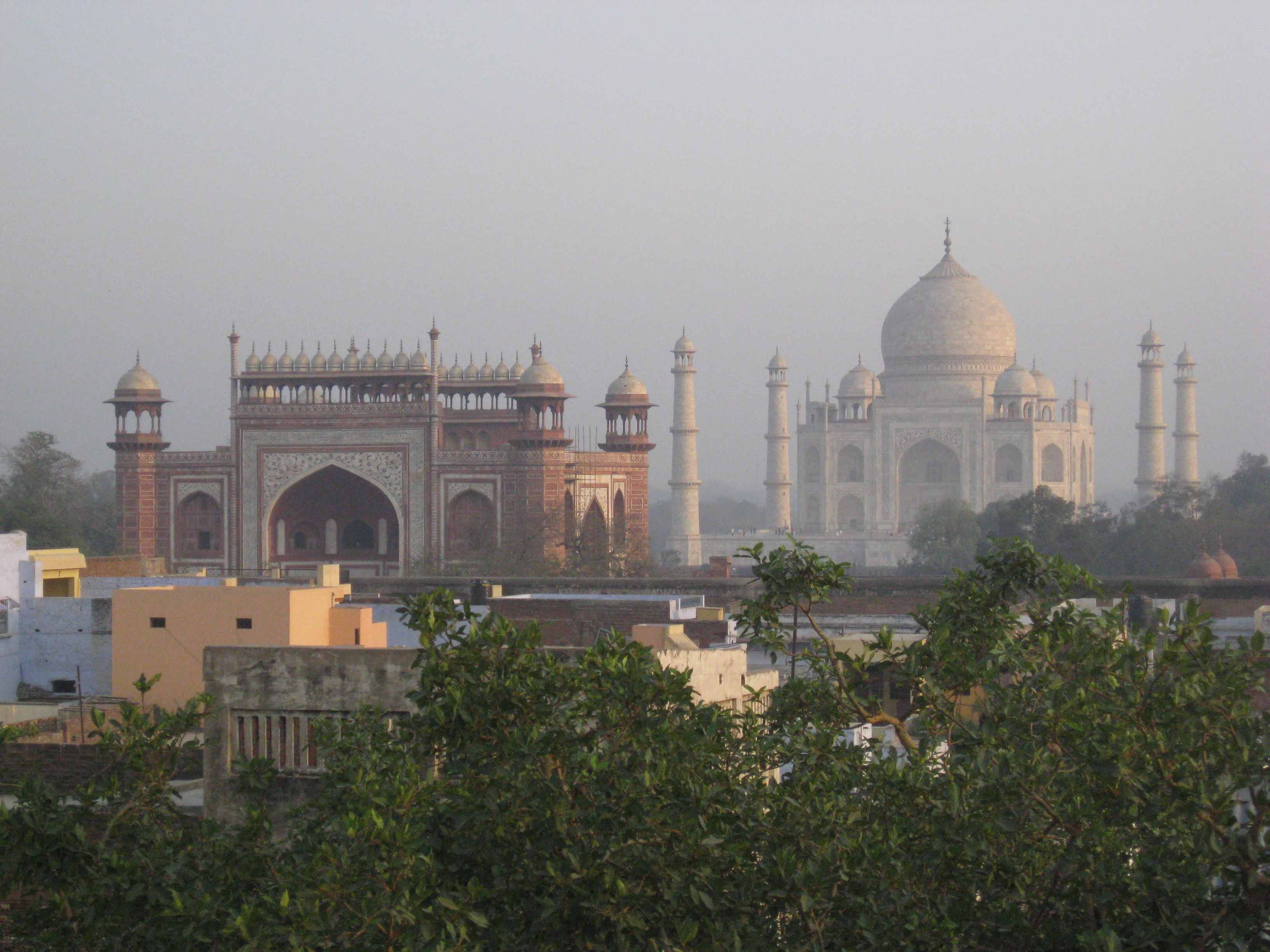
With this photo of Taj Mahal waking up to the morning sun rays, I wish all of my Hindu followers a Happy Diwali! Let your inner light shine like Taj Mahal and keep searching for your ātman, the soul. Taj Mahal

PS This photo was taken in March 2008 during my first visit to India. It was when I fell in love with India, and where I have returned twice since 2008. Looking at my old photos always makes me very happy, so I will try to post more about India. Meanwhile, have you been to India and what is your feeling toward this astonishing continent?

FIAC 2013

Since my first visit to FIAC in October 1999, I have tried to go back whenever I am in Paris. To me, FIAC is an important window to the contemporary art scene that is not limited to France and the francophone world. It gives me a concrete way to witness how our globalized world is changing, and even if old European cities are still strongly represented, galleries and artists from India, South Korea and Israel are definitely gaining a solid position in the international art world.  FIAC 2013

For example, Yeesookyung is a South Korean artist living in Seoul. We saw her work at Espace Louis Vuitton in Paris in 2008 and recognized her work immediately at FIAC (she reconstructs trashed ceramic vases).Yeesookyung

Jitish Kallat is a Mumbai-based artist whose work reflects the diversified yet complex character of his home city. I am curious to know the story behind this sculpture of four men, so if you know something, please let me know! Otherwise I will pay a visit to Daniel Templon gallery.. (or ask my Mumbai friends!).Jitish Kallat

It would be difficult to make an exhaustive summary of everything I saw at FIAC, but some other interesting art pieces are pictured below:

Suenos by Jason Martin (2012): Jason Martin

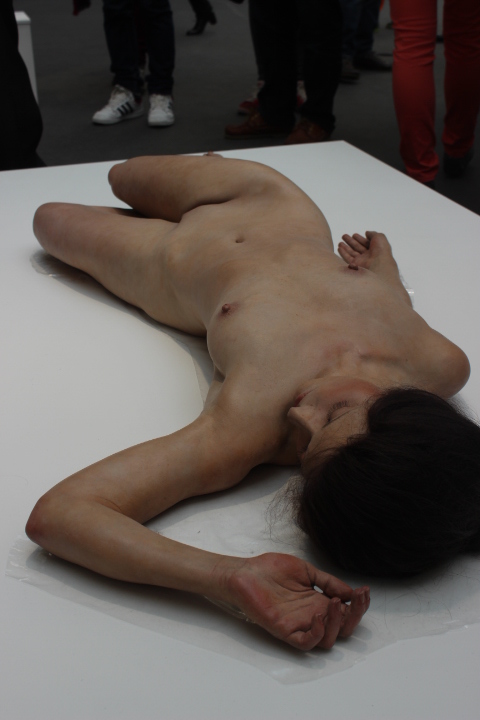
Lisa by John DeAndrea (2005): Lisa by John DeAndrea

Indeed, this year we saw many real-life size sculptures of human beings, which made me leave FIAC wondering how the global crisis are influencing the artists’ works….?

PS In addition to the high-quality art, I love FIAC because of its stunning venue: le Grand Palais built in the Belle Epoque era. To see an exhibition at le Grand Palais should be on everyone’s “once in a life time” list so try to make a stop there during your next visit to Paris!

Links to the artists:

http://www.saatchigallery.com/artists/yeesookyung.htm?section_name=body_language

http://www.saatchigallery.com/artists/jitish_kallat.htm

http://www.artnet.com/artists/jason-martin-2/ (Note to my Finnish friends: Jason Martin exhibited at Galerie Forsblom in Helsinki 2012)

http://www.artnet.com/artists/john-deandrea/